
Regulatory Compliance
Standards, testing, certifications and market requirements for disposable gloves.
Regulatory Compliance
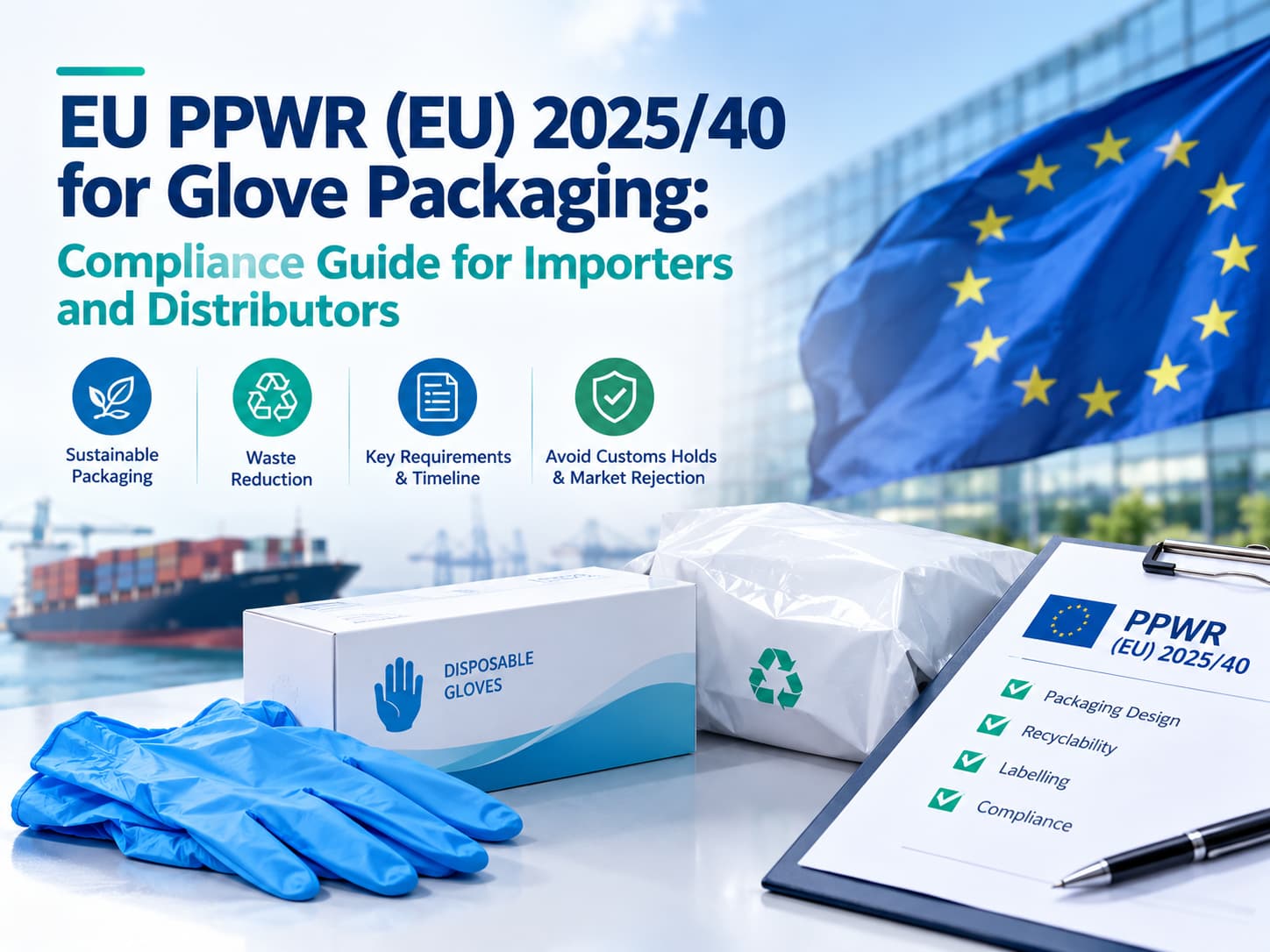
EU PPWR (EU) 2025/40 for Glove Packaging: Compliance Guide for Importers and Distributors
The EU Packaging and Packaging Waste Regulation (PPWR, (EU) 2025/40) applies to glove packaging sold into the EU since 12 August 2026: substance limits, PFAS rules for food-contact packaging, recyclability grades and recycled-content targets. Here is the compliance checklist for importers and distri
2026-10-08
Regulatory Compliance
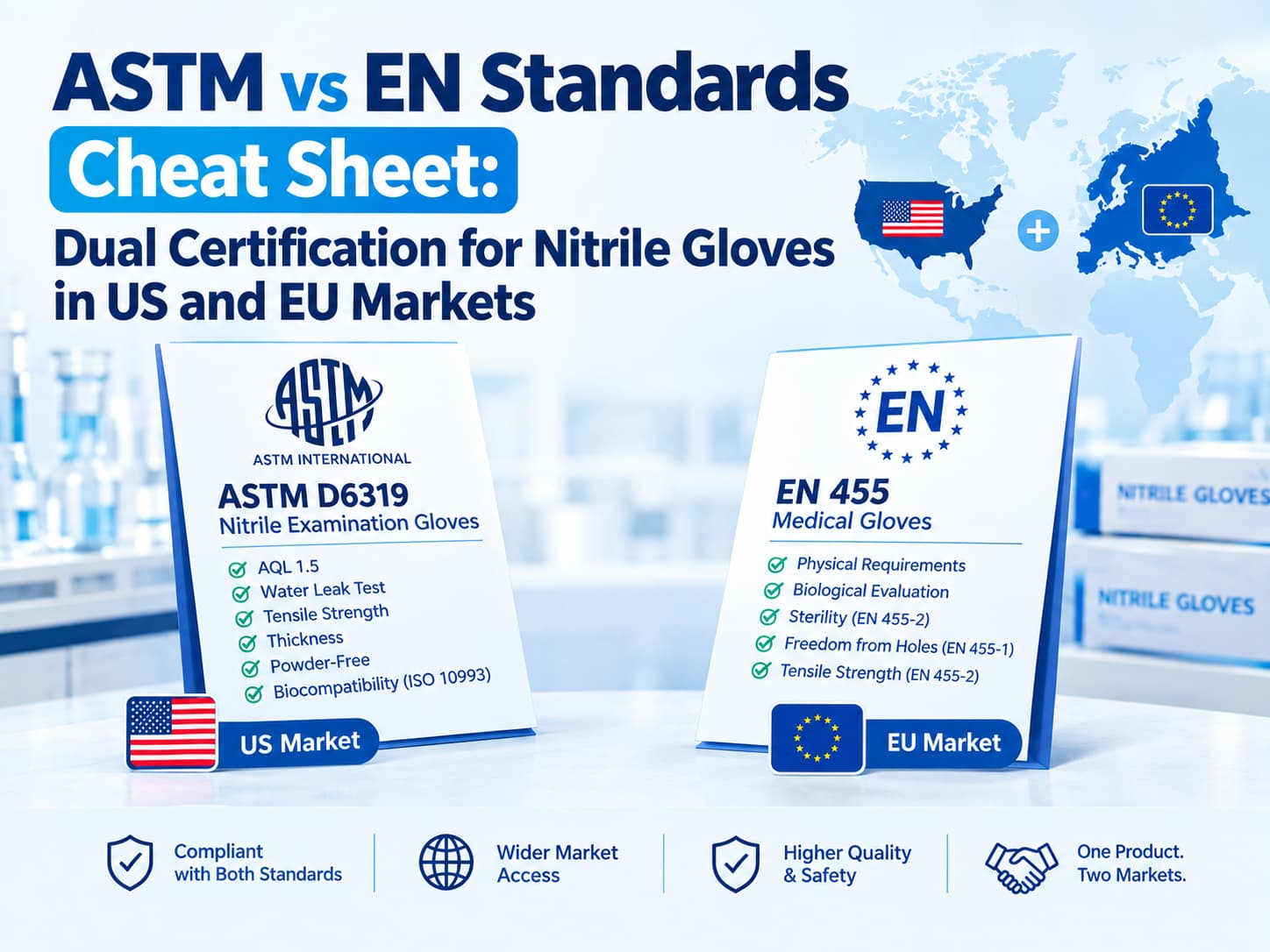
ASTM vs EN Standards Cheat Sheet: Dual Certification for Nitrile Gloves in US and EU Markets
ASTM and EN are the two most important standards families for disposable nitrile gloves. This cheat sheet compares key standards, test methods, AQL requirements, and physical property specs side by side, so buyers can understand what dual certification requires. ASTM International and the European
2026-09-10
Regulatory Compliance
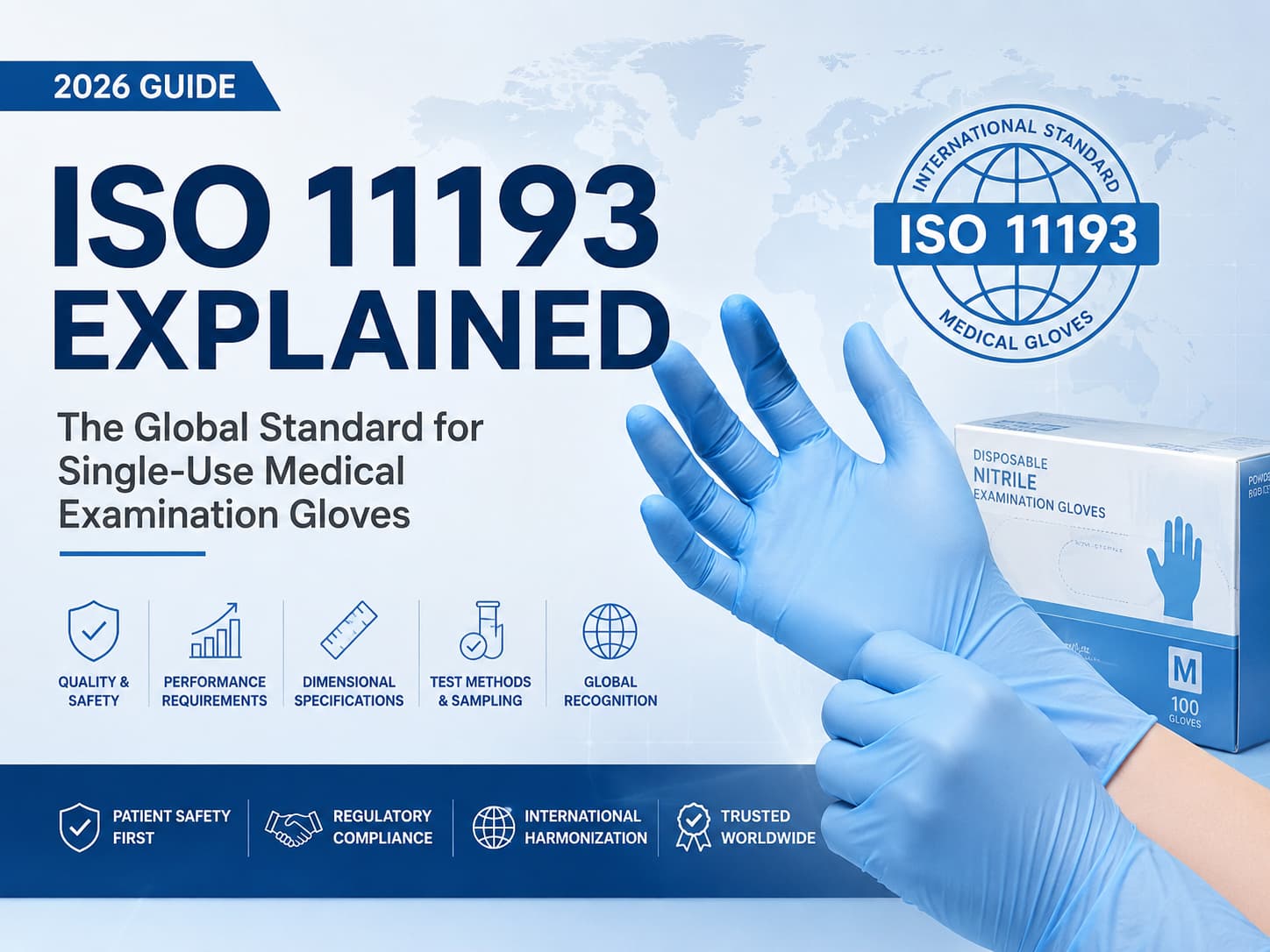
ISO 11193 Explained: The Global Standard for Single-Use Medical Examination Gloves (2026 Guide)
ISO 11193 is the international standard specification for single-use medical examination gloves. It has two parts: ISO 11193-1 covers gloves made from rubber latex or rubber solution (natural rubber latex, nitrile rubber, polychloroprene, styrene-butadiene rubber, and thermoplastic elastomers), and
2026-08-27
Regulatory Compliance
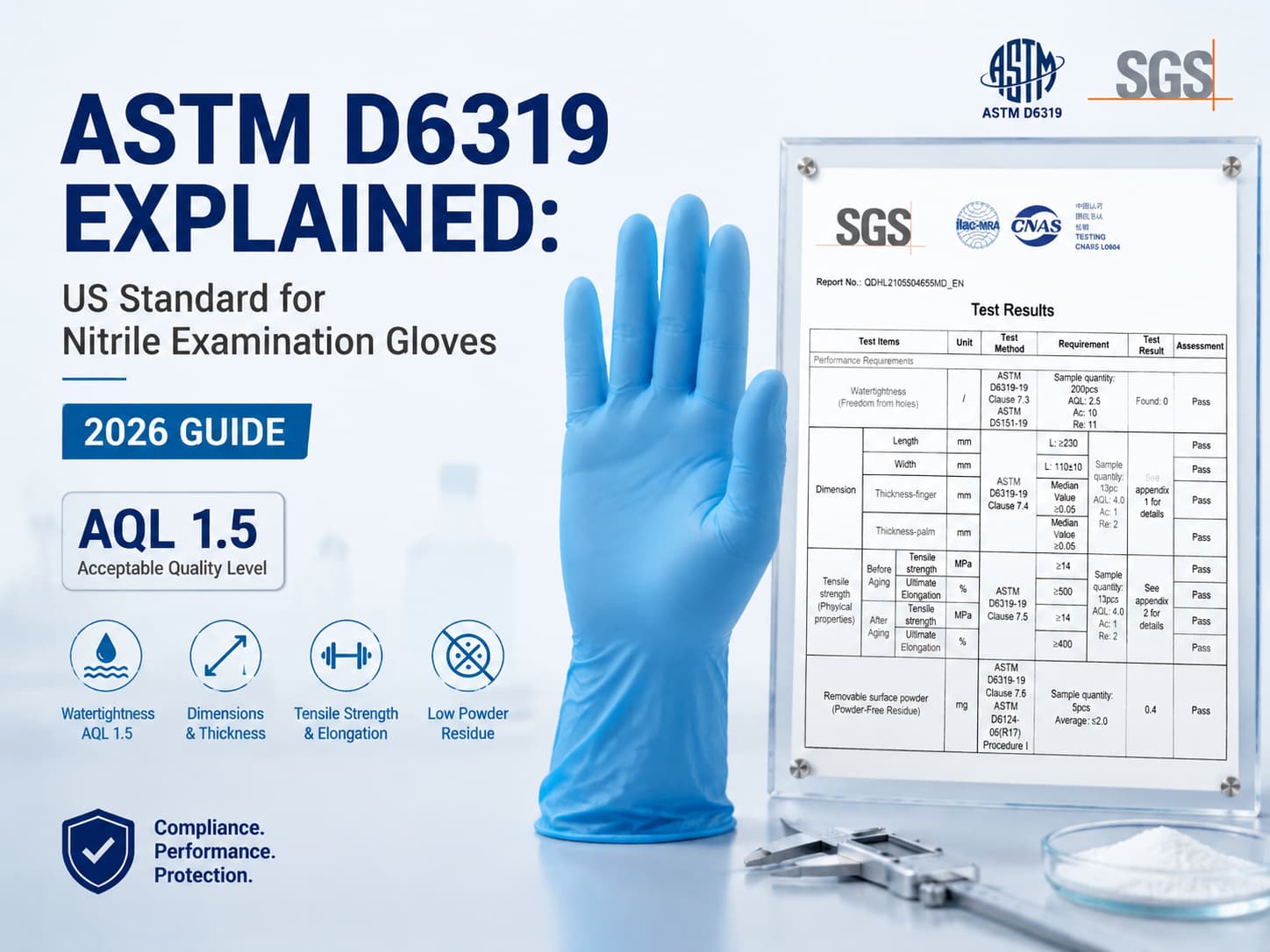
ASTM D6319 Explained: US Standard for Nitrile Examination Gloves (2026 Guide)
ASTM D6319 is the US standard specification for nitrile examination gloves intended for medical application. This certification interpretation guide explains the scope of ASTM D6319, its key test requirements, the FDA 510(k) clearance linkage, and how it compares to the European EN 455 series. Essen
2026-08-11
Regulatory Compliance
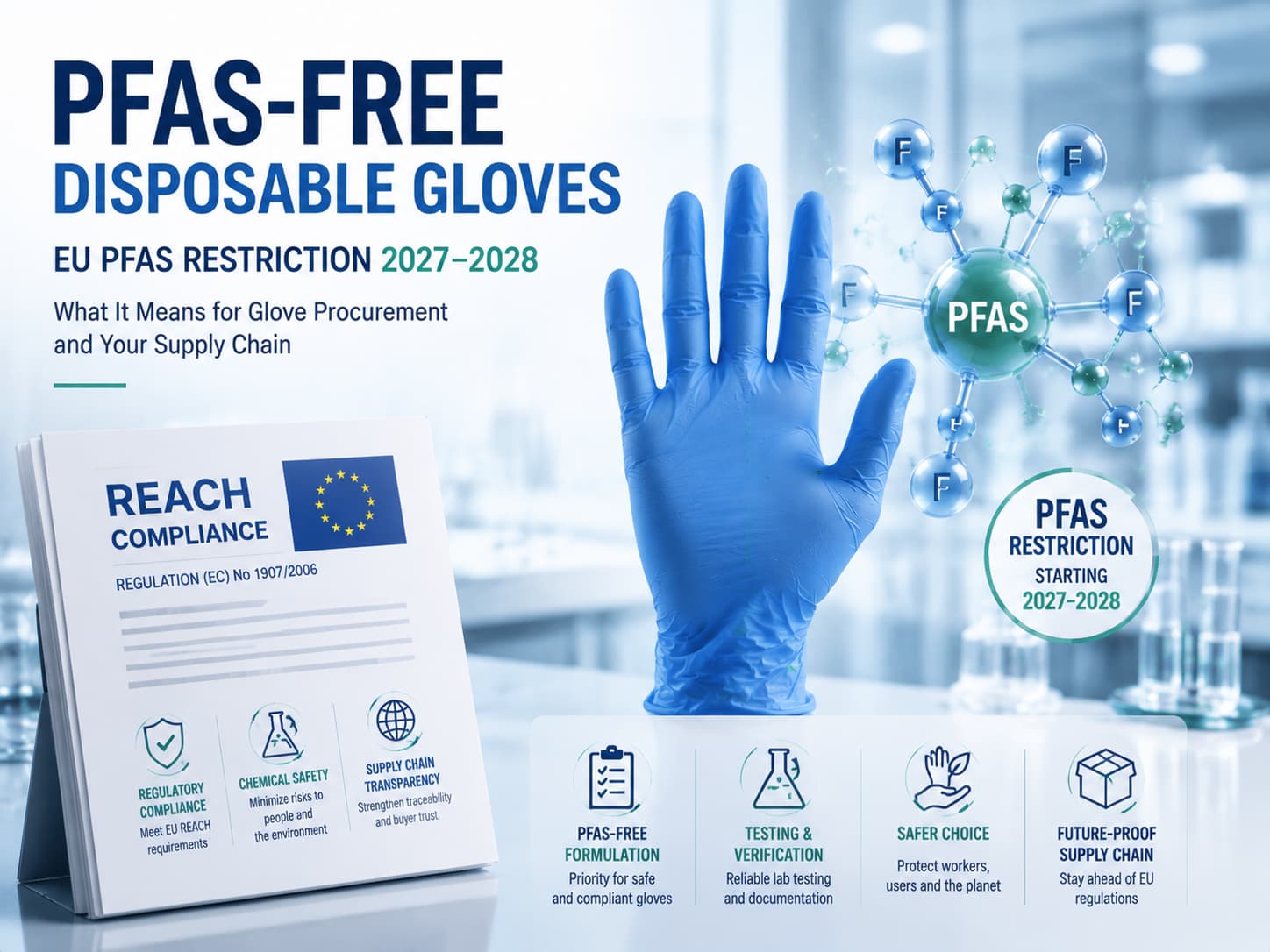
PFAS-Free Disposable Gloves - What the 2027-2028 EU PFAS Restriction Means for Glove Procurement
Per- and polyfluoroalkyl substances (PFAS), widely known as "forever chemicals," are facing broad regulatory restrictions across the European Union under the REACH regulation. For disposable glove buyers and procurement professionals, the 2027-2028 PFAS restriction timeline creates both compliance u
2026-08-10
Regulatory Compliance
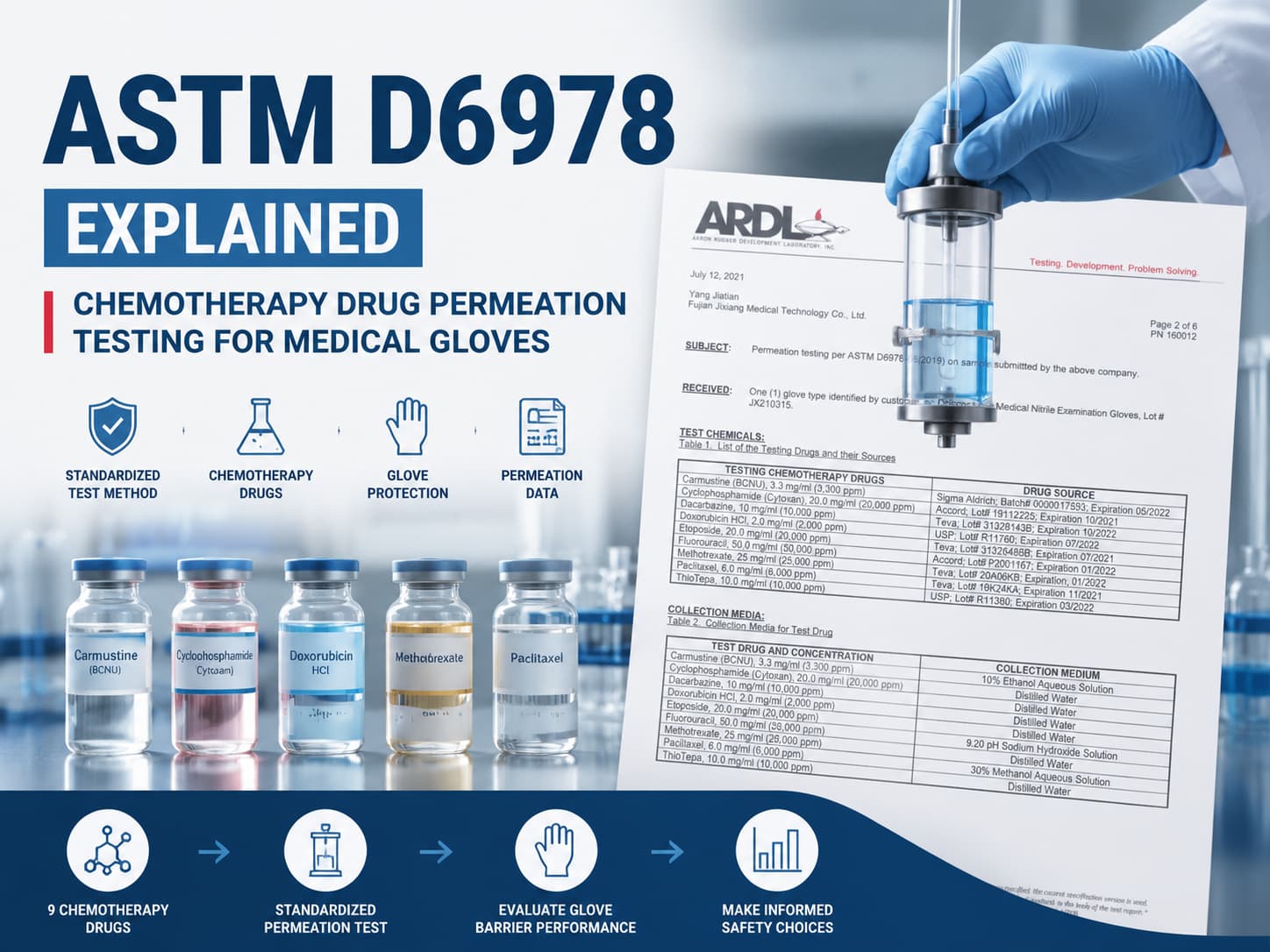
ASTM D6978 Explained - Chemotherapy Drug Permeation Testing for Medical Gloves
ASTM D6978 is the FDA-referenced standard for testing chemotherapy drug permeation through medical gloves. Learn the 9 test drugs, methodology, pass criteria, and which materials qualify. ASTM D6978 is the standard test method for assessing the resistance of medical gloves to permeation by chemothe
2026-07-28
Regulatory Compliance
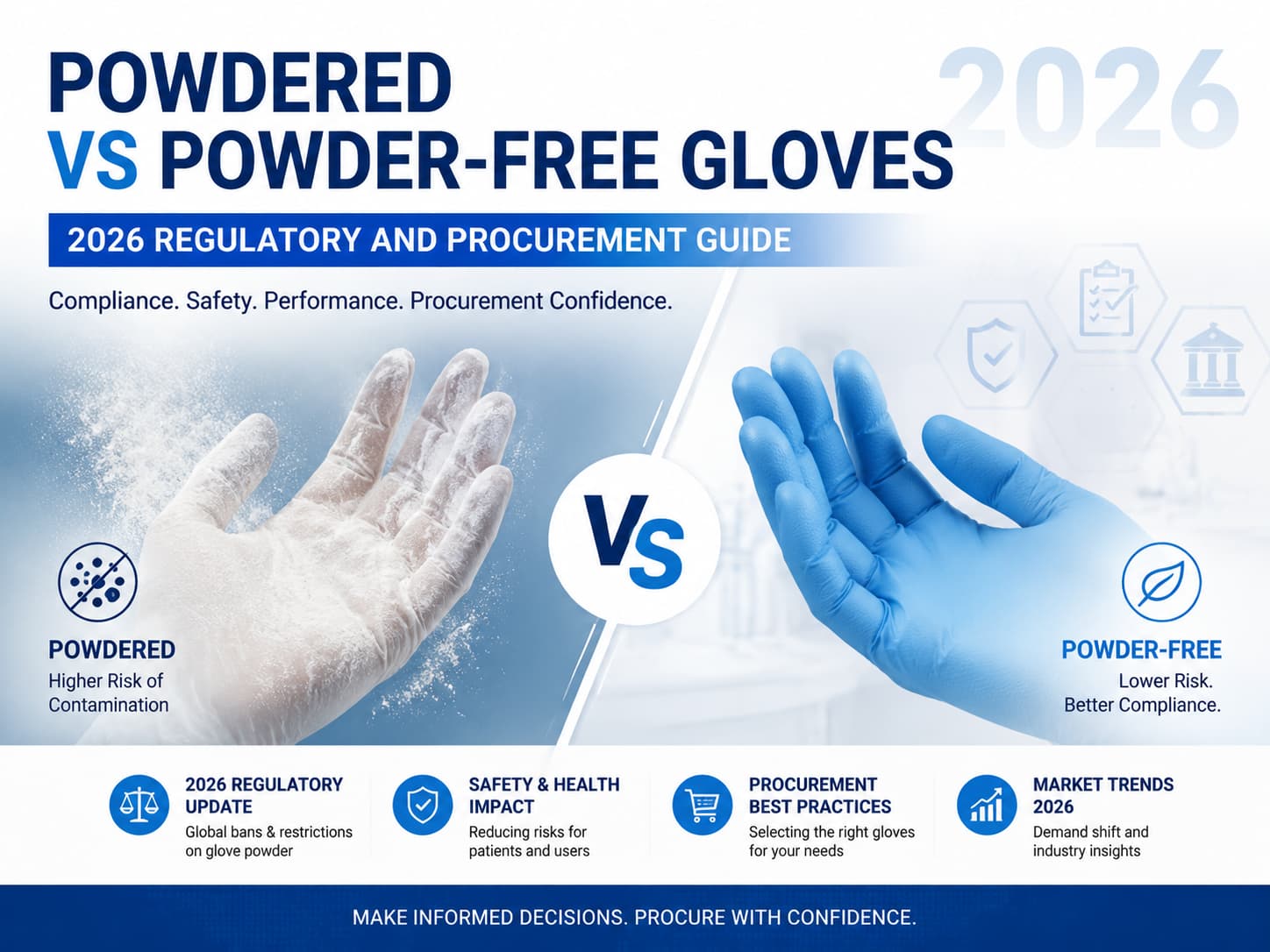
Powdered vs Powder-Free Gloves - 2026 Regulatory and Procurement Guide
The FDA banned powdered medical gloves in 2017. Learn why powder-free is now the global standard, how chlorination and polymer coatings replaced powder, and what buyers must verify in 2026. The FDA banned powdered surgeon's gloves and powdered patient examination gloves effective January 18, 2017,
2026-07-27
Regulatory Compliance
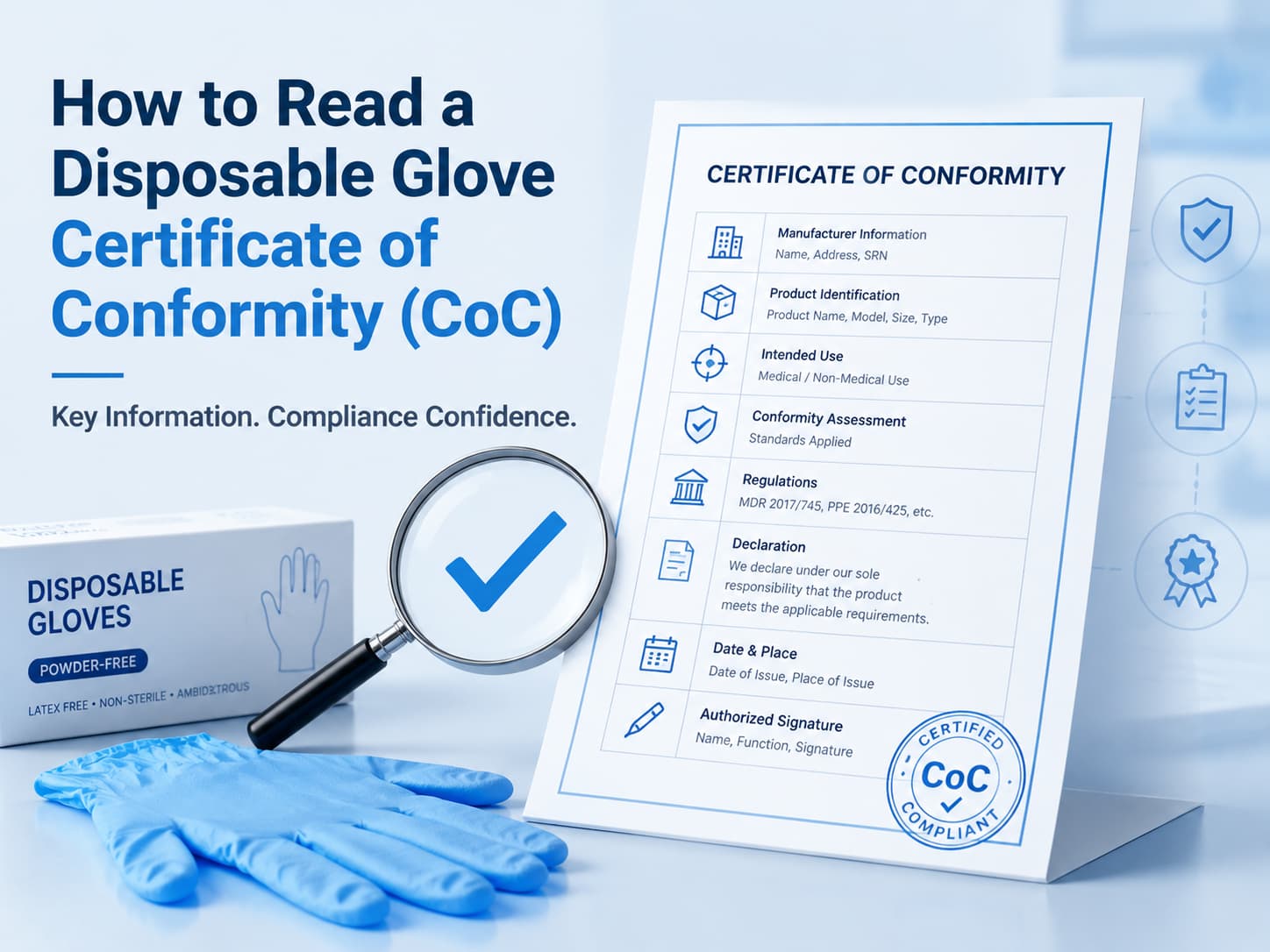
How to Read a Disposable Glove Certificate of Conformity (CoC)
A Certificate of Conformity (CoC) is a document issued by a manufacturer or notified body confirming that a product meets specified regulatory and technical requirements. For disposable gloves, the CoC is the fastest way to verify that a batch meets the claims made on the box. 1. What a CoC Is - and
2026-07-21
Regulatory Compliance
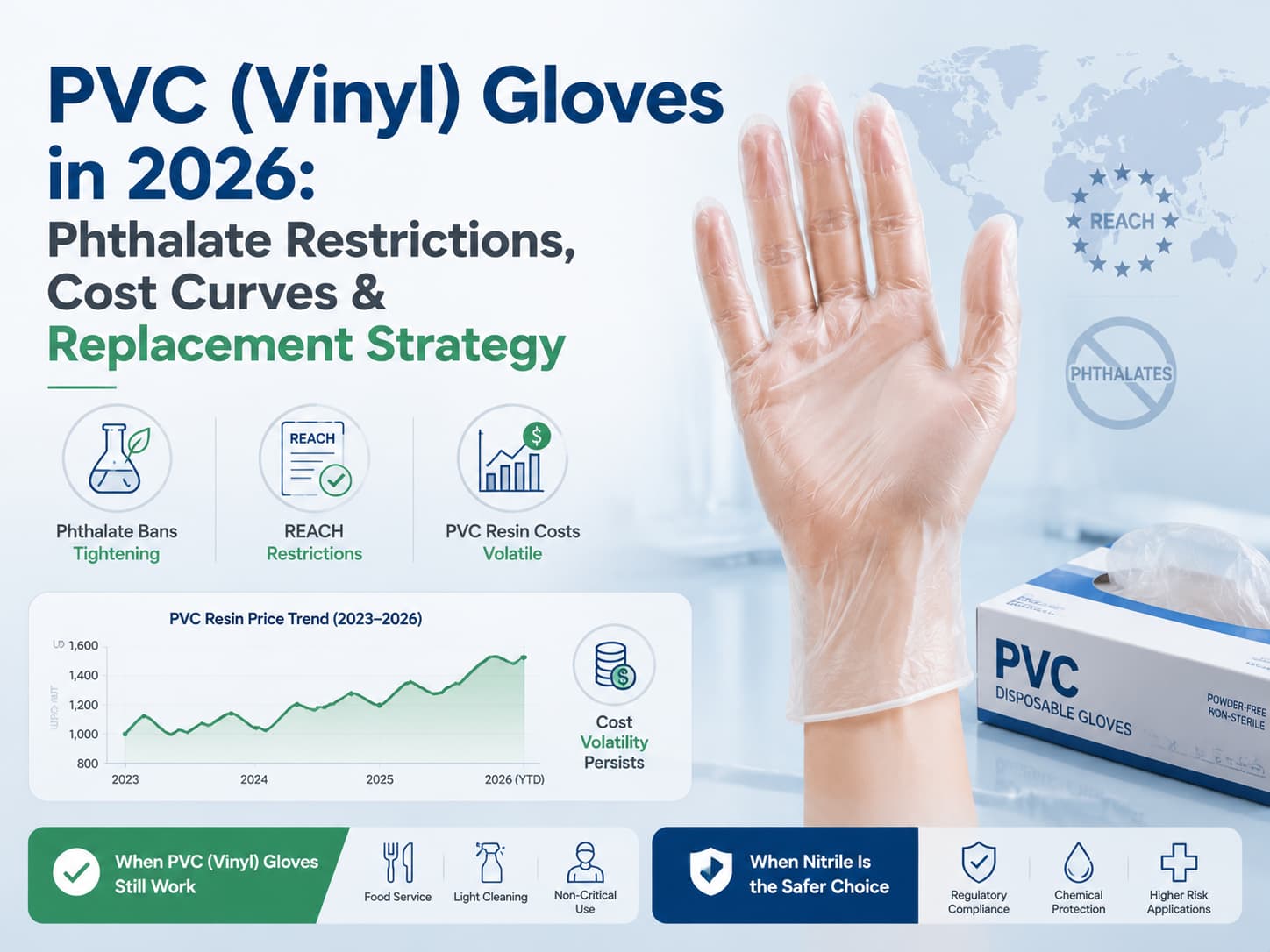
PVC (Vinyl) Gloves in 2026: Phthalate Restrictions, Cost Curves & Replacement Strategy
PVC (vinyl) gloves still account for roughly 25-30% of the global disposable glove market by volume, but 2026 is turning into a difficult year for buyers who rely on vinyl as a low-cost option. New phthalate restrictions, REACH enforcement, and volatile PVC resin prices driven by crude oil are resha
2026-07-19
Regulatory Compliance
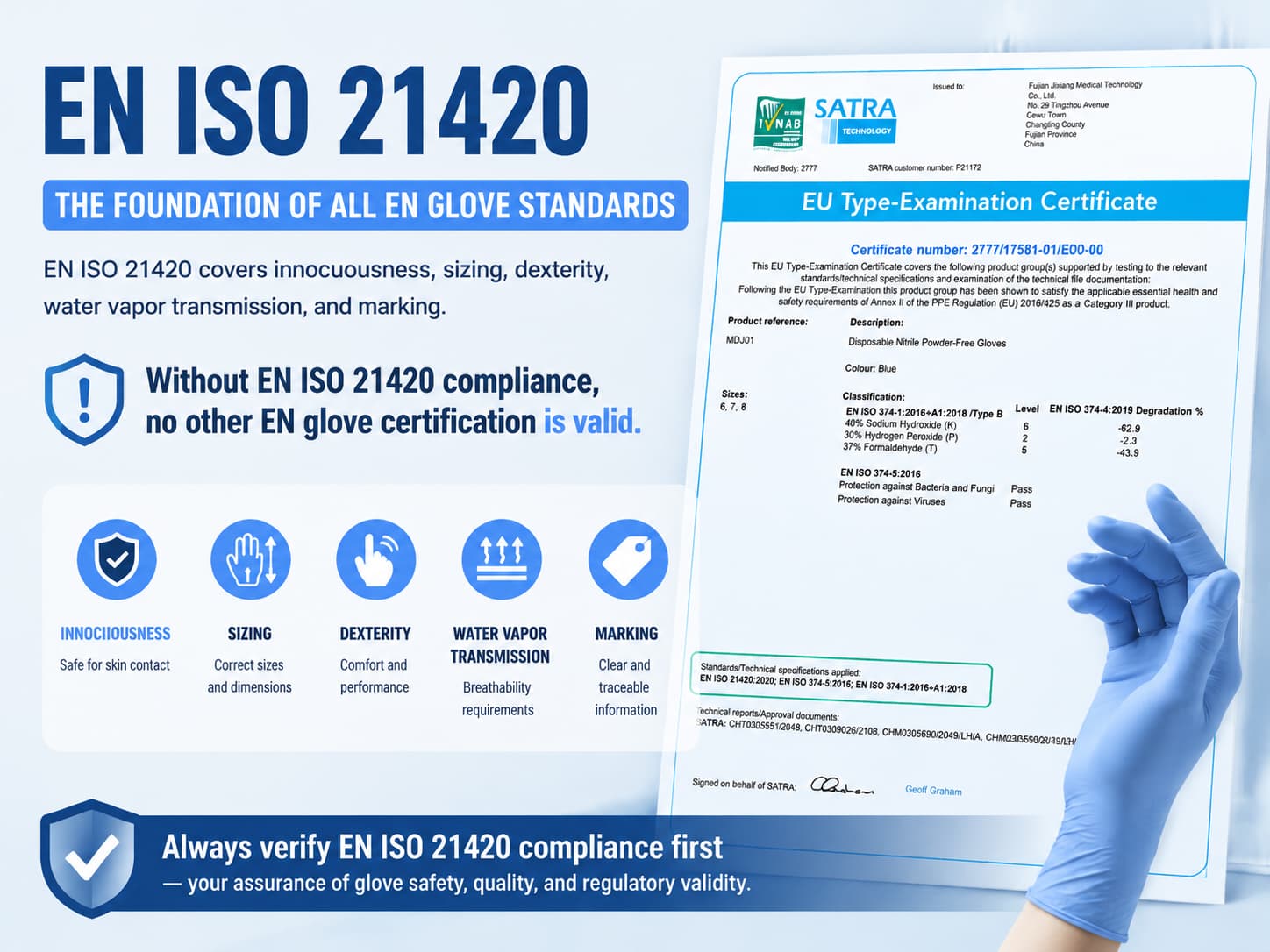
EN ISO 21420 (EN 420) Explained: General Requirements for Protective Gloves (2026 Procurement Guide)
EN 420 (now superseded by EN ISO 21420) is the European base general standard for all protective gloves - including disposable nitrile, latex, PVC, and reusable work gloves. It defines the fundamental requirements for glove design and manufacturing, including innocuousness (e.g., pH value), comfort,
2026-07-15
Regulatory Compliance
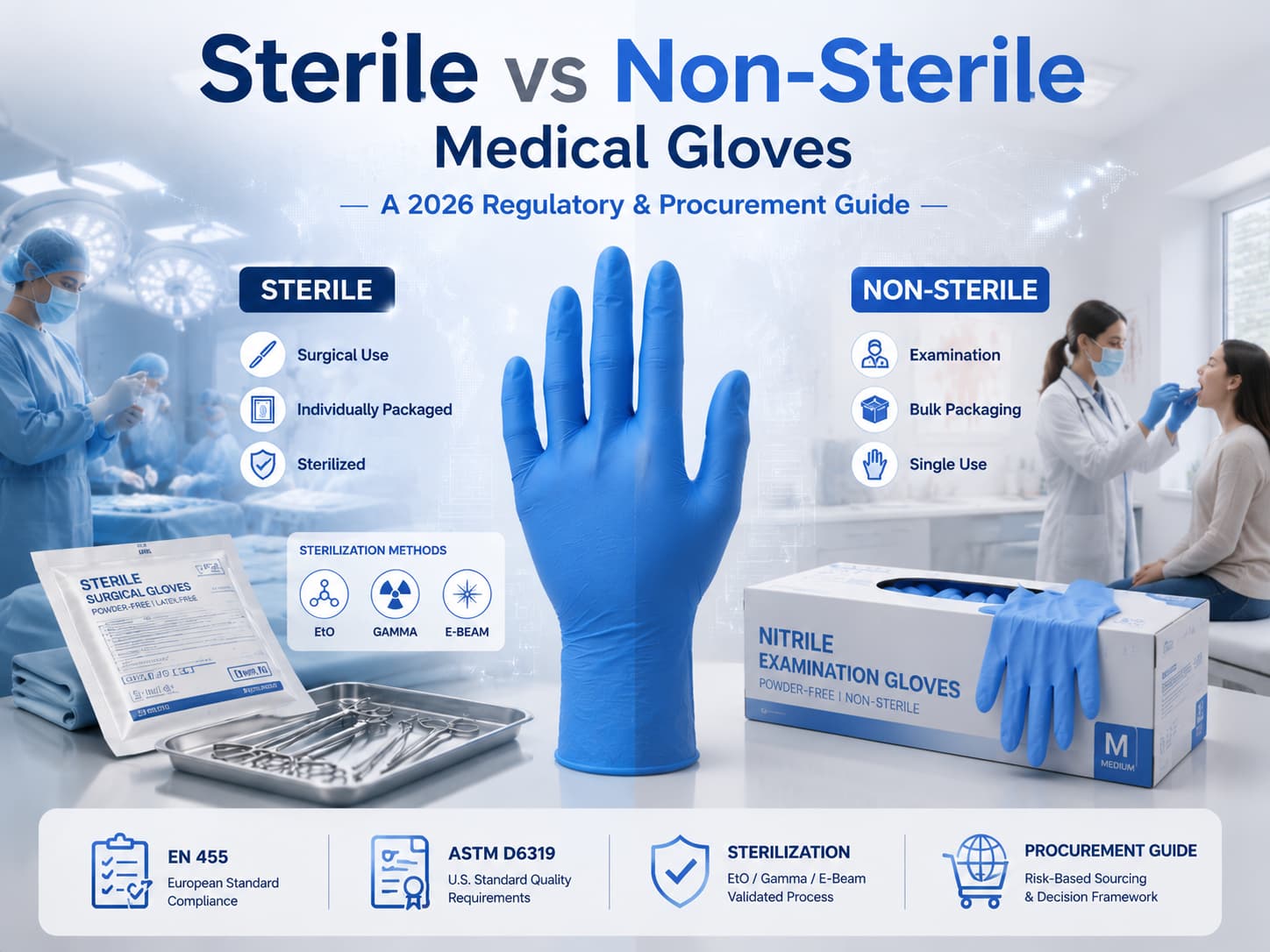
Sterile vs Non-Sterile Medical Gloves: A 2026 Regulatory & Procurement Guide
What is the difference between sterile and non-sterile medical gloves? This 2026 guide covers EN 455, ASTM D6319, sterilization methods (EtO, gamma, e-beam), AQL requirements, packaging, shelf life, and a procurement decision framework for healthcare buyers. Sterile medical gloves are manufac
2026-07-13

Regulatory Compliance
Medical Glove Procurement Compliance Checklist 2026: EU MDR, GSO & FDA Requirements
A medical glove procurement compliance checklist is a structured framework that importers, distributors, and healthcare procurement managers use to verify that disposable medical gloves meet all applicable regulatory requirements before shipment. In 2026, this checklist must cover at least three ma
2026-07-07
Regulatory Compliance
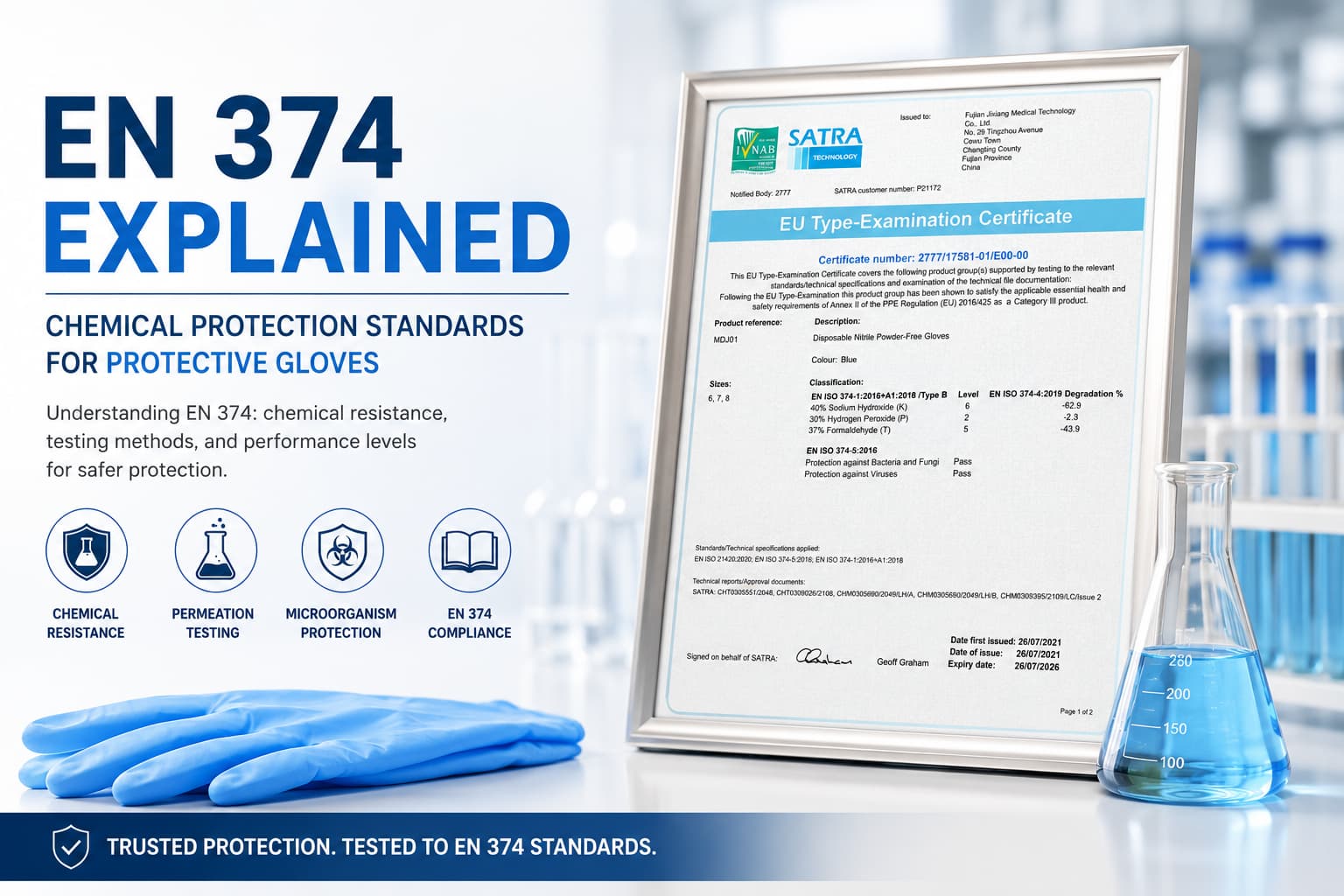
EN 374 Explained — Chemical Protection Standards for Protective Glove
When your team handles solvents, acids, or petroleum-based chemicals, the label "EN 374" on a glove box is more than marketing — it is a verified claim that the product has been tested against specific chemicals under controlled conditions. But what exactly does each part of the standard cover
2026-06-29
Regulatory Compliance
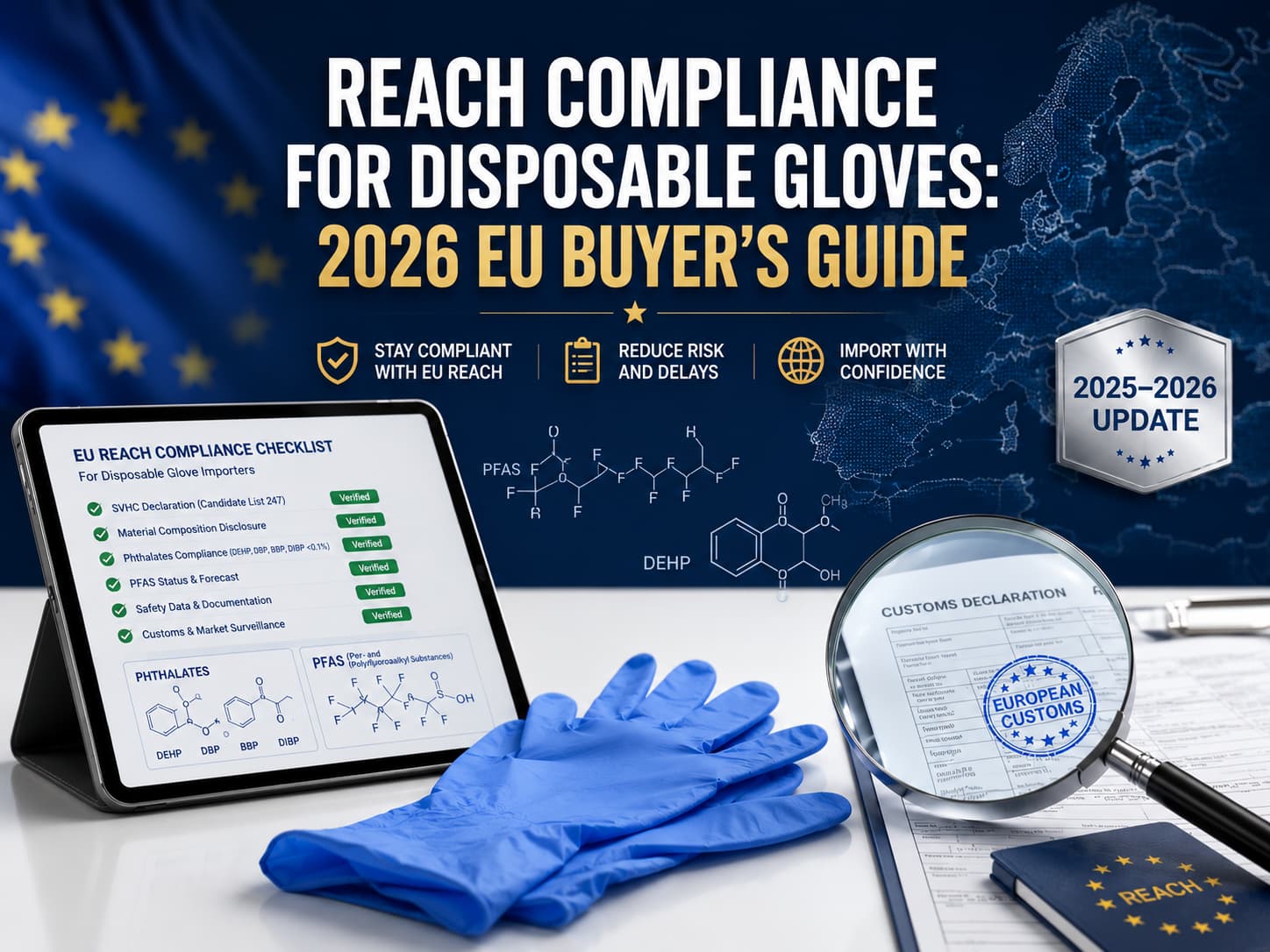
REACH Compliance for Disposable Gloves: 2026 EU Buyer's Guide
REACH regulations directly affect every disposable glove imported into the EU. This guide explains which substances are restricted, how to verify compliance, and what changed in 2025–2026 that buyers need to know. REACH (Registration, Evaluation, Authorisation and Restriction of Chemicals) is
2026-06-24
Regulatory Compliance
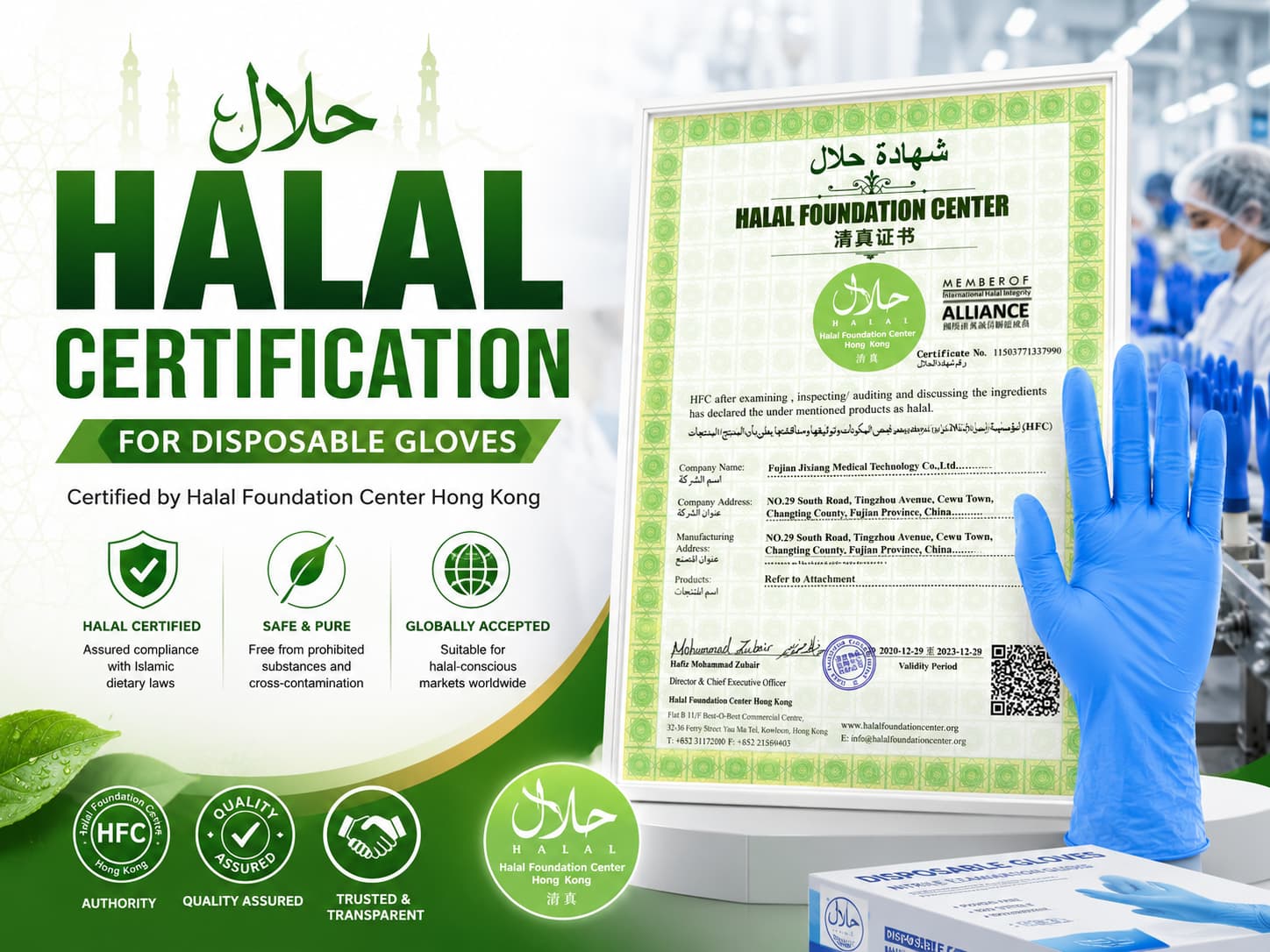
Halal Certification for Disposable Glove
Halal certification for disposable gloves confirms that the gloves are manufactured, packaged, and handled in compliance with Islamic law — meaning they contain no haram substances, are produced on clean equipment free from cross-contamination, and meet the requirements of a recognized Halal c
2026-06-17
Regulatory Compliance
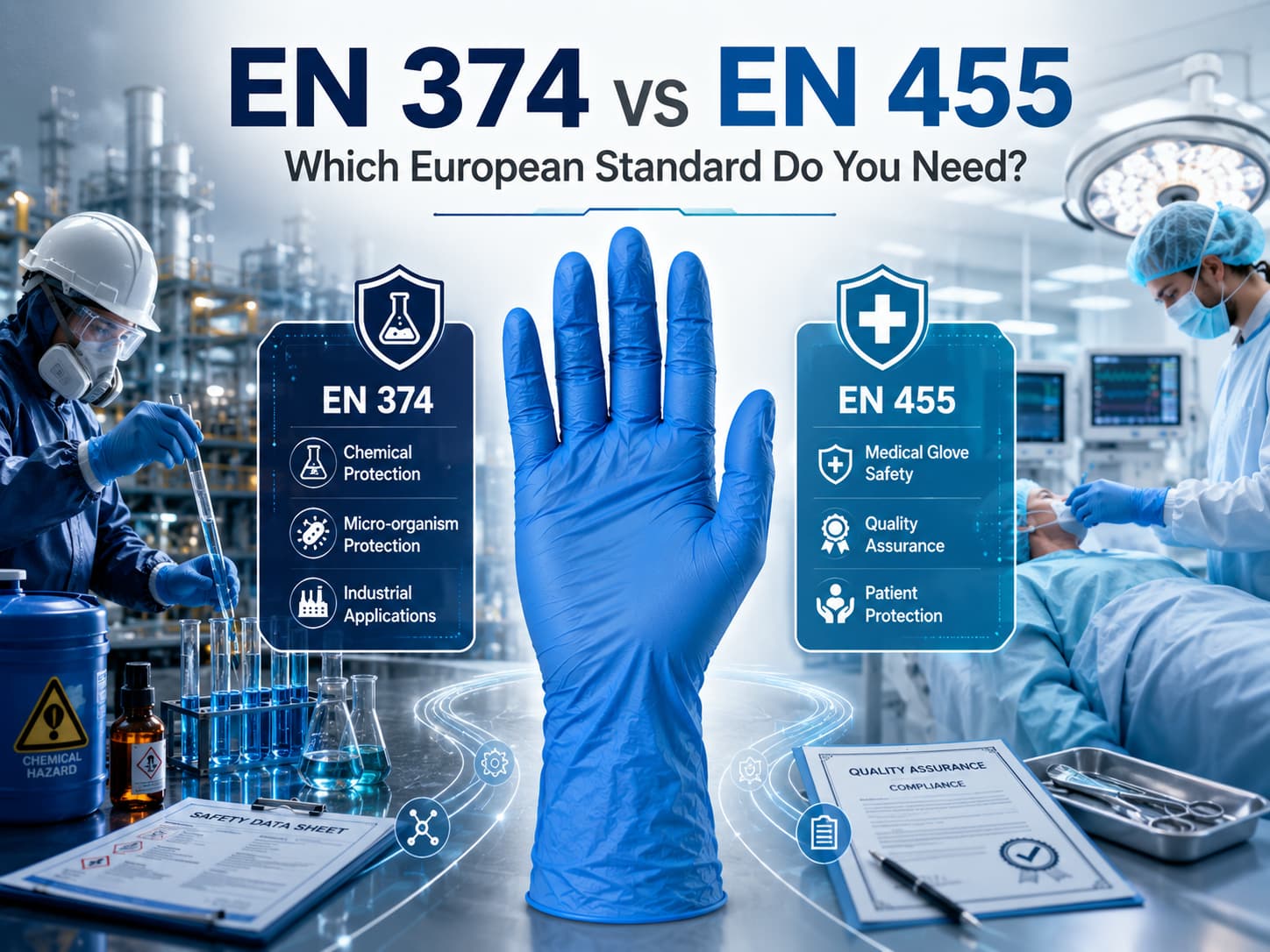
EN 374 vs EN 455: Which European Standard Do You Need?
EN 374 vs EN 455: The Core Difference (Direct Answer) EN 374 governs chemical and micro-organism protection for protective gloves, while EN 455 governs the quality and safety of medical gloves for single use. In short: if your priority is chemical resistance → look for EN 374. If your priority
2026-06-11
Regulatory Compliance
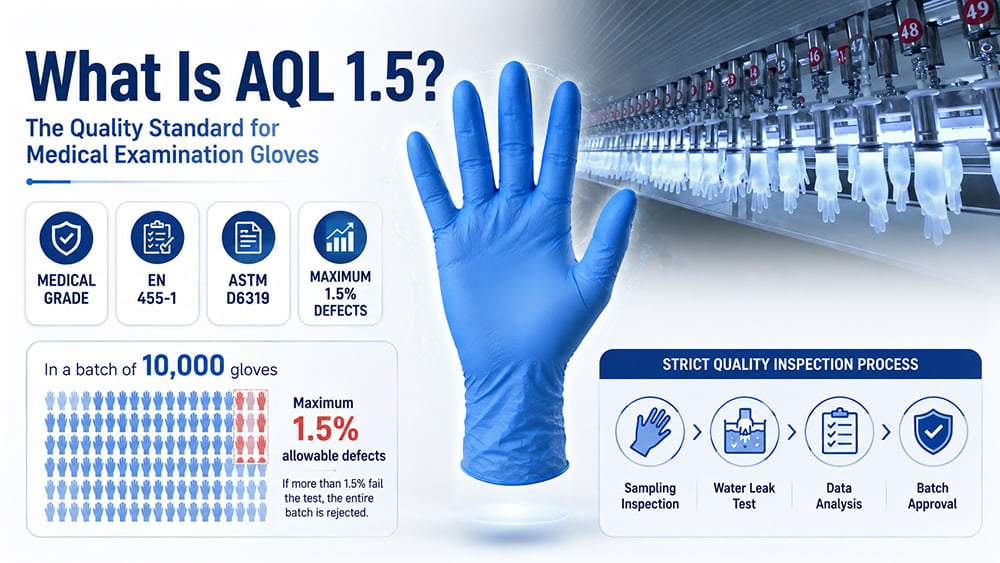
What Is AQL 1.5? A Complete Guide to Disposable Glove Quality Testing and Medical Glove Standards
What Is AQL 1.5? (Direct Answer) AQL (Acceptable Quality Level) 1.5 is the international standard for medical-grade examination gloves. It means that in a production batch, no more than 1.5% of gloves are allowed to have pinhole defects (holes that would compromise the barrier between the wearer and
2026-06-08
Regulatory Compliance
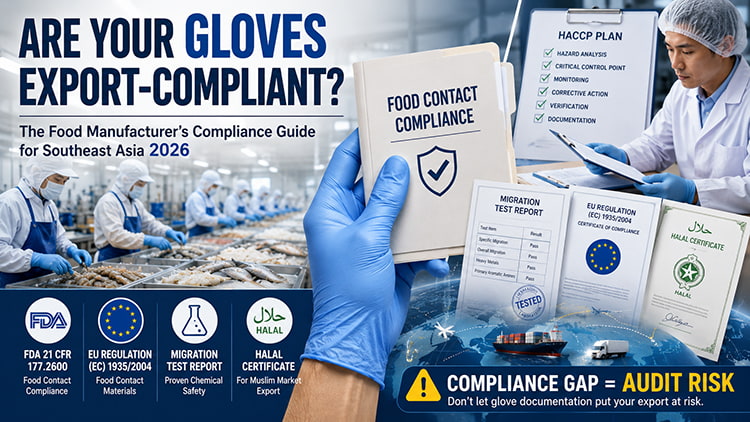
Glove Compliance for Southeast Asia Food Exporters: Vietnam, Indonesia and Thailand Certification Requirements in 2026
Southeast Asia's food export boom is creating new compliance demands for disposable gloves. This guide breaks down the certification requirements in Vietnam, Indonesia, Thailand and Malaysia — and what food manufacturers need to verify before their next procurement cycle. Southeast Asia's foo
2026-06-04
Regulatory Compliance
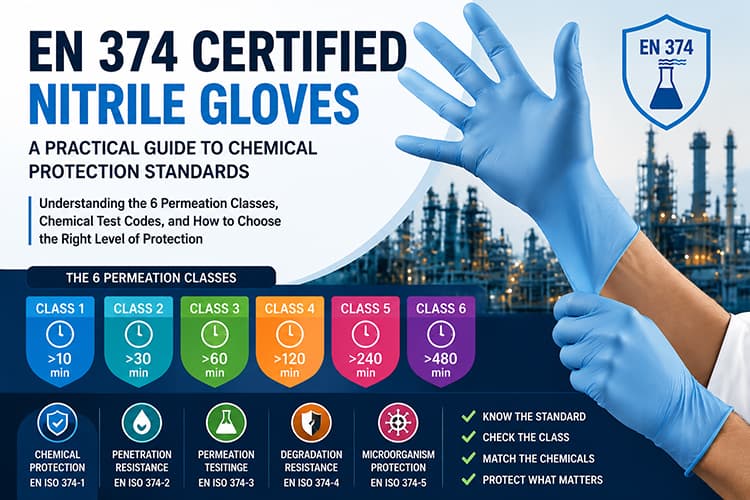
EN 374 Chemical Resistance for Disposable Gloves: What the 6 Permeation Classes Actually Mean
EN 374 is more than a certification label — it is a structured framework for measuring how long a glove can resist chemical breakthrough. This guide decodes all six permeation classes and explains how to match glove specifications to your actual workplace hazards. When a procurement man
2026-06-01

Regulatory Compliance
Gulf Market Glove Compliance Guide 2026: GSO Standards, Specifications & Supplier Checklist for UAE & Saudi Arabia
The Gulf Cooperation Council (GCC) region — encompassing Saudi Arabia, UAE, Qatar, Kuwait, Bahrain, and Oman — is one of the world's fastest-growing markets for disposable protective gloves. With a healthcare infrastructure expanding at pace with Vision 2030 initiatives and a grow
2026-05-06
Regulatory Compliance
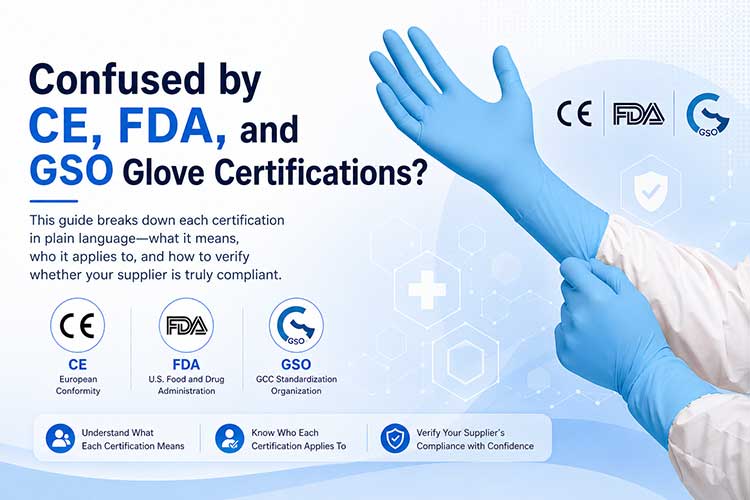
CE, FDA, and GSO Certification for Disposable Gloves: A Complete Guide for Importers in Europe, the US, and the Gulf
If you are importing disposable gloves — whether nitrile, PVC, or latex — the certification landscape can feel like an alphabet soup: CE, MDR, FDA, 510(k), GSO, EN 455, EN 374. And the stakes are high. Importing non-compliant PPE can result in customs rejection, product recalls, regulato
2026-04-29

Regulatory Compliance
Food-Grade Nitrile Gloves in 2026: What Every Food Industry Buyer Needs to Know About Compliance, Safety & Sourcing
Are your nitrile gloves truly food-safe? From FDA 21 CFR to EU Regulation 10/2011 and HACCP requirements — here's Jixiang's complete compliance guide for food industry buyers. In the food processing, catering, and retail sectors, "disposable gloves" is not a generic commodit
2026-04-15

Regulatory Compliance
FDA-Compliant Gloves for Food Processing: The Ultimate Safety Guide for Procurement Teams
Food safety isn’t just a checkbox for food processing facilities—it’s the foundation of consumer trust and brand reputation. At the heart of every safe production line? A pair of compliant gloves. For procurement managers and safety directors, choosing the right FDA-complia
2026-04-01

Regulatory Compliance
Why Do Disposable Gloves Need to Meet Food-Grade Standards?
Disposable gloves play a crucial role in food processing and catering. However, to ensure food safety and hygiene, disposable gloves must meet specific food-grade standards and certification requirements. Chemical Composition Food-grade certification testing involves examining the chem
2023-10-30