welcome to Jixiang E-commerce!

Blog

Home

Blog

  • The Disposable Gloves Industry: A Technological Revolution Shaping B2B Procurement
    The Disposable Gloves Industry: A Technological Revolution Shaping B2B Procurement
    Mar 25, 2026
          The disposable gloves industry is in the midst of a transformative technological revolution—driven by tightening environmental regulations, evolving global hygiene standards, and growing end-user demand for safer, more sustainable solutions. For B2B buyers, staying ahead of these innovations isn’t just a competitive advantage; it’s a necessity to future-proof procurement strategies, meet stakeholder expectations, and align with broader ESG (Environmental, Social, Governance) goals. Let’s dive into the key technological advancements reshaping the industry, and how they impact your procurement decisions.   The Sustainability Imperative: Biodegradable Gloves Lead the Charge Traditional disposable gloves have long posed a significant environmental challenge—one that’s becoming harder to ignore as regulations around single-use plastics tighten and sustainability becomes a non-negotiable for businesses worldwide. The Environmental Burden of Conventional Gloves Massive Volume: An estimated 300+ billion disposable gloves are discarded globally each year, flooding landfills and contributing to plastic waste. Slow Decomposition: Conventional nitrile and latex gloves can take 100+ years to break down in landfills, leaving a lasting environmental footprint. Regulatory Pressure: Governments and regulatory bodies are cracking down on single-use plastics, with new legislation affecting how gloves are disposed of and sourced.   Biodegradable Glove Technology: How It Works (Without Sacrificing Performance) The solution? Next-generation biodegradable nitrile gloves, engineered with proprietary additives that accelerate decomposition—without compromising the protection and durability B2B users rely on. Here’s the science behind it: Bio-Additives: Organic compounds attract microbes that break down polymer chains, kickstarting the decomposition process. Enzymatic Action: In anaerobic landfill environments (the most common type), enzymes trigger molecular breakdown, speeding up decomposition. Timeline: High-quality biodegradable gloves achieve 80%+ decomposition within 2-5 years—compared to 100+ years for conventional gloves. Key Note: Biodegradable gloves perform identically to conventional gloves during use. The degradation process only activates in landfill conditions, so you get full barrier protection and durability when you need it most. Performance vs. Cost: What B2B Buyers Need to Know Worried about trade-offs? Here’s a side-by-side comparison to help you evaluate: Property Conventional Gloves Biodegradable Gloves Barrier Protection Excellent Excellent Tensile Strength High High Puncture Resistance High High Chemical Resistance Excellent Excellent Shelf Life 3-5 Years 3-5 Years Landfill Decomposition 100+ Years 2-5 Years Cost Premium None +15-25% Top Market Applications for Biodegradable Gloves Biodegradable gloves are gaining traction across industries where sustainability is a priority: Healthcare: Hospitals and clinics with sustainability mandates are specifying biodegradable gloves for non-sterile applications (e.g., exam rooms, patient care). Food Service: Restaurants, caterers, and food processors with corporate ESG commitments prefer biodegradable options for food-handling gloves. Industrial: Companies with ISO 14001 certification use biodegradable gloves to support sustainability reporting and reduce their environmental impact.   Sourcing Tips for B2B Buyers: How to Choose a Reliable Biodegradable Supplier Not all biodegradable claims are created equal. Use these criteria to evaluate suppliers: Request Third-Party Testing Data: Legitimate claims should be backed by independent lab verification (e.g., ASTM D5511 or equivalent standards). Verify Shelf Stability: Ensure the biodegradation additives don’t shorten the glove’s shelf life—look for 3-5 years of stability. Check Certifications: Look for environmental certifications that validate sustainability claims (e.g., OK Compost, ASTM D6400). Evaluate Total Cost: Consider the 15-25% premium against the value of meeting sustainability requirements, avoiding regulatory fines, and aligning with customer demands. Antimicrobial Glove Technology: Adding an Extra Layer of Protection While disposable gloves already create a physical barrier against pathogens, antimicrobial technology takes protection to the next level—critical for industries where hygiene is non-negotiable. This innovation is particularly valuable as global health standards continue to evolve.   Why Antimicrobial Protection Matters Active Protection: Antimicrobial agents work continuously to inhibit bacterial and viral growth on the glove surface—even when the glove is in use. Reduced Cross-Contamination: Minimizes the transfer of pathogens between surfaces, patients, food, or samples. Extended Safety Margin: Provides extra protection during extended wear, when gloves may be more prone to contamination. Top Antimicrobial Technology Types Different antimicrobial technologies suit different applications—here’s how to choose: Silver-Ion Technology: Disrupts bacterial cell membranes, offering broad-spectrum efficacy and long-lasting protection (even through multiple uses). Ideal for high-hygiene environments. Chlorhexidine-Treated: Common in medical settings, effective against a wide range of pathogens. Note: May cause skin sensitivity in some users. Quaternary Ammonium Compounds: A cost-effective option with good general-purpose protection. Suitable for food-contact applications when properly formulated. Applications & Benefits Across Industries Healthcare: Enhanced protection during patient care, reduced cross-contamination between patients, and added safety in high-risk areas (ICU, surgical prep, isolation). Food Processing: An extra safety layer for food handling, supports HACCP compliance, and boosts consumer confidence in food safety. Laboratory & Pharmaceutical: Controls contamination in sensitive environments and reduces the risk of sample cross-contamination. Emerging Technologies to Watch in 2024 & Beyond The innovation doesn’t stop at biodegradable and antimicrobial gloves. These emerging technologies are set to redefine the industry even further—giving B2B buyers more options to meet evolving demands: Smart Gloves: Tech-Enabled Protection Integration of sensors and indicators is transforming gloves into “smart” tools: Puncture Detection: Visual or tactile alerts when glove integrity is compromised, preventing accidental exposure. Contamination Indicators: Color-changing gloves that detect chemical or biological exposure, providing real-time safety feedback. Usage Tracking: RFID or NFC tags for inventory management, usage monitoring, and compliance reporting.   Advanced Comfort Features Comfort is key for extended wear—and manufacturers are innovating to make gloves more user-friendly: Temperature-Regulating Materials: Maintain comfort in hot or cold environments, reducing hand fatigue during long shifts. Enhanced Tactile Sensitivity: Thinner formulations that don’t sacrifice barrier protection, ideal for precision tasks (e.g., laboratory work, medical procedures). Allergen-Free Alternatives: Beyond latex-free, addressing sensitivities to accelerators and other additives, expanding accessibility. Strategic Recommendations for B2B Buyers To leverage these innovations effectively, here’s how to build a procurement strategy that’s future-proof: Build a Tiered Product Portfolio: Offer customers options across the innovation spectrum: Economy Tier: Standard gloves for cost-sensitive, low-risk applications. Premium Tier: Biodegradable or antimicrobial gloves for sustainability-focused or high-hygiene customers. Innovation Tier: Smart gloves for industries that value real-time safety and data (e.g., healthcare, pharmaceuticals). Partner with Innovative Suppliers: Choose suppliers that invest in R&D and can provide transparent testing data—this ensures you’re getting high-quality, compliant products. Align with ESG Goals: Prioritize biodegradable options to reduce your environmental footprint and meet stakeholder expectations. Stay Ahead of Regulations: Monitor evolving legislation around single-use plastics and hygiene standards to avoid compliance risks. Final Thoughts The disposable gloves industry’s technological revolution is here—and it’s reshaping how B2B buyers source, select, and use gloves. By embracing biodegradable, antimicrobial, and emerging smart technologies, you can not only meet current demands but also position your business for long-term success. The key is to stay informed, evaluate suppliers carefully, and build a portfolio that balances cost, performance, and sustainability. Ready to upgrade your glove procurement strategy? Start by assessing your industry’s specific needs—whether it’s sustainability, enhanced hygiene, or smart functionality—and partner with suppliers that can deliver innovative solutions tailored to your business.   [Request a Factory Audit Report] About Fujian Jixiang E-commerce Co., Ltd. With over 20 years of experience, we specialize in manufacturing high-quality disposable gloves. Why Choose Us? ✅ Factory-direct pricing ✅ ISO/CE/FDA certified products ✅ OEM/ODM customization ✅ Global shipping to 50+ countries Contact Us: info@jxgloves.com
  • The Ultimate B2B Sourcing Guide for Disposable Gloves
    The Ultimate B2B Sourcing Guide for Disposable Gloves
    Mar 18, 2026
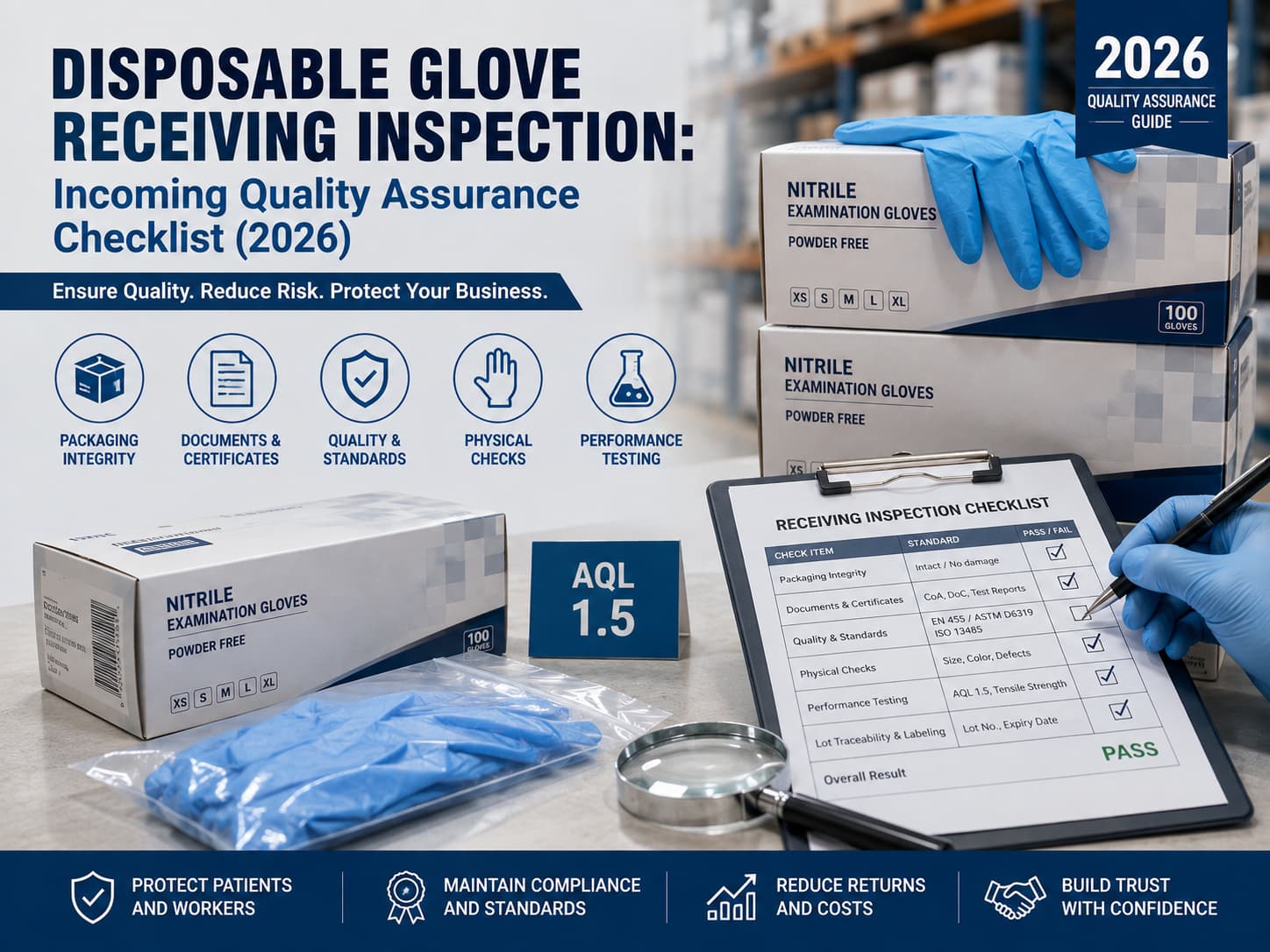
      What Procurement Managers Need to Know Introduction In today's global marketplace, procurement managers face increasing pressure to source high-quality disposable gloves at competitive prices while maintaining supply chain reliability. Whether you're purchasing for healthcare facilities, food processing plants, automotive workshops, or industrial applications, understanding the nuances of B2B glove sourcing can save your organization thousands of dollars annually while ensuring worker safety and regulatory compliance. This comprehensive guide will walk you through everything you need to know about bulk disposable glove procurement, from evaluating suppliers to optimizing costs and avoiding common pitfalls. B2B vs. B2C Purchasing Understanding the Key Differences Volume and Pricing Structure B2B purchases typically involve orders of 100,000+ units Tiered pricing based on volume commitments Negotiable terms for long-term contracts Customization options (branding, packaging, specifications) Quality Assurance Requirements Batch-level testing and certification Factory audit access Consistency across production runs Documentation for regulatory compliance Supply Chain Considerations Reliable lead times and delivery schedules Inventory management support Emergency supply capabilities Multi-location distribution options 10 Critical Factors When Sourcing 1. Material Selection Choose the right material for your application: Nitrile: Chemical resistance, latex-free, versatile Latex: Superior elasticity, tactile sensitivity PVC: Cost-effective, food-safe options available 2. Certification and Compliance Ensure products meet relevant standards: FDA 510(k) for medical applications CE marking for European markets ISO 13485 quality management ASTM standards (D6319, D3578, D5250) 3. Manufacturing Capacity Evaluate supplier production capabilities: Daily/monthly output capacity Multi-line production flexibility Quality control infrastructure Expansion capabilities 4. Lead Time and Reliability Understand delivery expectations: Standard production lead times (15-45 days) Express/emergency order capabilities Historical on-time delivery performance Communication responsiveness 5. Pricing Transparency Analyze total cost of ownership: Unit pricing at different volumes Shipping and logistics costs Payment terms and options Currency and tariff considerations 6. Quality Control Processes Verify quality assurance measures: Incoming raw material inspection In-process quality checks Final product testing protocols Third-party laboratory verification 7. Customization Options Explore value-added services: Private labeling and branding Custom packaging solutions Special formulations (color, thickness, texture) Bundle configurations 8. Geographic Considerations Factor in logistics advantages: Proximity to major ports Regional distribution capabilities Free trade zone benefits Local regulatory expertise 9. Financial Stability Assess supplier reliability: Company history and track record Financial health indicators Insurance coverage References from similar-sized buyers 10. Communication and Support Evaluate service quality: Dedicated account management Technical support availability Problem resolution processes Language capabilities How to Evaluate Suppliers Request Essential Documentation Before committing to a supplier, request: Business licenses and registration Quality certifications (ISO, CE, FDA) Factory audit reports Product test reports (recent batches) Client references (similar industries) Conduct Factory Audits Key areas to assess: Production environment cleanliness Equipment condition and maintenance Worker training and safety protocols Quality control checkpoints Raw material storage conditions Sample Testing Protocol Always request samples before large orders: Test multiple production batches Verify consistency in sizing and thickness Evaluate durability for your application Check packaging and labeling quality Cost Optimization Strategies MOQ Negotiation Start with supplier's standard MOQ Negotiate lower MOQ for trial orders Commit to volume for better pricing Consider blanket orders with scheduled releases Logistics Cost Reduction Consolidate shipments when possible Choose optimal shipping methods (sea vs. air) Utilize warehouse facilities near your operations Plan orders to avoid expedited shipping premiums Common Mistakes to Avoid 1. Focusing Solely on Price Lowest price often means compromised quality. Consider total value, including reliability, quality consistency, and service support. 2. Inadequate Sample Testing Never place large orders without thorough sample evaluation across multiple batches. 3. Ignoring Regulatory Requirements Ensure all products meet relevant standards for your industry and market before purchasing. 4. Single Supplier Dependency Maintain relationships with 2-3 qualified suppliers to mitigate supply chain risks. 5. Poor Communication Establish clear communication channels and expectations from the beginning of the relationship. 6. Neglecting Contract Details Document all specifications, terms, and conditions in writing to avoid disputes. Building Long-Term Supplier Relationships Successful B2B procurement is built on trust and mutual benefit. Be a Reliable Partner: Honor payment commitments Provide accurate demand forecasts Give adequate lead time for orders Provide feedback on product quality Expect the Same in Return: Consistent product quality Transparent communication Fair pricing practices Proactive problem resolution Conclusion Effective B2B sourcing of disposable gloves requires a strategic approach that balances cost, quality, reliability, and compliance. By following the guidelines in this comprehensive guide, procurement managers can build strong supplier relationships, optimize costs, and ensure a steady supply of high-quality gloves for their organizations. Remember: the cheapest option is rarely the best value. Focus on total cost of ownership, supplier reliability, and long-term partnership potential. Next Steps Ready to optimize your glove procurement strategy? Get detailed insights into our manufacturing capabilities, quality control processes, and certification documentation. Contact our B2B sales team today to discuss your bulk disposable glove requirements.   [Request a Factory Audit Report] About Fujian Jixiang E-commerce Co., Ltd. With over 20 years of experience, we specialize in manufacturing high-quality disposable gloves. Why Choose Us? ✅ Factory-direct pricing ✅ ISO/CE/FDA certified products ✅ OEM/ODM customization ✅ Global shipping to 50+ countries Contact Us: info@jxgloves.com
  • Top 5 Benefits of Nitrile Gloves for Medical and Industrial Applications
    Top 5 Benefits of Nitrile Gloves for Medical and Industrial Applications
    Mar 16, 2026
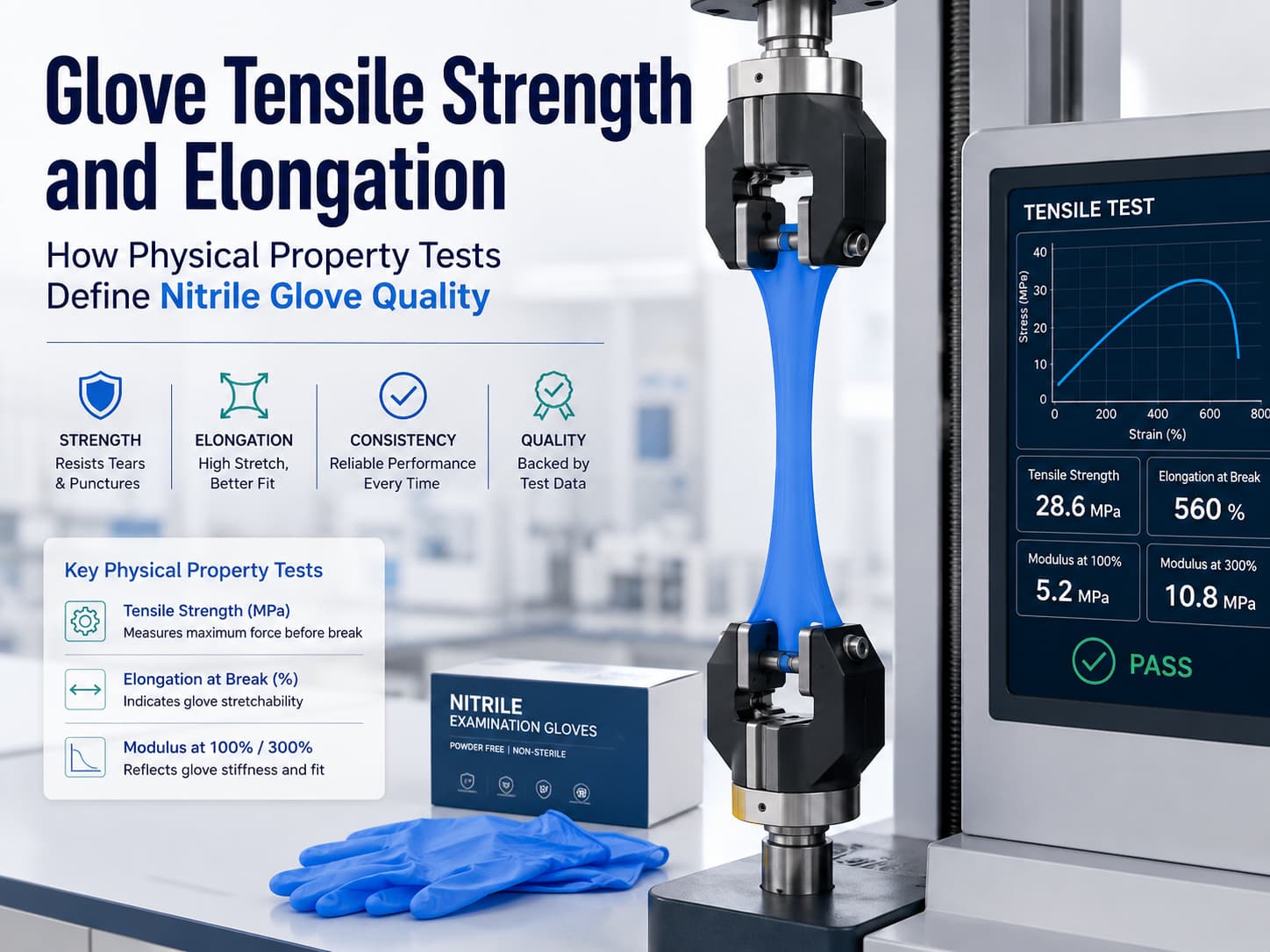
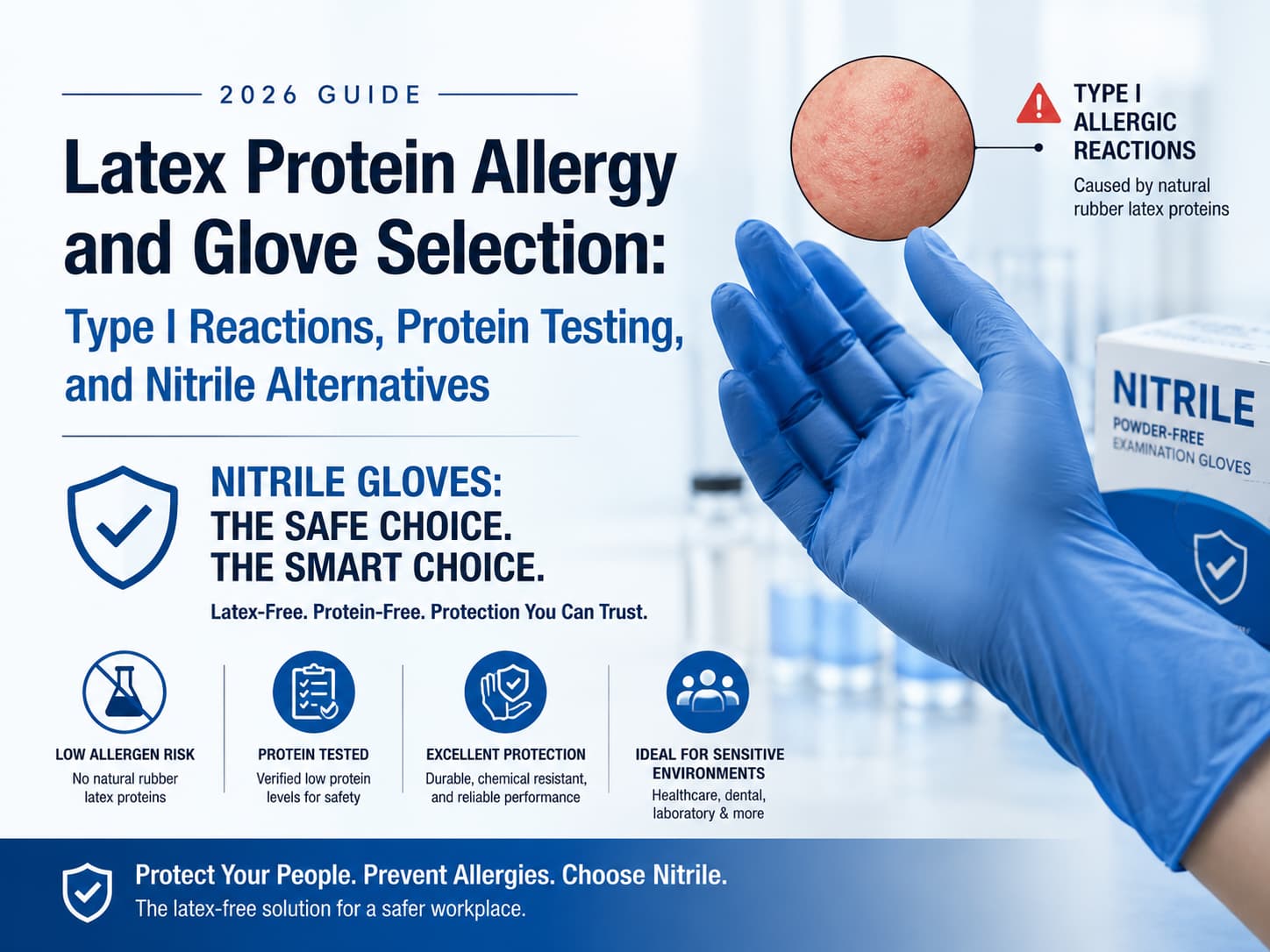
      Top 5 Benefits of Nitrile Gloves for Medical and Industrial Applications Discover why nitrile gloves have become the preferred choice across healthcare, manufacturing, and laboratory environments. Introduction The global disposable gloves market is projected to reach $18.3 billion by 2027, with nitrile gloves leading the growth. But what makes them so popular?   What Are Nitrile Gloves? Nitrile gloves are made from synthetic rubber (nitrile butadiene rubber), making them: 100% latex-free Hypoallergenic More durable than latex or vinyl Chemical resistant   First developed in the 1990s as a latex alternative, nitrile gloves have evolved to become the preferred choice for high-performance applications. Benefit #1: Superior Puncture and Tear Resistance The Strongest Disposable Glove Option Nitrile gloves are 3-5 times more puncture-resistant than latex gloves. Real-World Impact: Healthcare workers handling sharps (needles, scalpels) Mechanics working with metal parts Laboratory technicians Manufacturing workers Testing Data: Puncture resistance: 20-30 Newtons Tensile strength: 14-28 MPa Elongation: 400-600%   Benefit #2: Excellent Chemical Resistance   Protection Against Hazardous Substances Chemicals Nitrile Resists: ✅ Oils and greases ✅ Solvents (alcohol, acetone) ✅ Acids (weak concentrations) ✅ Bases and alkalis ✅ Fuels and hydrocarbons Industries That Benefit:   Automotive: Engine oil, brake fluid, transmission fluid Healthcare: Chemotherapy drugs, disinfectants Laboratory: Chemical reagents, solvents Manufacturing: Cleaning agents, lubricants Chemical Resistance Comparison: Material Oils Solvents Acids Overall Rating Nitrile Excellent Good Good ⭐⭐⭐⭐⭐ Latex Poor Poor Fair ⭐⭐ PVC Fair Poor Fair ⭐⭐ Benefit #3: Latex-Free and Hypoallergenic Solving the Latex Allergy Problem The Latex Allergy Crisis: 8-12% of healthcare workers have latex allergies 1-6% of general population is sensitive Reactions range from irritation to anaphylaxis Nitrile: The Safe Alternative: 100% latex-free No natural rubber proteins Safe for latex-sensitive individuals Zero allergic reactions reported Why This Matters: Reduced workers' compensation claims Fewer sick days Compliance with safety regulations Protection for employees and customers Benefit #4: Superior Grip and Tactile Sensitivity Enhanced Performance in All Conditions Textured Surface Technology: Micro-textured fingertips Excellent grip in wet conditions Superior handling of instruments Non-slip with oily surfaces Applications Requiring Superior Grip:   Surgical procedures: Handling instruments Dental work: Managing small tools Automotive repair: Working with oily parts Laboratory: Handling test tubes Tactile Sensitivity Comparison: Feature Nitrile Latex PVC Touch Sensitivity Excellent Superior Good Wet Grip Excellent Good Fair Dry Grip Excellent Excellent Good Innovation: Diamond-textured nitrile gloves offer 360° grip, perfect for mechanics. Benefit #5: Cost-Effective and Long-Lasting   Better Value Than You Think Upfront Cost vs. Total Cost: While nitrile costs 20-30% more upfront, it provides better value: ✅ Fewer glove changes (3x longer lasting) ✅ Reduced waste (less tearing) ✅ Lower allergy-related costs ✅ Better protection (fewer accidents) Cost Comparison: Factor Nitrile Latex PVC Cost per pair $0.10-0.20 $0.05-0.12 $0.03-0.08 Avg uses/task 1 pair 2-3 pairs 2-3 pairs Allergy risk $0 $5-50/incident $0 Durability High Medium Low   Real Savings Example: A dental clinic using 500 pairs/week: Latex: $30/week + allergy incidents Nitrile: $50/week (40% fewer changes) Net savings: $15-30/week Long Shelf Life: 3-5 years vs Latex 1-3 years Bonus Benefits 🔥 Heat Resistance: Up to 150°F 🎨 Color Options: Blue: Medical standard Black: Automotive/industrial White: Cleanroom Orange: High-visibility ⚡ Anti-Static: Electronics manufacturing 🌿 Eco-Friendly: Biodegradable options Conclusion Nitrile gloves offer unmatched protection, comfort, and versatility. Key Takeaways: Strongest option (3-5x stronger than latex) Best chemical resistance 100% latex-free Superior grip Cost-effective "Request Free Quote" About Fujian Jixiang E-commerce Co., Ltd. We are a leading manufacturer of premium nitrile, latex, and PVC disposable gloves, serving 50+ countries worldwide. Our Commitment: ✅ ISO 13485 certified ✅ CE and FDA approved ✅ Factory-direct pricing ✅ OEM/ODM customization ✅ Fast global shipping Contact Us: 📧 Email: info@jxgloves.com 🌐 Website: www.jxgloves.com Request a Quote or Free Sample Today!
  • How to Choose the Right Disposable Gloves for Your Industry
    How to Choose the Right Disposable Gloves for Your Industry
    Mar 13, 2026
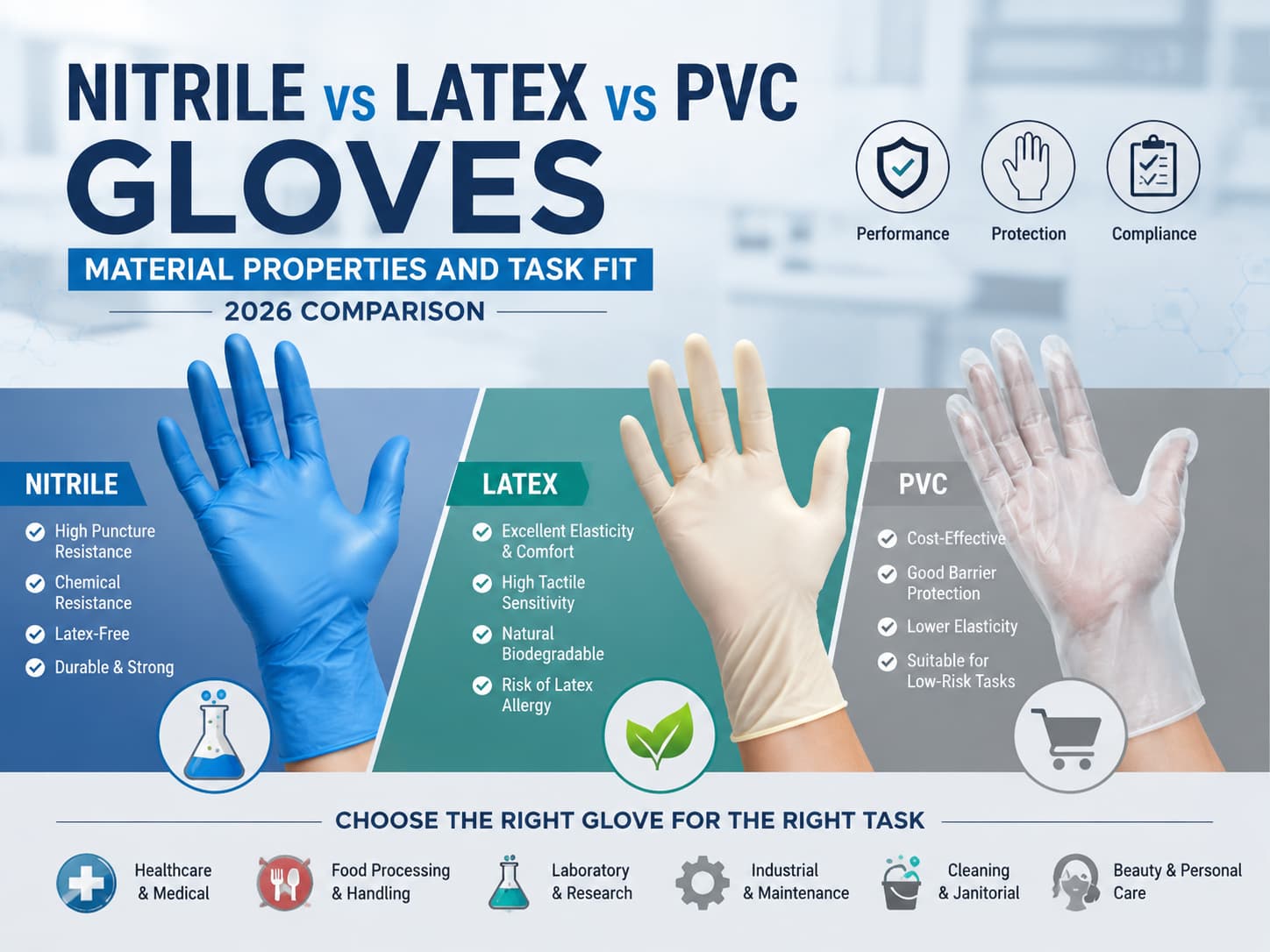
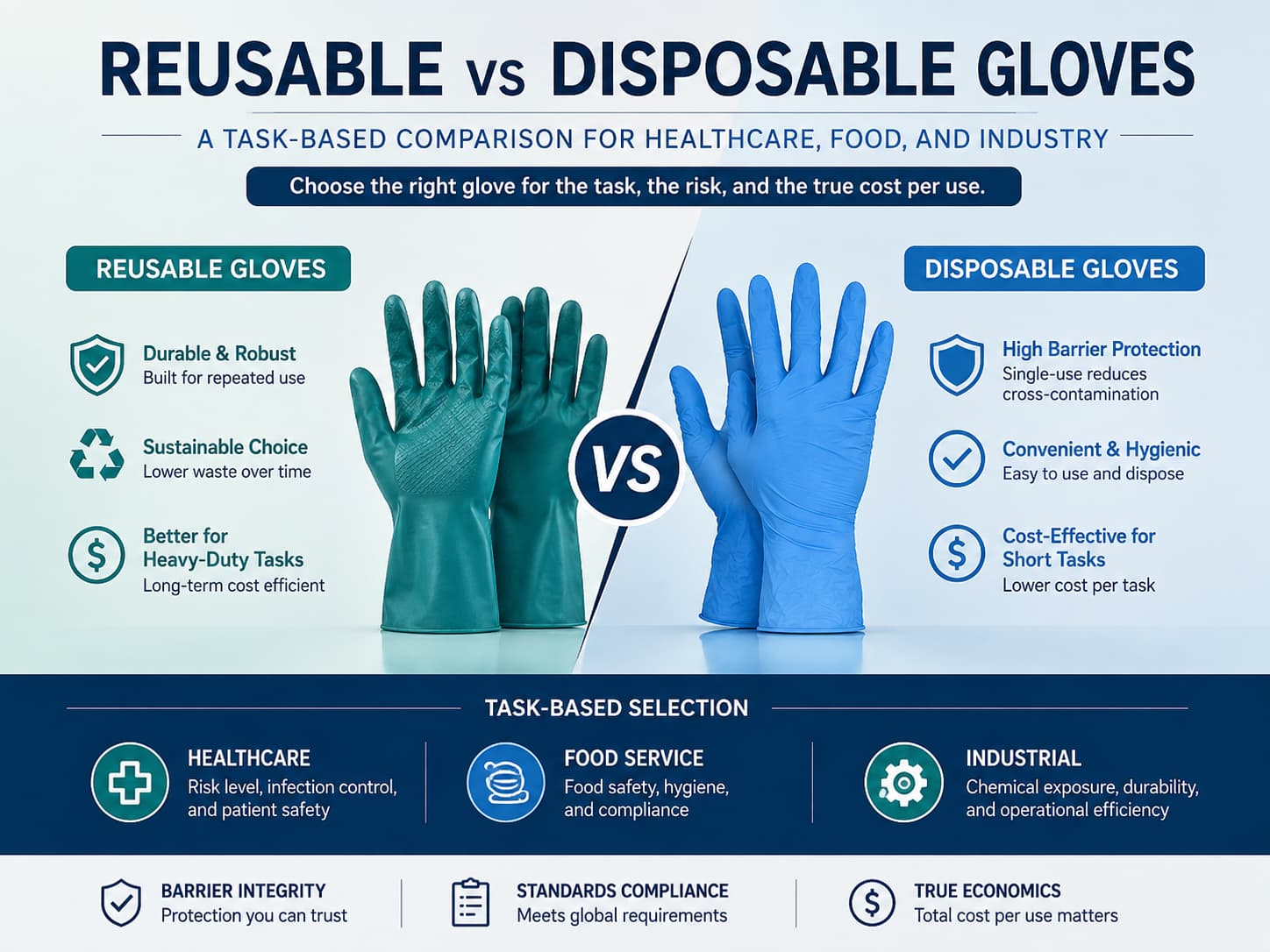
      How to Choose the Right Disposable Gloves for Your Industry Choosing the perfect disposable gloves can be challenging. This guide will help you select the right gloves for healthcare, food service, industrial, and laboratory applications. Introduction Disposable gloves are essential protective equipment across numerous industries, from healthcare facilities to manufacturing plants. However, not all gloves are created equal. Selecting the wrong type can lead to safety hazards, allergic reactions, or unnecessary costs.   With over 20 years of experience in the disposable glove industry, we've helped thousands of businesses find the perfect glove solutions. In this guide, we'll break down everything you need to know to make an informed decision. Understanding the Three Main Types of Disposable Gloves 1. Nitrile Gloves   Best for: Healthcare, automotive, chemical handling, laboratories Key Benefits: ✅ Superior chemical resistance ✅ Puncture-resistant (3x stronger than latex) ✅ Latex-free (no allergy concerns) ✅ Excellent grip in wet conditions ✅ Long shelf life Ideal Applications: Medical examinations Chemical handling Automotive repair Laboratory work Tattoo and piercing Why Choose Nitrile? Nitrile gloves are the gold standard for industries requiring durability and chemical protection. Made from synthetic rubber, they offer the best puncture resistance among disposable gloves. Pro Tip: For extended wear, choose thicker nitrile gloves (6-8 mil) for industrial applications, and thinner options (3-5 mil) for medical examinations. 2. Latex Gloves   Best for: Medical/surgical procedures, dental, laboratory Key Benefits: ✅ Superior fit and comfort ✅ Excellent tactile sensitivity ✅ Biodegradable (eco-friendly) ✅ Cost-effective ✅ Elastic and form-fitting Ideal Applications: Surgical procedures Dental examinations Laboratory work Cleaning and sanitation Important Note: Approximately 1-6% of the population has latex allergies. Always offer latex-free alternatives in healthcare settings. 3. PVC (Vinyl) Gloves   Best for: Food service, cleaning, light industrial work Key Benefits: ✅ Most affordable option ✅ Latex-free and powder-free ✅ Loose fit for easy on/off ✅ Good for short-term use ✅ Suitable for food handling Ideal Applications: Food preparation and handling Cleaning and janitorial work Hair salons Light industrial tasks Did You Know? The FDA requires food handlers to use gloves when preparing ready-to-eat foods to prevent bacterial contamination. Industry-Specific Recommendations Healthcare & Medical Recommended: Nitrile or Latex (powder-free) Why: Medical-grade protection required High puncture resistance essential Powder-free prevents contamination Thickness: 4-6 mil Standards: ASTM D6319 (nitrile), ASTM D3578 (latex) Food Service & Processing Recommended: PVC or Nitrile Why: FDA-approved for food contact Cost-effective for frequent changes Safe for all food types Thickness: 3-5 mil Standards: FDA 21 CFR 177.2600 Pro Tip: Blue nitrile gloves are preferred in food processing—they're easily visible if a piece falls into food. Automotive & Industrial Recommended: Heavy-duty Nitrile (6-8 mil) Why: Oil and chemical resistance Superior puncture protection Enhanced grip for tools Thickness: 6-8 mil Standards: EN 374 (chemical resistance) Laboratory & Research Recommended: Chemical-resistant Nitrile Why: Chemical splash protection Contamination prevention Powder-free essential Thickness: 5-8 mil Standards: ASTM D6319, EN 374, EN 455 5 Key Factors to Consider When Choosing Gloves 1. Material Allergies Always offer latex-free options Nitrile is safe for latex-sensitive individuals 2. Chemical Exposure Check chemical compatibility charts Nitrile: Excellent for oils, solvents, chemicals 3. Duration of Use Short tasks (<30 min): PVC or thin nitrile Extended wear (>1 hour): Thicker nitrile 4. Fit and Comfort Proper sizing prevents hand fatigue Latex offers best fit 5. Cost Considerations Material Cost per Pair Durability Best Value PVC $0.03-0.08 Low High volume, short use Latex $0.05-0.12 Medium Medical, surgical Nitrile $0.08-0.20 High Industrial, long use   Glove Sizing Guide   Size Palm Width (mm) Hand Length (mm) XS 60-75 150-160 S 70-85 160-170 M 80-95 170-180 L 90-105 180-190 XL 100-115 190-200 How to Measure: Measure around your dominant hand at the widest point Measure from the tip of your middle finger to your wrist Use the larger measurement to determine size Quality Standards to Look For Medical Gloves: FDA 510(k) Clearance (USA) CE Marking (Europe) ISO 13485 (Quality Management) ASTM D6319 (Nitrile) / ASTM D3578 (Latex) Industrial Gloves: EN 374 (Chemical Resistance) EN 388 (Mechanical Risks) Food Gloves: FDA 21 CFR 177.2600 (Food Contact) Common Mistakes to Avoid ❌ Using latex gloves with oil-based products ❌ Reusing disposable gloves ❌ Choosing wrong size ❌ Ignoring chemical compatibility ❌ Storing gloves in direct sunlight Conclusion Selecting the right disposable gloves is crucial for safety, comfort, and cost-efficiency. Quick Summary: Healthcare: Nitrile or Latex (medical-grade) Food Service: PVC or Nitrile (FDA-approved) Industrial: Heavy-duty Nitrile (6-8 mil) Laboratory: Chemical-resistant Nitrile "Request Free Quote" About Fujian Jixiang E-commerce Co., Ltd. With over 20 years of experience, we specialize in manufacturing high-quality disposable gloves. Why Choose Us? ✅ Factory-direct pricing ✅ ISO/CE/FDA certified products ✅ OEM/ODM customization ✅ Global shipping to 50+ countries Contact Us:info@jxgloves.com
  • Why Do Disposable Gloves Need to Meet Food-Grade Standards?
    Why Do Disposable Gloves Need to Meet Food-Grade Standards?
    Oct 31, 2023
    Disposable gloves play a crucial role in food processing and catering. However, to ensure food safety and hygiene, disposable gloves must meet specific food-grade standards and certification requirements.    Chemical Composition Food-grade certification testing involves examining the chemical composition of gloves to ensure they do not contain harmful substances such as heavy metals and toxic materials.   Residue Testing Residue testing is conducted to check for harmful substances and additives in gloves, ensuring they do not contaminate food.    Physical Properties Food-grade certification also includes testing the physical properties of gloves, such as abrasion resistance and puncture resistance, to ensure that gloves do not generate debris or damage during use.   Microbiological Testing Microbiological levels on the surface of gloves are examined to ensure that gloves do not serve as carriers for bacteria and viruses.   Allergen Testing Food-grade certification also involves testing for allergenic substances in gloves to prevent allergic reactions in users.   I recommend these gloves even more for food contact and safety.   Disposable Latex gloves are known for their excellent elasticity and comfort, making them suitable for food processing and catering. However, it's important to note that some individuals may have latex allergies, so alternative options such as nitrile gloves are often preferred to mitigate this risk.   Disposable Nitrile gloves, as latex substitutes, offer good chemical resistance and strength, making them a popular choice in food handling environments. They provide an effective barrier for food handling while addressing concerns related to latex allergies.   Disposable Vinyl PVC gloves, known for their transparency and affordability, are commonly used for simple food handling and catering services. These gloves are lightweight and cost-effective, making them suitable for short-term, low-risk food handling tasks.   In the food industry, using disposable gloves that meet food-grade standards is a crucial step in ensuring food safety and hygiene. We hope this article helps you better understand why disposable gloves need to meet food-grade standards.
Contact Us
Unit 1301-1, No. 3, Xixishan Wei Road, Software Park phase III, Torch High-tech Zone,Xiamen City, Fujian Province, China
+86-592-6511055
+86 -15750719843
Subscribe

Copyright 2026@ Fujian Jixiang E-commerce Co., Ltd All Rights Reserved. Sitemap | Blog | Xml | Privacy Policy Network Supported

leave a message

Leave A Message
If you are interested in our products and want to know more details,please leave a message here,we will reply you as soon as we can.
Submit

Home

Products

whatsApp

contact