Nitrile Gloves for Laboratory and Research Use - Selection Guide (2026)
Oct 12, 2026
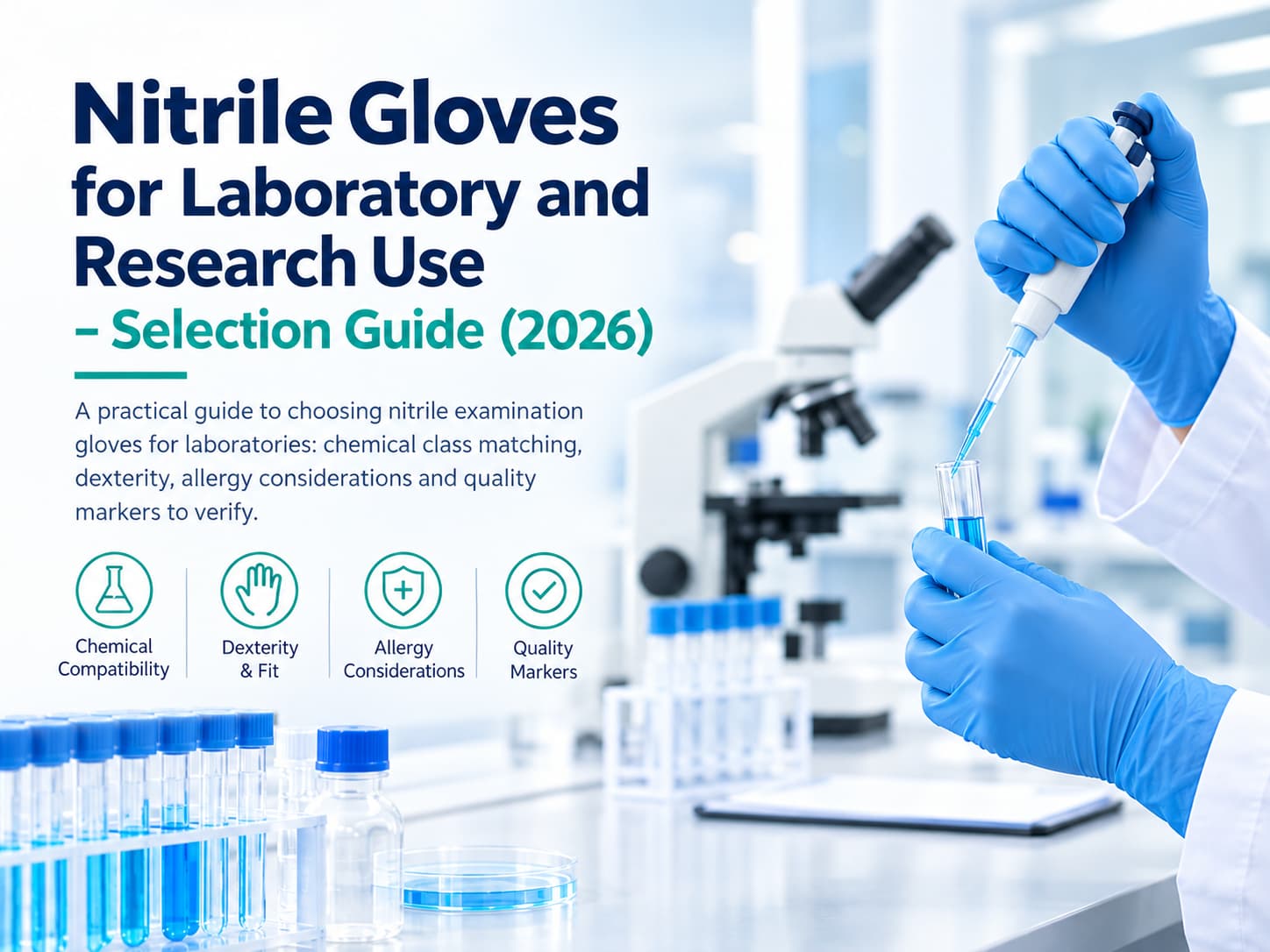
A practical guide to choosing nitrile examination gloves for laboratories: chemical class matching, dexterity, allergy considerations and quality markers to verify.
Nitrile examination gloves are the default hand protection in modern laboratories because they combine a synthetic polymer barrier against water-based chemicals and biological agents with high tactile sensitivity, low protein-allergy risk and compliance with ASTM D6319 or EN 455. Choosing the right laboratory glove, however, is not a one-line decision: it depends on the chemicals handled, the precision of the task, and the regulatory context of the lab.
Market context first. Brent crude held above 103 USD/bbl on 12 October 2026 (Data sources:生意社 (SunSirs) Brent benchmark 104.72 USD/bbl, 2026-10-12; ICE Brent intraday ~103.3-103.8 USD/bbl, 2026-10-12.), keeping butadiene and acrylonitrile - the two feedstocks of nitrile rubber - at elevated levels. For laboratory buyers this means pricing pressure will persist into 2027, so specifying the correct glove the first time avoids both over-specification waste and under-specification risk.
1. Match the Glove to the Chemical Class
Chemical class in the lab
Typical examples
Recommended glove choice
Key reference
Water-based solutions and buffers
Saline, PBS, cell culture media
Standard 4-mil nitrile exam glove
EN 455 / ASTM D6319
Dilute acids, bases and detergents
10% HCl, 1M NaOH, cleaning agents
Nitrile, double gloved or thicker 6-mil
EN 374 Type C/B
Organic solvents
Toluene, chloroform, methanol
Heavy-duty reusable nitrile, not disposable
EN 374 Type A
Cytostatic drugs
Cisplatin, cyclophosphamide
Chemo-tested nitrile
ASTM D6978
Biological samples
Blood, urine, cultures
Nitrile exam glove, AQL 1.5 or better
ISO 11193-1:2020
The single most common laboratory error is using a disposable exam glove for solvent work. Nitrile rubber resists hydrocarbons far better than latex or PVC, but disposable wall thickness (0.05 to 0.08 mm) gives only minutes of protection against aggressive solvents. Disposable means barrier for a task window, not a tank suit.
2. Precision, Grip and Dexterity
EN ISO 21420 (formerly EN 420) grades dexterity from 1 to 5. Pipetting, micro-instrument handling and microscopy work benefit from 4-mil and thinner nitrile with textured fingertips; thicker 6-mil to 8-mil gloves sacrifice touch for added chemical dwell time. Thumb-and-forefinger textured zones are a useful middle ground for manual dosing tasks.
3. Allergy and Skin Health Considerations
Latex gloves carry Type I protein allergy risk, which is why most research and diagnostic labs have moved to nitrile rubber. Residual accelerators (thiurams, carbamates, MBT) in standard nitrile can still trigger Type IV contact dermatitis; accelerator-free formulations exist for sensitised staff. Powder-free is the default in any lab handling samples or optics, since powder particles contaminate surfaces and interfere with assays.
4. Quality Markers to Verify Before Purchasing
Quality marker
What to check
Acceptable reference
AQL
Water-tightness level on the box and CoC
AQL 1.5 or lower for exam use; AQL 4.0 is industrial only
Physical properties
Tensile and elongation per ASTM D6319
>= 14 MPa tensile before and after aging; elongation >= 500% (unaged) / >= 400% (aged)
Food/medical intent
Certification matches lab context
ISO 11193-1:2020 for medical-adjacent labs
Documentation
TDS and CoC match the delivered batch
Reconcile batch numbers on arrival
Source note: physical-property values follow ASTM D6319 and EN 455-2 as published by the standards bodies; chemical guidance follows EN 374-1 permeation classification.
5. Cost Logic Under High Raw-Material Prices
With nitrile rubber feedstocks elevated (Data sources:生意社 (SunSirs) Brent benchmark 104.72 USD/bbl, 2026-10-12; ICE Brent intraday ~103.3-103.8 USD/bbl, 2026-10-12.), the efficient procurement pattern is: one standard 4-mil exam glove for the majority of tasks, one chemo-tested or 6-mil variant for high-risk benches, and reusable heavy nitrile for solvent rooms. This three-tier kit prevents the classic waste pattern of chemo-grade gloves used for PBS dilutions.
FAQ
Q: Which gloves are best for laboratory work?
A: Nitrile examination gloves certified to ASTM D6319 or EN 455 are the best default for laboratory work, because they combine chemical resistance to water-based agents, low allergy risk and high dexterity. For organic solvents use heavy-duty reusable nitrile instead of disposable gloves.
Q: Can disposable nitrile gloves protect against methanol or toluene?
A: Only for brief splash contact. Disposable nitrile walls of 0.05 to 0.08 mm allow organic solvents to permeate within minutes, so standards bodies direct solvent work to thicker reusable chemical gloves tested under EN 374 Type A.
Q: Why do labs prefer nitrile over latex gloves?
A: Labs prefer nitrile rubber because it eliminates Type I latex protein allergy risk, offers better chemical resistance, and is available in accelerator-free and powder-free versions suited to sample integrity.
Q: What does dexterity rating 5 mean on a laboratory glove?
A: Under EN ISO 21420 (formerly EN 420), dexterity is scored 1 to 5; level 5 is the highest precision rating and matters for pipetting, microscopy and fine-instrument handling.
Q: How often should lab gloves be changed?
A: Change gloves immediately after suspected splash, before touching keyboards or phones, and at any task switch. Chemical dwell time on disposables is measured in minutes, so extended wear is not extended protection.



 Network Supported