Latex Protein Allergy and Glove Selection: Type I Reactions, Protein Testing, and Nitrile Alternatives (2026 Guide)
Aug 25, 2026
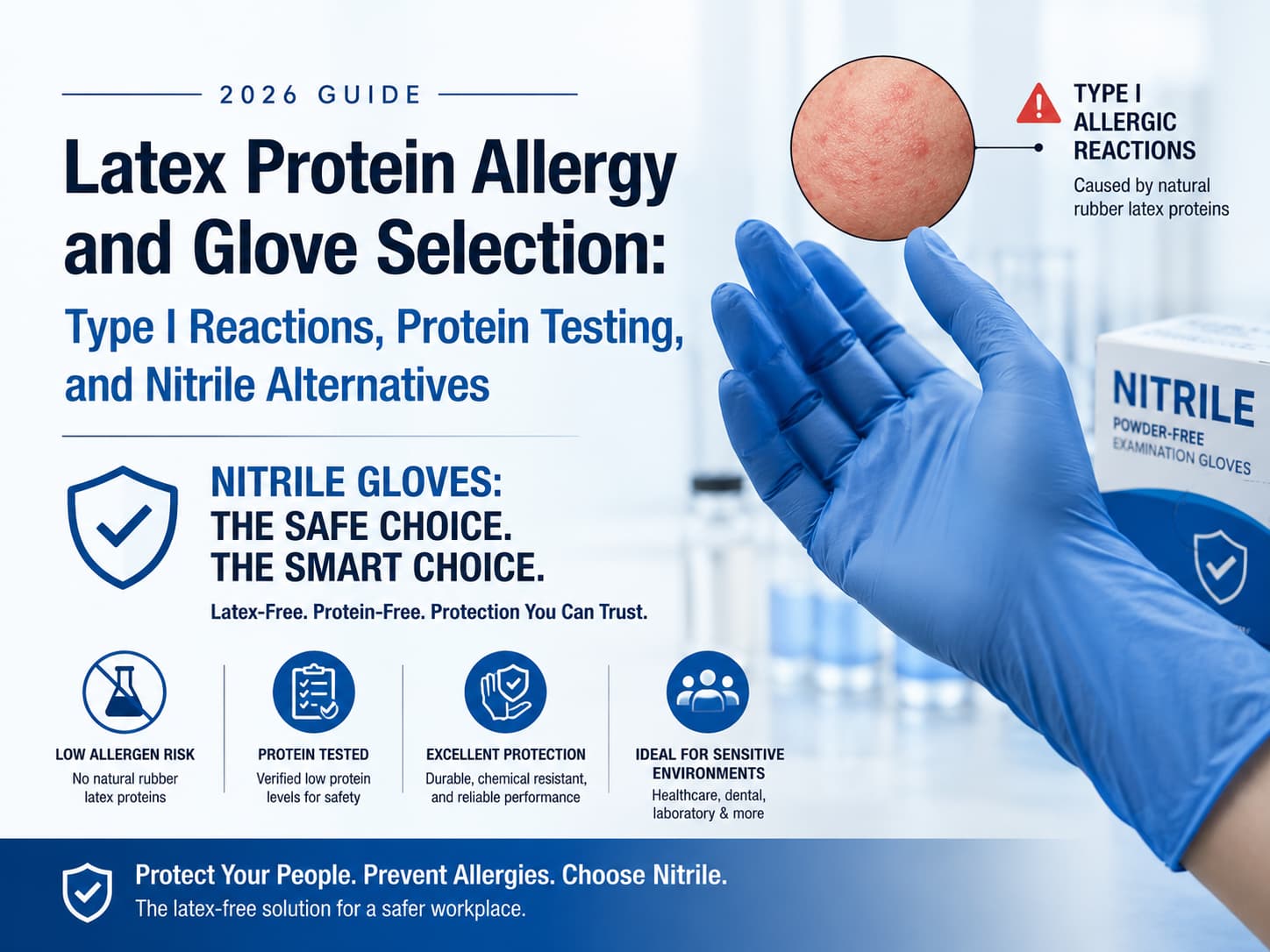
Latex protein allergy is a Type I IgE-mediated reaction that can escalate from skin irritation to anaphylaxis. This guide explains how latex proteins trigger allergy, how protein testing works (ASTM D5712, ISO 12243), and why nitrile gloves are the safer, cost-effective choice for healthcare and industry in 2026.
Latex protein allergy (Type I) is one of the most serious occupational health issues associated with medical gloves. Unlike contact dermatitis, which is a skin reaction, Type I latex allergy is an immediate hypersensitivity reaction mediated by immunoglobulin E (IgE). It can progress from hives to life-threatening anaphylaxis in minutes. This guide explains the science behind latex protein allergy, the testing used to quantify it, and why switching to nitrile rubber gloves has become standard practice in healthcare and industry.
1. What Is Type I Latex Protein Allergy?
Latex gloves are made from natural rubber latex, a milky fluid harvested from the Hevea brasiliensis tree. This fluid naturally contains proteins, and some of these proteins are antigens: when they contact skin, mucous membranes, or the bloodstream, the immune system of sensitive individuals produces IgE antibodies. On re-exposure, the antibodies trigger the release of histamine and other chemicals, producing symptoms within minutes.
Because Type I reactions are systemic and potentially fatal, they are distinct from Type IV contact dermatitis (a delayed T-cell-mediated reaction caused by chemicals such as accelerators). The table below summarizes the differences.
Feature
Type I (Immediate)
Type IV (Delayed)
Mechanism
IgE-mediated
T-cell mediated
Trigger
Latex proteins
Accelerators, vulcanization chemicals
Onset
Minutes
6-48 hours
Symptoms
Hives, rhinitis, asthma, anaphylaxis
Itchy rash, blisters, cracking
Glove material involved
Natural rubber latex
Latex and nitrile (accelerator chemicals)
Severity
Can be life-threatening
Usually local, rarely systemic
Prevention
Latex-free gloves (nitrile, PVC, TPE)
Accelerator-free formulations
2. Who Is at Risk?
Prevalence studies from the 1990s-2000s, when powdered latex gloves were widely used, reported latex protein sensitization in roughly 8-17% of healthcare workers with heavy exposure. Rates have fallen sharply in markets that moved to powder-free and low-protein gloves, but risk groups remain:
Healthcare and dental workers with years of glove exposure
Patients with spina bifida or repeated surgeries (frequent latex exposure via catheters and gloves)
Workers in laboratories, food processing, and cleaning who wear latex gloves daily
Atopic individuals (those with existing allergies, eczema, or asthma)
Workers in glove manufacturing itself
3. Symptoms and Diagnosis
Type I reactions present across three severity levels:
Skin: contact urticaria (hives) within minutes at the contact site
Respiratory: sneezing, runny nose, itchy eyes, asthma-like wheezing
Systemic: angioedema, hypotension, anaphylaxis (medical emergency)
Diagnosis is confirmed by an allergist using skin-prick tests with latex extract, specific IgE blood tests, or a supervised glove-use test. Anyone with suspected latex allergy should be evaluated before anaphylaxis occurs, and should carry an epinephrine auto-injector if confirmed.
4. Protein Testing Standards
Because proteins are the trigger, quantifying them is the core of latex glove safety. Three methods dominate:
ASTM D5712: modified Lowry method for analysis of protein in natural rubber and its products; the most commonly cited test for water-extractable protein on glove surfaces
ISO 12243: determination of water-extractable protein in medical gloves made from natural rubber latex using the modified Lowry method; a harmonized approach for international markets
EN 455-3: the EU biological evaluation standard, which requires protein testing (extractable latex proteins play a central role in latex allergy) plus powder and endotoxin limits
Buyers should request the protein test report (usually expressed in micrograms per gram, mg/g, or micrograms per square decimeter) with every latex glove batch. Powder-free latex gloves typically have far lower protein content than powdered ones, because powder binds and carries proteins into the air, where they are inhaled.
5. Regulatory Actions Against Latex Exposure
FDA ban on powdered surgeon and powdered patient examination gloves (effective January 2017) because powder increases protein exposure and aerosolization
EU medical device rules (currently Regulation (EU) 2017/745) require biocompatibility evaluation of gloves, including sensitization testing under ISO 10993-10
WHO and CDC guidance has long recommended latex-free protocols where Type I allergy risk exists
Many hospitals and food facilities have adopted 100% latex-free policies for this reason
6. Why Nitrile Rubber Gloves Are the Safer Choice
Nitrile rubber (acrylonitrile butadiene rubber, ACN + butadiene) is a synthetic polymer that contains no latex proteins at all. It delivers the barrier performance that latex is famous for, without the allergy risk.
Property
Natural rubber latex
Nitrile rubber
Latex proteins
Present - Type I allergy risk
None
Barrier vs pathogens
Excellent (EN 455 certified)
Excellent (EN 455 / ASTM D6319 certified)
Chemical resistance
Moderate
Better (oils, solvents, many chemicals)
Puncture resistance
Good
Better
Tensile strength
Very high (18+ MPa typical)
High (14+ MPa per ASTM D6319)
Elongation
Very high (650-700%+)
400-600%
Cost (2026)
Moderate
Competitive; premium in acute shortages
Type IV risk
Low-moderate
Low-moderate (accelerator chemicals; accelerator-free options exist)
The practical result: nitrile gloves now dominate medical examination, dental, laboratory, food service, and industrial applications in most markets.
7. Building a Latex-Free Procurement Policy
Audit current usage: identify every latex glove and latex-containing product (catheters, tourniquets, bandages) in the facility
Choose alternatives: nitrile rubber for exam and general tasks; PVC or TPE for low-risk food handling; specialized gloves for chemo and cleaning
Verify certification: EN 455 (EU) or ASTM D6319 with FDA 510(k) (US) for medical use; keep batch test reports on file
Train staff: communicate the difference between Type I and Type IV, and how to recognize symptoms
Label high-risk areas: maintain clearly marked latex-free zones in ORs, dental suites, and allergy clinics
Review TDS data: request protein test reports from any supplier that still supplies latex gloves
Data sources: prevalence literature on latex protein sensitization (8-17% in high-exposure healthcare workers, pre-powder-free transition); FDA final rule banning powdered gloves (2016, effective 2017); ASTM D5712; ISO 12243; EN 455-3; EN ISO 21420 (formerly EN 420) for general glove requirements; ISO 10993-10. Information current as of August 2026; verify regulatory status before procurement decisions.
FAQ
Q: What is the difference between Type I and Type IV glove allergies?
A: Type I is an immediate IgE-mediated reaction to latex proteins, with symptoms appearing within minutes (hives, rhinitis, asthma, and in severe cases anaphylaxis). Type IV is a delayed T-cell-mediated contact dermatitis caused by chemicals such as accelerators, appearing 6-48 hours after exposure, and it can affect both latex and nitrile glove wearers. Nitrile gloves eliminate Type I risk (no latex proteins) but some users may still develop Type IV reactions to accelerator chemicals, which is why accelerator-free nitrile gloves exist.
Q: How do I know if I am allergic to latex?
A: A doctor (allergist) can confirm latex allergy with a skin-prick test using latex extract, a specific IgE blood test, or a supervised glove-use test. Common signs include hives where the glove touched the skin, sneezing, itchy eyes, or wheezing within minutes of putting on a latex glove. Anyone with suspected Type I latex allergy should be formally evaluated, because repeated exposure can escalate from mild symptoms to anaphylaxis.
Q: Can nitrile gloves cause latex allergy?
A: No. Nitrile rubber (acrylonitrile butadiene rubber, ACN + butadiene) is fully synthetic and contains no latex proteins, so it cannot trigger Type I latex allergy. Nitrile gloves are the standard replacement for latex in healthcare, dental, laboratory, and food settings. Note that a small number of users may develop Type IV contact dermatitis from accelerator chemicals in nitrile gloves; accelerator-free formulations are available for these cases.
Q: Do powder-free latex gloves still carry allergy risk?
A: Yes, a reduced but real risk. Powder-free latex gloves have much lower protein content and produce far less airborne protein than powdered gloves, which is why sensitization rates fell after the FDA powdered-glove ban (effective January 2017). But even low-protein latex can trigger symptoms in already-sensitized individuals. For facilities with any Type I allergy concern, latex-free nitrile gloves remain the safer choice.
Q: What protein tests should a buyer request from a latex glove supplier?
A: Request batch-level reports for ASTM D5712 (modified Lowry, water-extractable protein) and, for EU shipments, evidence of EN 455-3 compliance which covers protein, powder, and endotoxin testing. ISO 12243 is the international method for the same modified Lowry analysis. Check that the protein value is expressed in a clear unit (e.g., micrograms per gram or per square decimeter) and that the report covers the specific batch being shipped, not a historical sample.



 Network Supported