SEO Blog: PVC (Vinyl) Gloves in 2026: Phthalate Restrictions, Cost Curves & Replacement Strategy
Jul 20, 2026
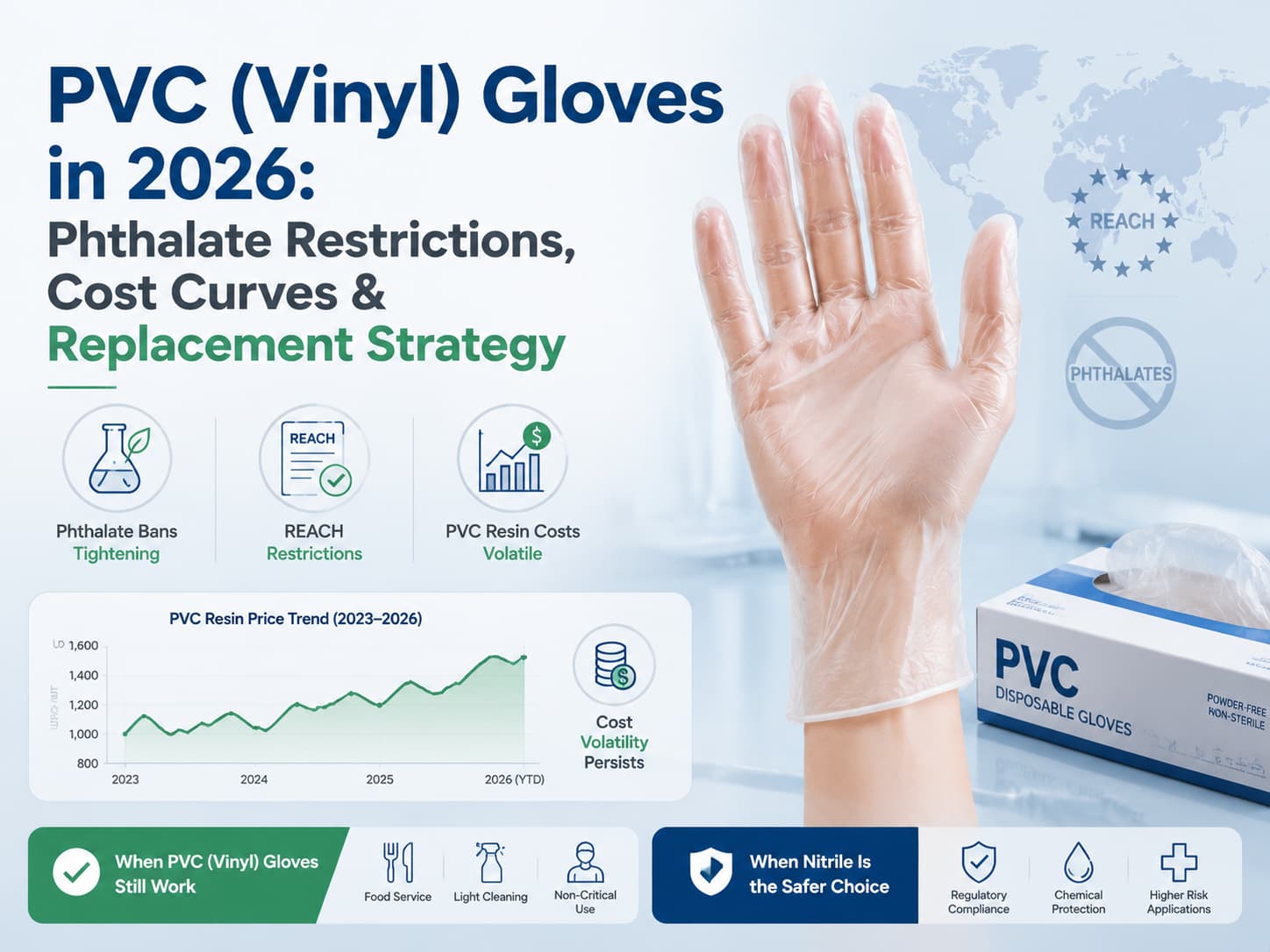
PVC (vinyl) gloves still account for roughly 25-30% of the global disposable glove market by volume, but 2026 is turning into a difficult year for buyers who rely on vinyl as a low-cost option. New phthalate restrictions, REACH enforcement, and volatile PVC resin prices driven by crude oil are reshaping the total cost of ownership. This guide explains the current regulatory landscape, the raw-material economics, and when nitrile rubber is the better long-term choice.
1. What Are PVC (Vinyl) Gloves?
PVC gloves are made from polyvinyl chloride, a thermoplastic polymer produced from vinyl chloride monomer. In disposable glove form, PVC is usually plasticized with phthalates or alternative plasticizers to make it flexible. They are popular in food service, light cleaning, and non-critical medical exams because they are generally cheaper than nitrile or latex and do not contain natural rubber latex proteins.
2. Why PVC Gloves Are Under Pressure in 2026
Three forces are squeezing the PVC glove market this year:
Regulatory: The EU REACH Annex XVII restriction on DEHP, DBP, BBP, and DIBP in plasticized materials is already in force; many phthalate alternatives are now under scrutiny.
Environmental: PVC is less recyclable than nitrile rubber in many waste streams, and ESG procurement policies are moving buyers toward alternatives.
Economic: PVC resin is derived from chlorine and ethylene, which is linked to crude oil and natural gas feedstock prices. Brent crude above $95/bbl and the ongoing Strait of Hormuz uncertainty have kept PVC resin costs elevated.
3. Phthalate Restrictions by Market
Region
Applicable Regulation
Key Restricted Substances
Impact on PVC Gloves
EU
REACH Annex XVII + SVHC list
DEHP, DBP, BBP, DIBP, DPHP under review
Phthalate-plasticized vinyl gloves restricted in childcare, toys, and increasingly in medical/food contact
USA
FDA 21 CFR 177.2600 + state laws (e.g., California Prop 65)
DEHP, DINP, DIDP depending on application
Food-contact PVC gloves must use allowed plasticizers; migration limits apply
GCC
GSO 4872 / SASO technical regulations
Phthalates limited in consumer products
Medical and food-grade PVC gloves require CoC and plasticizer declaration
China
GB standards + food contact GB 4806 series
Authorized plasticizer list with migration limits
Domestic sale must comply with positive-list plasticizer requirements
Sources: EU REACH Annex XVII, FDA 21 CFR 177.2600, GSO 4872, GB 4806.7-2016. Data current as of July 2026.
4. Raw Material Cost Curve: PVC Resin vs Nitrile Rubber
Raw Material
Q3 2026 Reference Range
Cost Driver
Glove Impact
Brent crude
$96-99 / bbl
Strait of Hormuz supply-risk premium
Pushes ethylene, acrylonitrile, and energy costs higher
Butadiene (CFR China)
$1,520-1,580 / MT
C4 feedstock tightness + oil-linked naphtha
Main driver of nitrile rubber cost
Acrylonitrile (CFR China)
$1,420-1,480 / MT
Propylene-ammonia route
Determines nitrile rubber barrier quality
PVC resin (SG-5, China ex-works)
$920-980 / MT
Ethylene + chlorine + electricity
Directly affects vinyl glove cost base
DOP/DEHP plasticizers
$1,050-1,150 / MT
Phthalate raw material + regulation
Phthalate-free alternatives often cost 10-20% more
PVC resin and nitrile rubber are both linked to oil and gas derivatives, but their cost drivers differ. PVC depends on ethylene and chlorine; nitrile rubber depends on butadiene and acrylonitrile. In Q3 2026, the spreads are tightening because PVC resin is also being pushed up by higher chlorine and energy costs.
Sources: ICIS, Platts, S&P Global Commodity Insights, July 2026 spot assessments. Ranges are indicative and subject to daily volatility.
5. When to Use PVC, When to Switch to Nitrile
6. 2026 Procurement Checklist for PVC Gloves
Request plasticizer declaration: identify DEHP, DBP, BBP, DIBP, DINP, and any replacement plasticizers.
Verify food-contact compliance: FDA 21 CFR 177.2600, EU 10/2011, or GB 4806 positive-list status.
Check migration test reports for overall migration and specific phthalate migration.
Confirm tensile strength and elongation meet ASTM D5250 (medical) or EN 455-2 (if medical claim).
Ask for AQL level: 1.5 for general purpose, 0.65 for medical-grade claims.
Compare total cost of ownership: include disposal, defect rate, and potential regulatory recall risk.
7. FAQ
Q: Are PVC gloves banned in the EU?
A: No, PVC gloves are not banned outright, but many phthalate plasticizers used in PVC are restricted under REACH Annex XVII. Food-contact and childcare applications face the strictest limits.
Q: Can PVC gloves be used for food handling?
A: Yes, if the plasticizer is on the positive list for food-contact materials and migration limits are met. In the EU, compliance with Regulation (EC) No 10/2011 is required.
Q: Why are PVC glove prices rising in 2026?
A: PVC resin prices are linked to ethylene and chlorine costs, both of which are influenced by oil and gas prices. The Strait of Hormuz uncertainty has added a risk premium to energy and freight.
Q: Are nitrile gloves always better than PVC?
A: Not always. Nitrile has better chemical and puncture resistance, but PVC can be cost-effective for short-duration, low-risk tasks with no chemical exposure.
Q: What does "phthalate-free" PVC mean?
A: It means the glove does not contain restricted phthalates such as DEHP, DBP, BBP, or DIBP. Buyers should still request a full plasticizer declaration because alternative plasticizers may have their own regulatory limits.



 Network Supported