welcome to Jixiang E-commerce!

Search

Home

disposable gloves

  • Why Do Disposable Gloves Need to Meet Food-Grade Standards?
    Why Do Disposable Gloves Need to Meet Food-Grade Standards?
    Oct 31, 2023
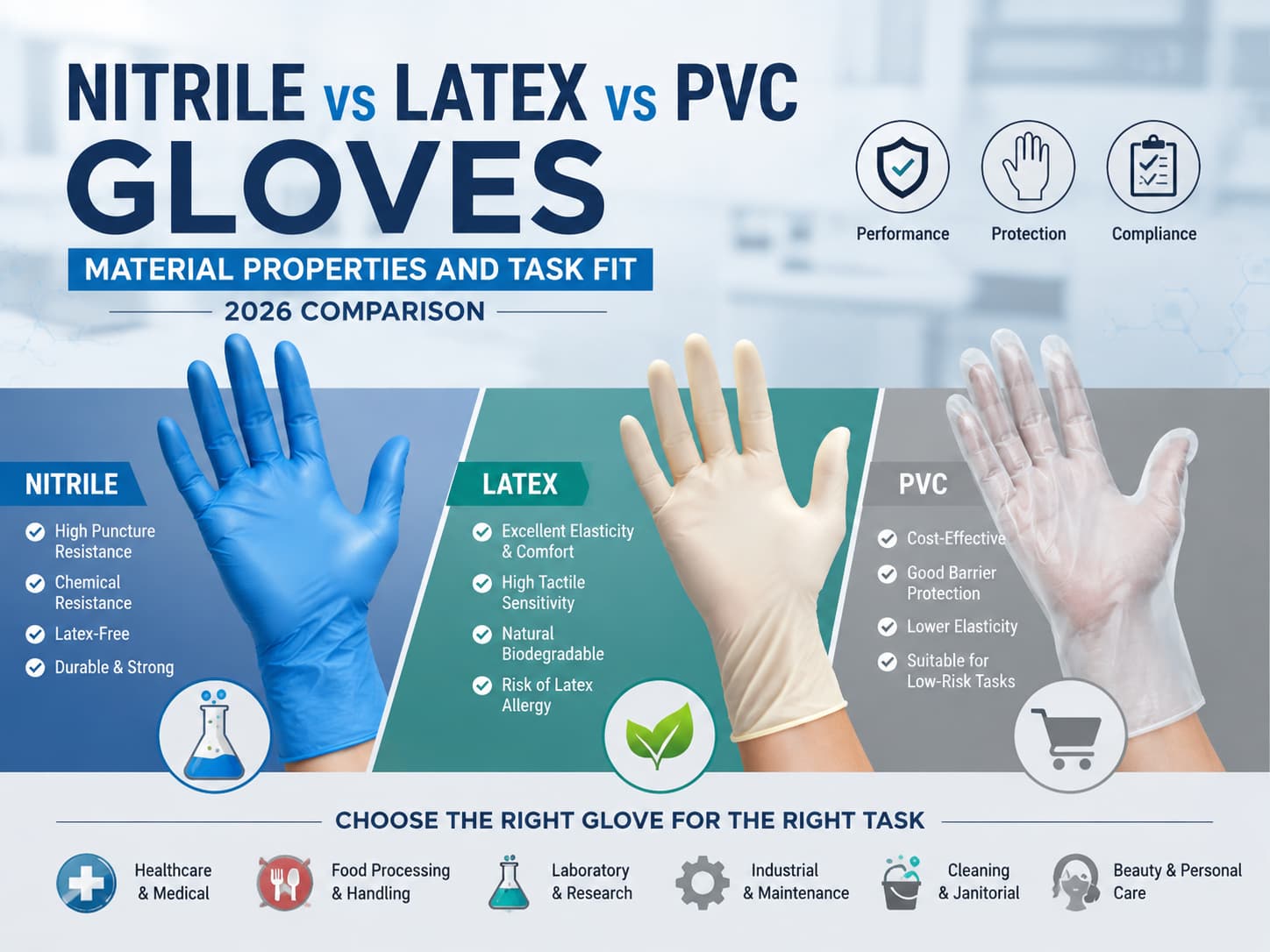
    Disposable gloves play a crucial role in food processing and catering. However, to ensure food safety and hygiene, disposable gloves must meet specific food-grade standards and certification requirements.    Chemical Composition Food-grade certification testing involves examining the chemical composition of gloves to ensure they do not contain harmful substances such as heavy metals and toxic materials.   Residue Testing Residue testing is conducted to check for harmful substances and additives in gloves, ensuring they do not contaminate food.    Physical Properties Food-grade certification also includes testing the physical properties of gloves, such as abrasion resistance and puncture resistance, to ensure that gloves do not generate debris or damage during use.   Microbiological Testing Microbiological levels on the surface of gloves are examined to ensure that gloves do not serve as carriers for bacteria and viruses.   Allergen Testing Food-grade certification also involves testing for allergenic substances in gloves to prevent allergic reactions in users.   I recommend these gloves even more for food contact and safety.   Disposable Latex gloves are known for their excellent elasticity and comfort, making them suitable for food processing and catering. However, it's important to note that some individuals may have latex allergies, so alternative options such as nitrile gloves are often preferred to mitigate this risk.   Disposable Nitrile gloves, as latex substitutes, offer good chemical resistance and strength, making them a popular choice in food handling environments. They provide an effective barrier for food handling while addressing concerns related to latex allergies.   Disposable Vinyl PVC gloves, known for their transparency and affordability, are commonly used for simple food handling and catering services. These gloves are lightweight and cost-effective, making them suitable for short-term, low-risk food handling tasks.   In the food industry, using disposable gloves that meet food-grade standards is a crucial step in ensuring food safety and hygiene. We hope this article helps you better understand why disposable gloves need to meet food-grade standards.
  • How to Choose the Right Disposable Gloves for Your Industry
    How to Choose the Right Disposable Gloves for Your Industry
    Mar 13, 2026
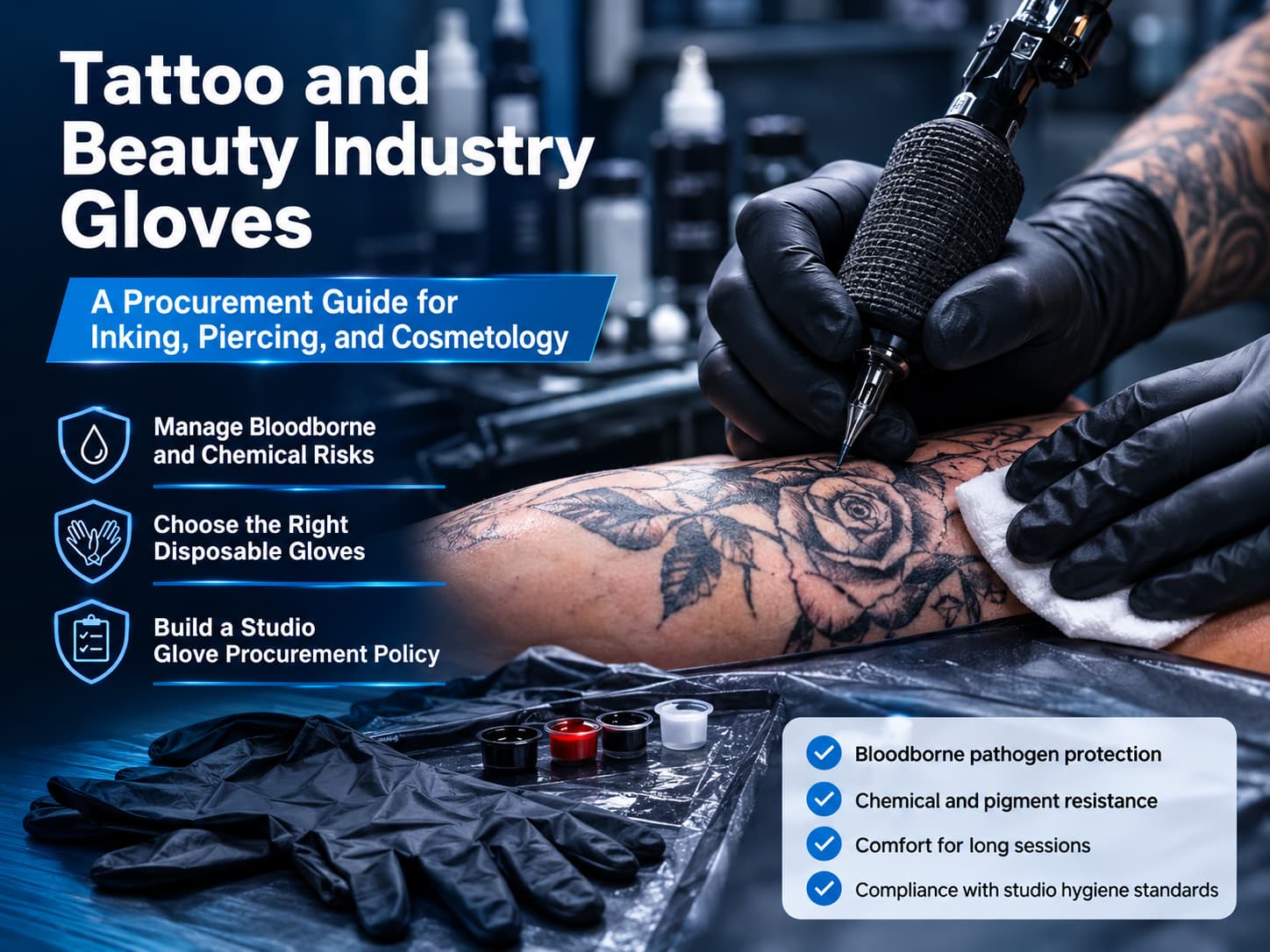
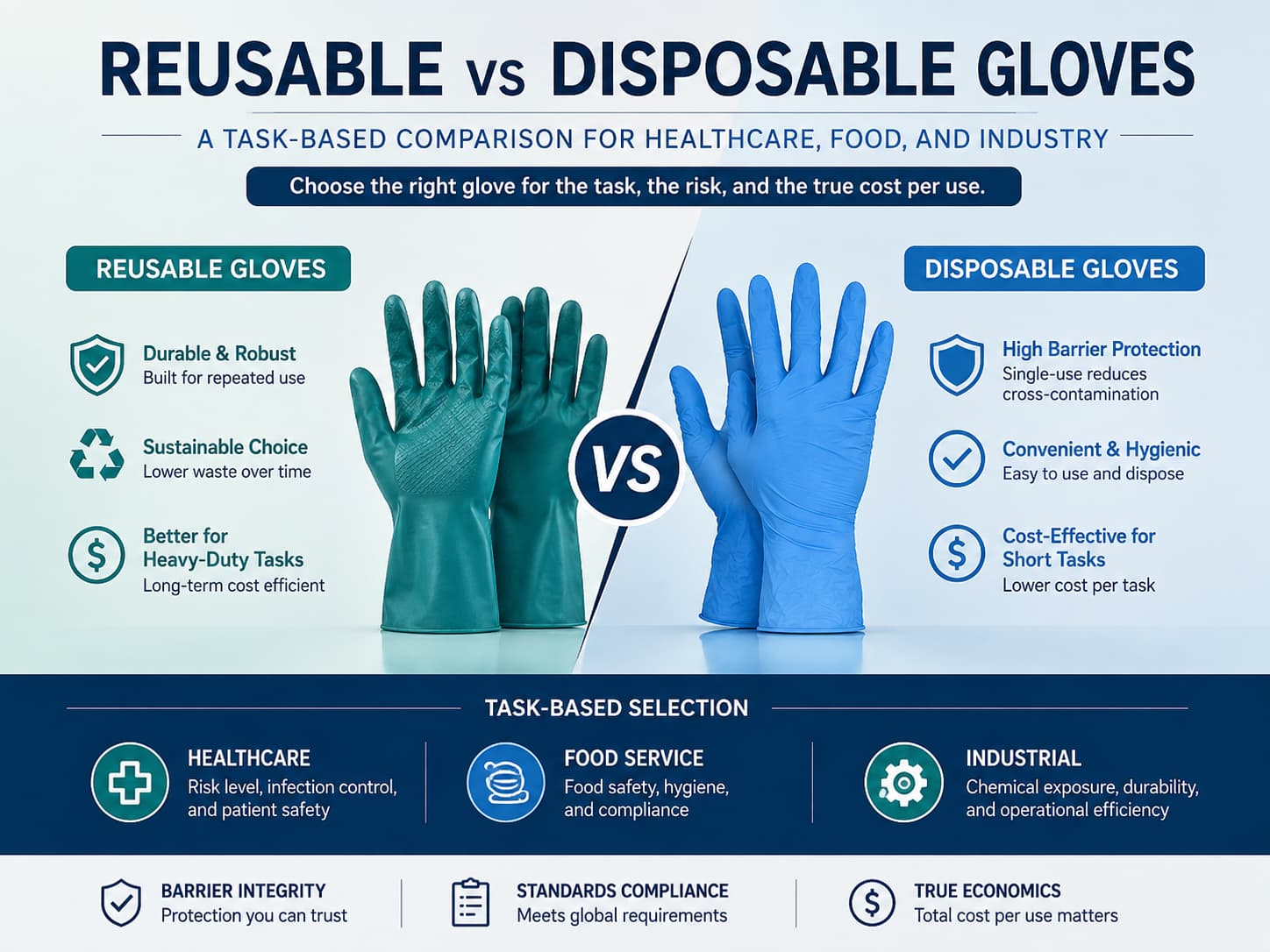
      How to Choose the Right Disposable Gloves for Your Industry Choosing the perfect disposable gloves can be challenging. This guide will help you select the right gloves for healthcare, food service, industrial, and laboratory applications. Introduction Disposable gloves are essential protective equipment across numerous industries, from healthcare facilities to manufacturing plants. However, not all gloves are created equal. Selecting the wrong type can lead to safety hazards, allergic reactions, or unnecessary costs.   With over 20 years of experience in the disposable glove industry, we've helped thousands of businesses find the perfect glove solutions. In this guide, we'll break down everything you need to know to make an informed decision. Understanding the Three Main Types of Disposable Gloves 1. Nitrile Gloves   Best for: Healthcare, automotive, chemical handling, laboratories Key Benefits: ✅ Superior chemical resistance ✅ Puncture-resistant (3x stronger than latex) ✅ Latex-free (no allergy concerns) ✅ Excellent grip in wet conditions ✅ Long shelf life Ideal Applications: Medical examinations Chemical handling Automotive repair Laboratory work Tattoo and piercing Why Choose Nitrile? Nitrile gloves are the gold standard for industries requiring durability and chemical protection. Made from synthetic rubber, they offer the best puncture resistance among disposable gloves. Pro Tip: For extended wear, choose thicker nitrile gloves (6-8 mil) for industrial applications, and thinner options (3-5 mil) for medical examinations. 2. Latex Gloves   Best for: Medical/surgical procedures, dental, laboratory Key Benefits: ✅ Superior fit and comfort ✅ Excellent tactile sensitivity ✅ Biodegradable (eco-friendly) ✅ Cost-effective ✅ Elastic and form-fitting Ideal Applications: Surgical procedures Dental examinations Laboratory work Cleaning and sanitation Important Note: Approximately 1-6% of the population has latex allergies. Always offer latex-free alternatives in healthcare settings. 3. PVC (Vinyl) Gloves   Best for: Food service, cleaning, light industrial work Key Benefits: ✅ Most affordable option ✅ Latex-free and powder-free ✅ Loose fit for easy on/off ✅ Good for short-term use ✅ Suitable for food handling Ideal Applications: Food preparation and handling Cleaning and janitorial work Hair salons Light industrial tasks Did You Know? The FDA requires food handlers to use gloves when preparing ready-to-eat foods to prevent bacterial contamination. Industry-Specific Recommendations Healthcare & Medical Recommended: Nitrile or Latex (powder-free) Why: Medical-grade protection required High puncture resistance essential Powder-free prevents contamination Thickness: 4-6 mil Standards: ASTM D6319 (nitrile), ASTM D3578 (latex) Food Service & Processing Recommended: PVC or Nitrile Why: FDA-approved for food contact Cost-effective for frequent changes Safe for all food types Thickness: 3-5 mil Standards: FDA 21 CFR 177.2600 Pro Tip: Blue nitrile gloves are preferred in food processing—they're easily visible if a piece falls into food. Automotive & Industrial Recommended: Heavy-duty Nitrile (6-8 mil) Why: Oil and chemical resistance Superior puncture protection Enhanced grip for tools Thickness: 6-8 mil Standards: EN 374 (chemical resistance) Laboratory & Research Recommended: Chemical-resistant Nitrile Why: Chemical splash protection Contamination prevention Powder-free essential Thickness: 5-8 mil Standards: ASTM D6319, EN 374, EN 455 5 Key Factors to Consider When Choosing Gloves 1. Material Allergies Always offer latex-free options Nitrile is safe for latex-sensitive individuals 2. Chemical Exposure Check chemical compatibility charts Nitrile: Excellent for oils, solvents, chemicals 3. Duration of Use Short tasks (<30 min): PVC or thin nitrile Extended wear (>1 hour): Thicker nitrile 4. Fit and Comfort Proper sizing prevents hand fatigue Latex offers best fit 5. Cost Considerations Material Cost per Pair Durability Best Value PVC $0.03-0.08 Low High volume, short use Latex $0.05-0.12 Medium Medical, surgical Nitrile $0.08-0.20 High Industrial, long use   Glove Sizing Guide   Size Palm Width (mm) Hand Length (mm) XS 60-75 150-160 S 70-85 160-170 M 80-95 170-180 L 90-105 180-190 XL 100-115 190-200 How to Measure: Measure around your dominant hand at the widest point Measure from the tip of your middle finger to your wrist Use the larger measurement to determine size Quality Standards to Look For Medical Gloves: FDA 510(k) Clearance (USA) CE Marking (Europe) ISO 13485 (Quality Management) ASTM D6319 (Nitrile) / ASTM D3578 (Latex) Industrial Gloves: EN 374 (Chemical Resistance) EN 388 (Mechanical Risks) Food Gloves: FDA 21 CFR 177.2600 (Food Contact) Common Mistakes to Avoid ❌ Using latex gloves with oil-based products ❌ Reusing disposable gloves ❌ Choosing wrong size ❌ Ignoring chemical compatibility ❌ Storing gloves in direct sunlight Conclusion Selecting the right disposable gloves is crucial for safety, comfort, and cost-efficiency. Quick Summary: Healthcare: Nitrile or Latex (medical-grade) Food Service: PVC or Nitrile (FDA-approved) Industrial: Heavy-duty Nitrile (6-8 mil) Laboratory: Chemical-resistant Nitrile "Request Free Quote" About Fujian Jixiang E-commerce Co., Ltd. With over 20 years of experience, we specialize in manufacturing high-quality disposable gloves. Why Choose Us? ✅ Factory-direct pricing ✅ ISO/CE/FDA certified products ✅ OEM/ODM customization ✅ Global shipping to 50+ countries Contact Us:info@jxgloves.com
  • SEO Blog: PVC (Vinyl) Gloves in 2026: Phthalate Restrictions, Cost Curves & Replacement Strategy
    SEO Blog: PVC (Vinyl) Gloves in 2026: Phthalate Restrictions, Cost Curves & Replacement Strategy
    Jul 20, 2026
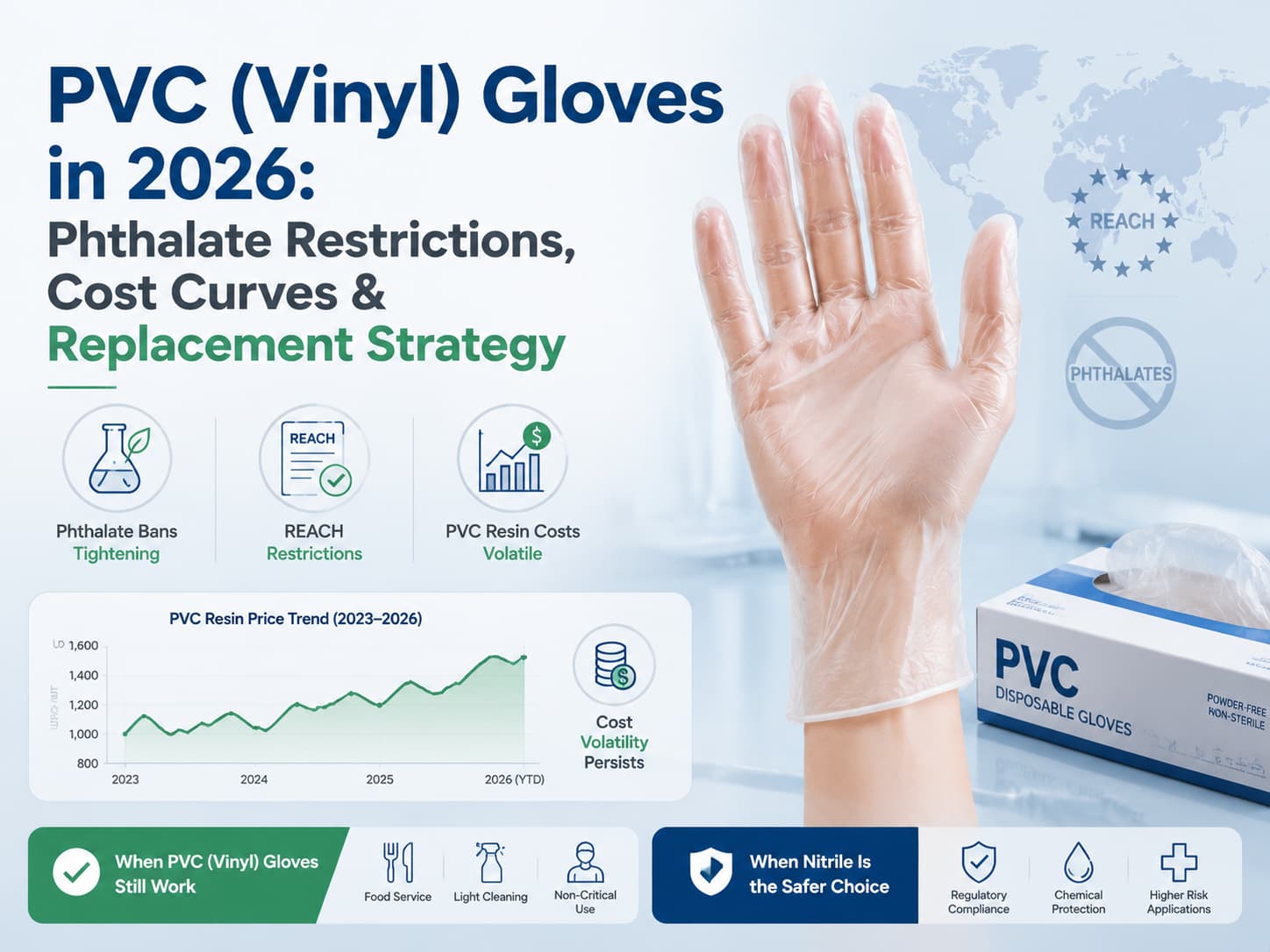
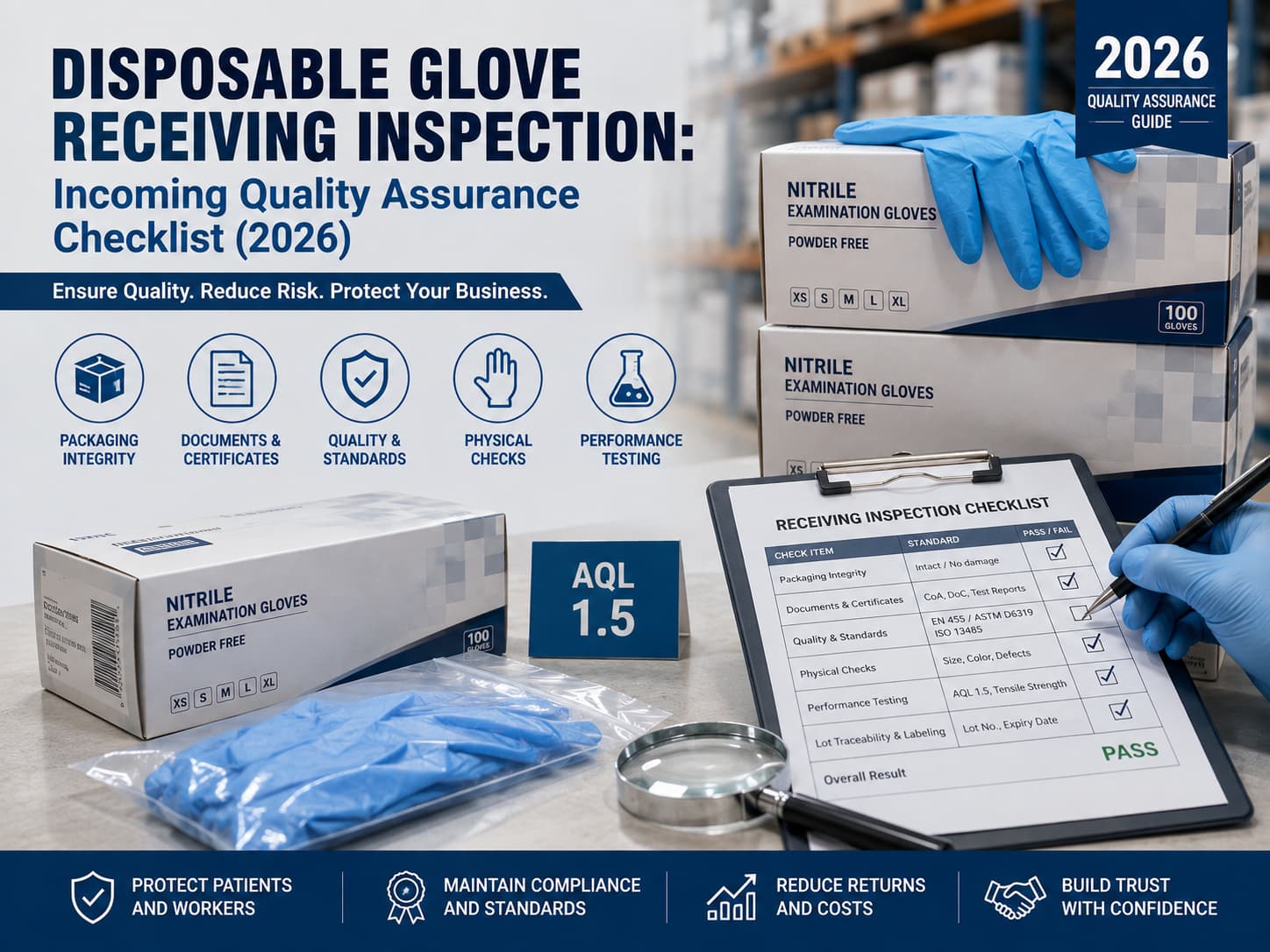
    PVC (vinyl) gloves still account for roughly 25-30% of the global disposable glove market by volume, but 2026 is turning into a difficult year for buyers who rely on vinyl as a low-cost option. New phthalate restrictions, REACH enforcement, and volatile PVC resin prices driven by crude oil are reshaping the total cost of ownership. This guide explains the current regulatory landscape, the raw-material economics, and when nitrile rubber is the better long-term choice. 1. What Are PVC (Vinyl) Gloves? PVC gloves are made from polyvinyl chloride, a thermoplastic polymer produced from vinyl chloride monomer. In disposable glove form, PVC is usually plasticized with phthalates or alternative plasticizers to make it flexible. They are popular in food service, light cleaning, and non-critical medical exams because they are generally cheaper than nitrile or latex and do not contain natural rubber latex proteins. 2. Why PVC Gloves Are Under Pressure in 2026 Three forces are squeezing the PVC glove market this year: Regulatory: The EU REACH Annex XVII restriction on DEHP, DBP, BBP, and DIBP in plasticized materials is already in force; many phthalate alternatives are now under scrutiny. Environmental: PVC is less recyclable than nitrile rubber in many waste streams, and ESG procurement policies are moving buyers toward alternatives. Economic: PVC resin is derived from chlorine and ethylene, which is linked to crude oil and natural gas feedstock prices. Brent crude above $95/bbl and the ongoing Strait of Hormuz uncertainty have kept PVC resin costs elevated. 3. Phthalate Restrictions by Market Region Applicable Regulation Key Restricted Substances Impact on PVC Gloves EU REACH Annex XVII + SVHC list DEHP, DBP, BBP, DIBP, DPHP under review Phthalate-plasticized vinyl gloves restricted in childcare, toys, and increasingly in medical/food contact USA FDA 21 CFR 177.2600 + state laws (e.g., California Prop 65) DEHP, DINP, DIDP depending on application Food-contact PVC gloves must use allowed plasticizers; migration limits apply GCC GSO 4872 / SASO technical regulations Phthalates limited in consumer products Medical and food-grade PVC gloves require CoC and plasticizer declaration China GB standards + food contact GB 4806 series Authorized plasticizer list with migration limits Domestic sale must comply with positive-list plasticizer requirements Sources: EU REACH Annex XVII, FDA 21 CFR 177.2600, GSO 4872, GB 4806.7-2016. Data current as of July 2026. 4. Raw Material Cost Curve: PVC Resin vs Nitrile Rubber Raw Material Q3 2026 Reference Range Cost Driver Glove Impact Brent crude $96-99 / bbl Strait of Hormuz supply-risk premium Pushes ethylene, acrylonitrile, and energy costs higher Butadiene (CFR China) $1,520-1,580 / MT C4 feedstock tightness + oil-linked naphtha Main driver of nitrile rubber cost Acrylonitrile (CFR China) $1,420-1,480 / MT Propylene-ammonia route Determines nitrile rubber barrier quality PVC resin (SG-5, China ex-works) $920-980 / MT Ethylene + chlorine + electricity Directly affects vinyl glove cost base DOP/DEHP plasticizers $1,050-1,150 / MT Phthalate raw material + regulation Phthalate-free alternatives often cost 10-20% more PVC resin and nitrile rubber are both linked to oil and gas derivatives, but their cost drivers differ. PVC depends on ethylene and chlorine; nitrile rubber depends on butadiene and acrylonitrile. In Q3 2026, the spreads are tightening because PVC resin is also being pushed up by higher chlorine and energy costs. Sources: ICIS, Platts, S&P Global Commodity Insights, July 2026 spot assessments. Ranges are indicative and subject to daily volatility. 5. When to Use PVC, When to Switch to Nitrile 6. 2026 Procurement Checklist for PVC Gloves Request plasticizer declaration: identify DEHP, DBP, BBP, DIBP, DINP, and any replacement plasticizers. Verify food-contact compliance: FDA 21 CFR 177.2600, EU 10/2011, or GB 4806 positive-list status. Check migration test reports for overall migration and specific phthalate migration. Confirm tensile strength and elongation meet ASTM D5250 (medical) or EN 455-2 (if medical claim). Ask for AQL level: 1.5 for general purpose, 0.65 for medical-grade claims. Compare total cost of ownership: include disposal, defect rate, and potential regulatory recall risk. 7. FAQ Q: Are PVC gloves banned in the EU? A: No, PVC gloves are not banned outright, but many phthalate plasticizers used in PVC are restricted under REACH Annex XVII. Food-contact and childcare applications face the strictest limits. Q: Can PVC gloves be used for food handling? A: Yes, if the plasticizer is on the positive list for food-contact materials and migration limits are met. In the EU, compliance with Regulation (EC) No 10/2011 is required. Q: Why are PVC glove prices rising in 2026? A: PVC resin prices are linked to ethylene and chlorine costs, both of which are influenced by oil and gas prices. The Strait of Hormuz uncertainty has added a risk premium to energy and freight. Q: Are nitrile gloves always better than PVC? A: Not always. Nitrile has better chemical and puncture resistance, but PVC can be cost-effective for short-duration, low-risk tasks with no chemical exposure. Q: What does "phthalate-free" PVC mean? A: It means the glove does not contain restricted phthalates such as DEHP, DBP, BBP, or DIBP. Buyers should still request a full plasticizer declaration because alternative plasticizers may have their own regulatory limits.
  • How to Read a Disposable Glove Certificate of Conformity (CoC)
    How to Read a Disposable Glove Certificate of Conformity (CoC)
    Jul 22, 2026
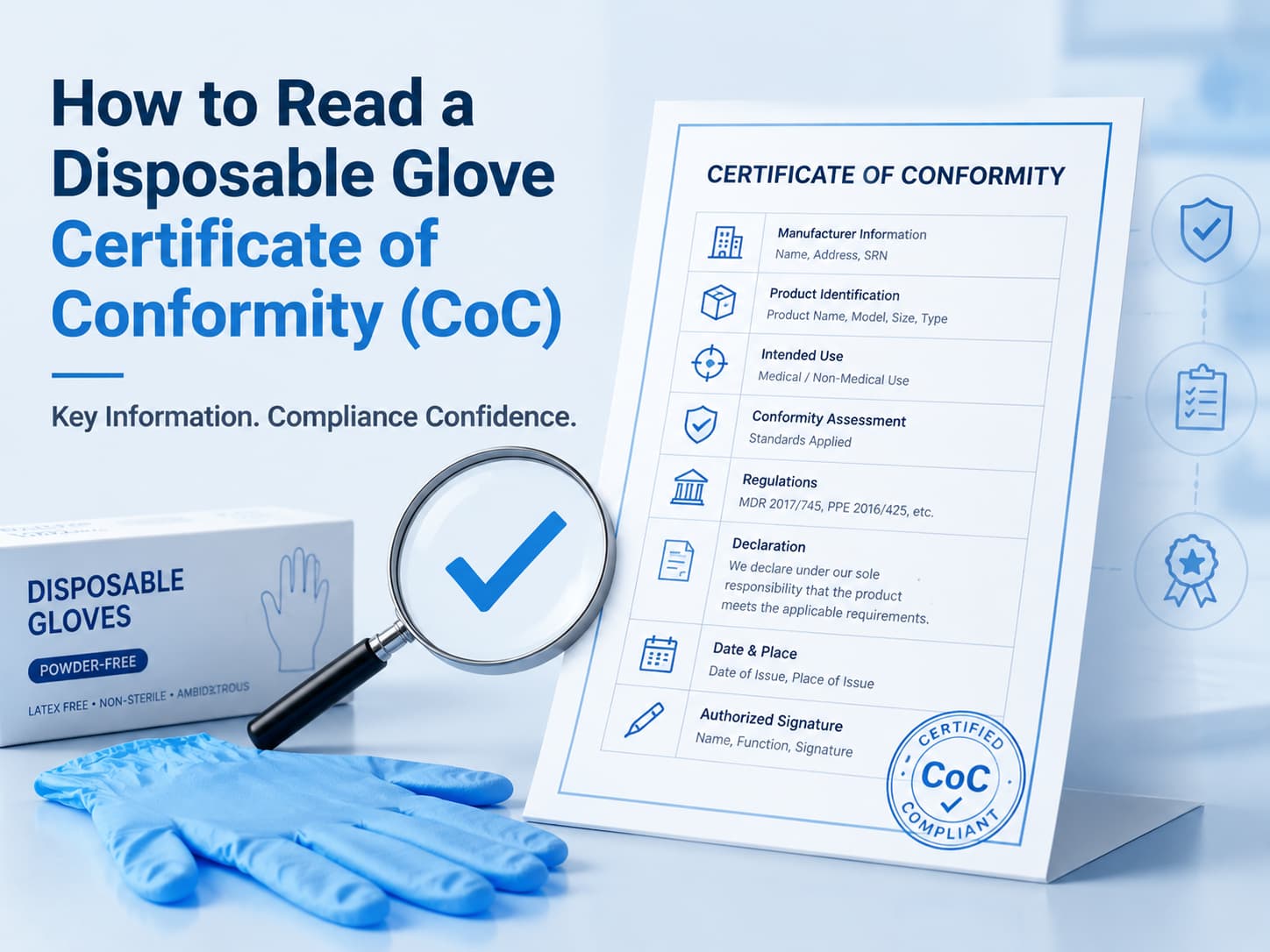
    A Certificate of Conformity (CoC) is a document issued by a manufacturer or notified body confirming that a product meets specified regulatory and technical requirements. For disposable gloves, the CoC is the fastest way to verify that a batch meets the claims made on the box. 1. What a CoC Is - and What It Is Not A CoC is an attestation of compliance. It is not a test report, not an invoice, and not a marketing brochure. It should reference the exact standard, batch or lot number, and the issuing authority. If the CoC does not match the product label, the document is unreliable. 2. Eight Fields to Check on Every Glove CoC Field What to Look For Why It Matters Product description Exact glove type, material, powder-free status, size range Ensures the CoC covers the SKU you are buying Applicable standards EN 455, EN 374, ASTM D6319, ASTM D3578, ISO 11193 Confirms regulatory scope for your market Notified body / lab Name, address, accreditation (ISO 17025) Unaccredited labs produce unenforceable certificates Test report numbers Unique report IDs with dates Lets you cross-check with the lab Batch / lot number Must match the shipment label Traceability and recall management AQL level AQL 1.5, 0.65, 2.5, 4.0 Determines defect allowance and medical-grade status Expiry / validity CoC issue date and validity period Old CoCs may not reflect current formulation Authorized signature Signed by quality manager or regulatory representative Demonstrates accountability 3. Red Flags That Should Stop the Order The CoC has no test report number or the lab is not ISO 17025 accredited. The standard referenced is outdated, vague, or incorrect for the product. The batch number on the CoC does not match the physical carton label. The document is a generic template with no product-specific details. The manufacturer refuses to share the original test report or factory quality manual. 4. How to Verify the CoC Contact the test lab directly using contact details from its official website, not from the CoC itself. Provide the report number and ask for confirmation. For EU CE-marked medical gloves, check the notified body identification number in the NANDO database. For GSO-marked products, verify the registration in the GCC Standardization Organization systems or national authority portals. 5. FAQ Q: Is a CoC the same as a test report? A: No. A CoC is a declaration that the product complies with standards. A test report contains the actual measurement data from a lab. Q: Who can issue a CoC for disposable gloves? A: A manufacturer can issue a self-declaration for some standards, but medical-grade and PPE claims usually require a notified body or ISO 17025 lab. Q: How long is a CoC valid? A: There is no universal expiry, but most buyers accept CoCs issued within 1-2 years. A new formulation, standard update, or material change requires a new CoC. Q: What does AQL 1.5 on a CoC mean? A: AQL 1.5 means the accepted quality level allows up to 1.5% defective gloves in the sampled lot. Lower AQL values mean stricter quality. Q: Can I use a CoC from one country in another market? A: Not automatically. A CoC must reference the standards recognized in the target market. For example, EN 455 is for the EU; ASTM D6319 is for the US market.
  • ASTM D6978 Explained - Chemotherapy Drug Permeation Testing for Medical Gloves
    ASTM D6978 Explained - Chemotherapy Drug Permeation Testing for Medical Gloves
    Jul 29, 2026
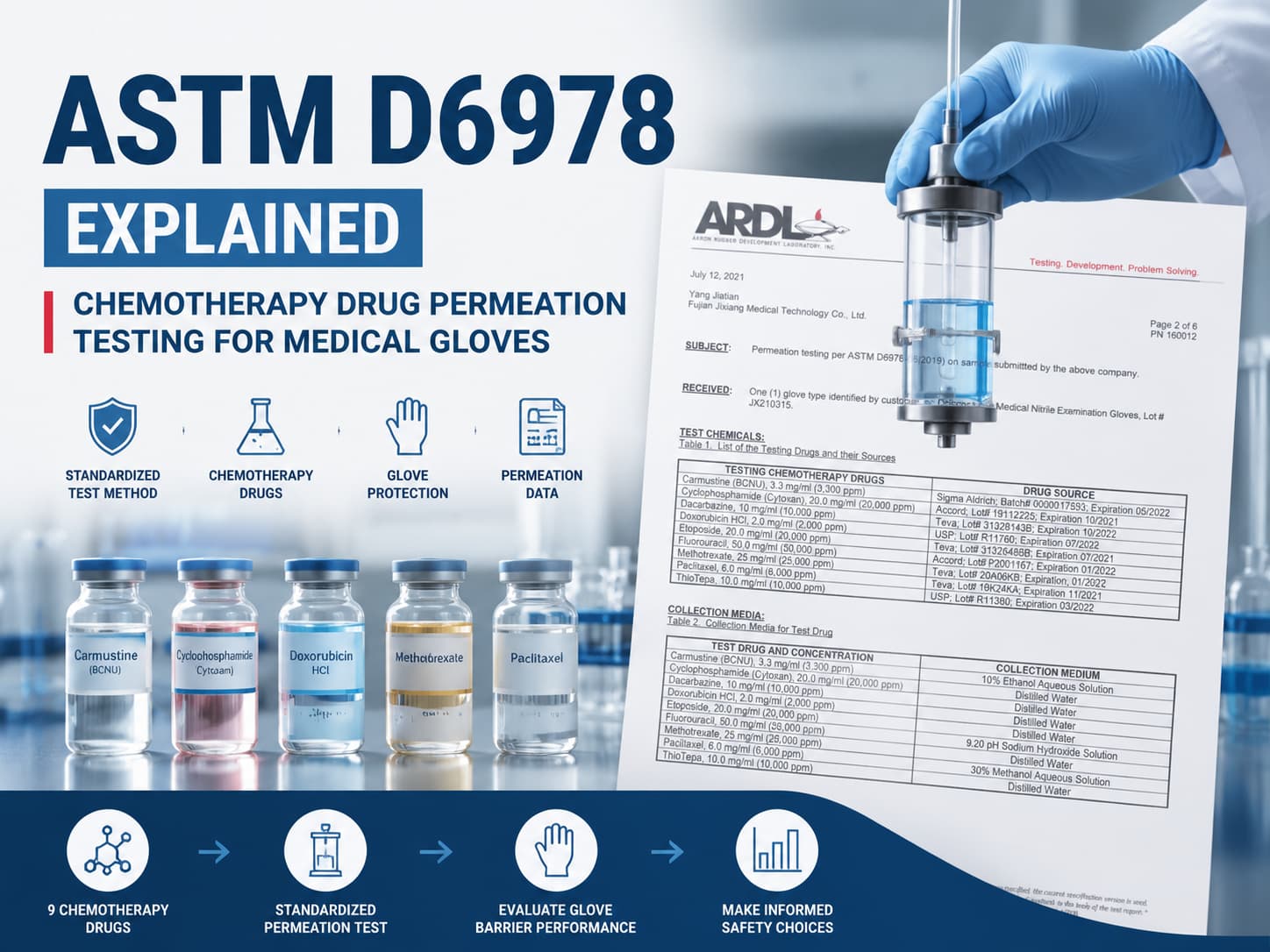
    ASTM D6978 is the FDA-referenced standard for testing chemotherapy drug permeation through medical gloves. Learn the 9 test drugs, methodology, pass criteria, and which materials qualify. ASTM D6978 is the standard test method for assessing the resistance of medical gloves to permeation by chemotherapy drugs. It is the primary standard referenced by the FDA for evaluating whether a glove can be labeled as "chemotherapy tested" in the United States. For procurement teams supplying oncology, hematology, and pharmacy compounding departments, understanding this standard is essential for patient and worker safety. 1. What Is ASTM D6978? ASTM D6978 (Standard Practice for Assessment of Resistance of Medical Gloves to Permeation by Chemotherapy Drugs) specifies a standardized method for measuring how long a medical glove can resist the permeation of specific oncology drugs. The standard was developed because general chemical permeation standards such as EN 374 do not adequately represent the unique molecular properties and concentrations of chemotherapy agents used in clinical practice. In the US, the FDA references ASTM D6978 in its 510(k) review process for gloves that carry chemotherapy-related claims. Gloves that pass the standard may be labeled as tested for chemotherapy drug permeation, but the specific drugs tested and breakthrough times must be documented in the Technical Data Sheet (TDS). 2. The Nine Chemotherapy Test Drugs ASTM D6978 requires testing against 9 chemotherapy drugs that represent a range of molecular sizes, solubilities, and clinical usage patterns. These drugs were selected because they are among the most commonly handled hazardous drugs in oncology practice. # Drug Name Class Clinical Use 1 Carmustine (BCNU) Alkylating agent Brain tumors, lymphoma 2 Cisplatin Platinum compound Solid tumors, testicular, ovarian 3 Cyclophosphamide Alkylating agent Leukemia, lymphoma, breast 4 Dacarbazine Alkylating agent Melanoma, Hodgkin lymphoma 5 Doxorubicin HCl Anthracycline Breast, leukemia, sarcoma 6 Etoposide Topoisomerase inhibitor Lung, testicular, lymphoma 7 5-Fluorouracil (5-FU) Antimetabolite Colorectal, breast, gastric 8 Ifosfamide Alkylating agent Sarcoma, testicular, lymphoma 9 Paclitaxel Taxane Breast, ovarian, lung 3. Test Methodology The test uses a two-chamber permeation cell. The chemotherapy drug solution is placed in one chamber, and the glove material is clamped between the two chambers as a barrier. The collecting medium in the second chamber is then analyzed at timed intervals to detect whether the drug has permeated through the glove material. The key performance metric is the permeation rate, measured in micrograms per square centimeter per minute (ug/cm2/min). A glove passes the standard if the permeation rate does not exceed 0.01 ug/cm2/min for each of the 9 drugs over the test period, which typically runs for 240 minutes (4 hours). 4. ASTM D6978 vs EN 374: Key Differences Factor ASTM D6978 EN 374 Scope Chemotherapy drug permeation Industrial chemical permeation Number of test chemicals 9 oncology drugs 18 industrial chemicals Test duration 240 minutes Typically 480 minutes Pass criterion Permeation rate <= 0.01 ug/cm2/min Breakthrough time classification (Type A/B/C) Primary market United States (FDA) European Union (MDR) Typical use Oncology/chemotherapy gloves Chemical/industrial PPE gloves 5. Which Glove Materials Pass? Material performance varies significantly under ASTM D6978 testing: Nitrile rubber gloves: Typically pass all 9 drugs with breakthrough times exceeding 240 minutes. Nitrile rubber is the recommended material for chemotherapy drug handling. Natural rubber latex gloves: Generally perform well, passing most or all 9 drugs. However, latex allergy risk must be considered. PVC (vinyl) gloves: Often fail one or more of the 9 drugs. PVC is not recommended for chemotherapy drug handling. Thickness factor: Thicker gloves (e.g., 6-8 mil) generally provide longer breakthrough times than thinner gloves (3-4 mil). However, thickness alone does not guarantee ASTM D6978 compliance. 6. Procurement Implications Verify that the Technical Data Sheet (TDS) explicitly references ASTM D6978 and lists the 9 drugs tested. Be cautious of vague claims such as "chemo-safe" or "chemotherapy compatible" without an ASTM D6978 reference. Confirm the Certificate of Conformity (CoC) includes chemotherapy permeation test results. For EU markets, check for both ASTM D6978 (US) and EN 374 Type A (EU) dual certification where applicable. Ensure that procurement specifies nitrile rubber gloves with minimum 5 mil thickness for oncology use. FAQ Q: What is the difference between ASTM D6978 and EN 374? A: ASTM D6978 specifically tests chemotherapy drug permeation through medical gloves using 9 oncology drugs. EN 374 tests chemical permeation using a broader list of 18 industrial chemicals. They serve different purposes and a glove may meet both standards. Q: Which chemotherapy drugs are tested under ASTM D6978? A: The standard requires testing with 9 drugs: carmustine (BCNU), cisplatin, cyclophosphamide, dacarbazine, doxorubicin hydrochloride, etoposide, 5-fluorouracil (5-FU), ifosfamide, and paclitaxel. Q: Can PVC (vinyl) gloves be used for chemotherapy handling? A: PVC gloves generally do not pass ASTM D6978 testing for all 9 chemotherapy drugs. Nitrile rubber and natural rubber latex gloves typically perform better. PVC gloves are not recommended for chemotherapy drug handling. Q: How long must a glove resist permeation under ASTM D6978? A: The test typically runs for 240 minutes. A glove must demonstrate a permeation rate that does not exceed 0.01 micrograms per square centimeter per minute for each drug tested. Q: How can I verify that a glove is chemotherapy-tested? A: Check the Technical Data Sheet (TDS) and Certificate of Conformity (CoC) for explicit reference to ASTM D6978. Be cautious of vague claims like 'chemo-safe' without a specific standard reference.
  • Medical vs Industrial Nitrile Gloves - Certification, Thickness, and Cost Trade-offs (2026)
    Medical vs Industrial Nitrile Gloves - Certification, Thickness, and Cost Trade-offs (2026)
    Aug 04, 2026
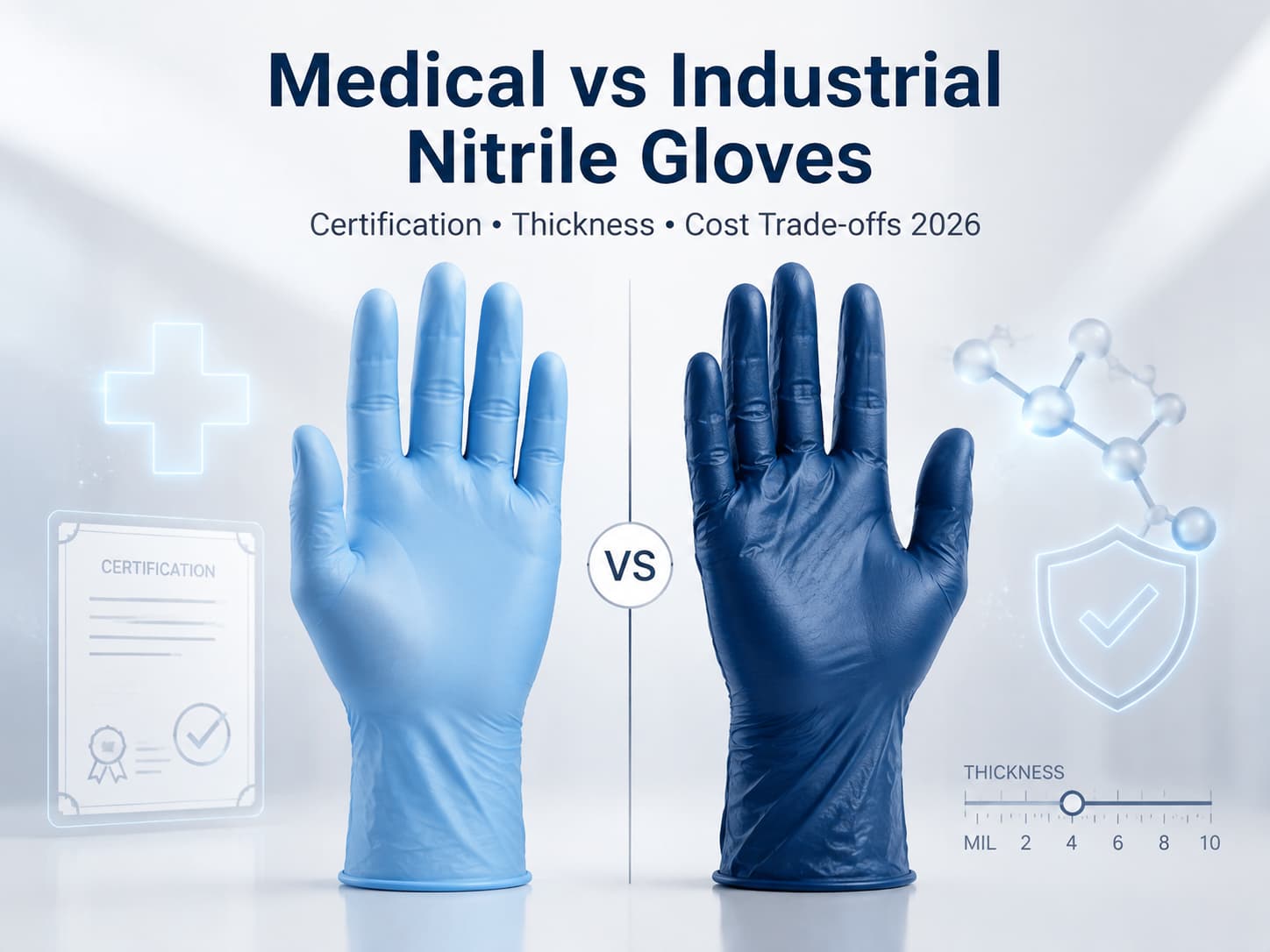
    Medical and industrial nitrile gloves look similar but follow different standards. Learn the EN 455 vs EN 374 divide, thickness and dexterity trade-offs, and 2026 raw material cost implications. Medical and industrial nitrile gloves may look nearly identical on a store shelf, but they are manufactured, tested, and certified under entirely different regulatory frameworks. Medical nitrile gloves must meet patient-safety standards (EN 455, ASTM D6319), while industrial nitrile gloves are governed by chemical-protection standards (EN ISO 21420, EN 374). Choosing the wrong category is not just a procurement error - it can be a regulatory violation. This guide breaks down the certification divide, thickness and dexterity trade-offs, raw material cost dynamics, and procurement decision criteria for 2026. 1. The Certification Divide: EN 455 vs EN 374 The fundamental distinction between medical and industrial nitrile gloves is the regulatory regime under which they are certified. Medical examination and surgical gloves are classified as medical devices. In the EU, they fall under the Medical Device Regulation (MDR 2017/745) and must comply with the EN 455 series. In the US, they require FDA 510(k) clearance and compliance with ASTM D6319 (nitrile examination gloves). Industrial nitrile gloves, by contrast, are personal protective equipment (PPE). In the EU, they are regulated under the PPE Regulation (EU) 2016/425 and must comply with EN ISO 21420 (formerly EN 420) for general requirements and EN 374 for chemical protection. They are never tested for patient safety, biocompatibility, or sterility. Factor Medical Nitrile Gloves Industrial Nitrile Gloves EU regulation MDR 2017/745 (medical device) PPE Regulation (EU) 2016/425 Key standards EN 455-1/2/3/4 EN ISO 21420 + EN 374 US standard ASTM D6319, FDA 510(k) ANSI/ISEA 105 (cut/chemical) AQL requirement 1.5 (exam) / 0.65 (surgical) 2.5 or 4.0 typical Biocompatibility ISO 10993 required Not required Sterility option Yes (gamma or EtO) No Intended user Healthcare workers, patients Industrial, laboratory, food workers 2. Thickness and Dexterity Trade-offs Thickness is one of the most visible differences between the two categories. Medical examination gloves are typically 3-5 mil (0.076-0.127 mm) thick, prioritizing tactile sensitivity and dexterity. Surgical gloves may be even thinner. Industrial nitrile gloves commonly range from 6 to 10 mil (0.152-0.254 mm) or more, prioritizing puncture resistance and chemical breakthrough time over touch sensitivity. The EN ISO 21420 dexterity scale rates performance from 1 to 5, where 5 is the highest dexterity (thinnest material). Medical exam gloves typically achieve level 4-5, while industrial gloves often rate level 1-3. This is a deliberate design trade-off, not a quality difference. Thickness (mil) Typical Category Dexterity Level (1-5) Primary Use 3-4 mil Medical exam 5 Patient examination, nursing 4-5 mil Medical exam / light industrial 4-5 General medical, food handling 5-6 mil Medical / industrial crossover 3-4 Chemotherapy, dual-certified 6-8 mil Industrial 2-3 Mechanical, automotive, janitorial 8-10+ mil Industrial heavy-duty 1-2 Chemical handling, sharp hazards 3. Material Chemistry: Same Polymer, Different Formulations Both medical and industrial nitrile gloves are made from nitrile rubber, also known as NBR (nitrile butadiene rubber) or Buna-N. This synthetic rubber is produced by copolymerizing acrylonitrile (ACN) and butadiene. The ACN content typically ranges from 28% to 33% for glove-grade compounds, balancing oil resistance (higher ACN) with flexibility (lower ACN). Medical-grade compounds use higher-purity nitrile rubber with stricter controls on residual monomers, extractables, and accelerators (for Type IV allergy management). Industrial compounds may use broader-specification nitrile rubber with more filler content, which reduces cost but may affect tensile consistency. 4. Raw Material Cost Dynamics in 2026 The two primary feedstocks for nitrile rubber are butadiene and acrylonitrile. In 2026, both have experienced significant price volatility driven by geopolitical factors: Butadiene: CFR China was approximately $1,330/ton in late July 2026 (up $30/ton), with domestic East China prices around 10,450-10,650 RMB/ton. Strait of Hormuz tensions kept Brent crude elevated, supporting naphtha-derived feedstock costs. Acrylonitrile: East China port prices rose to approximately 10,600-10,750 RMB/ton in late July 2026 (up roughly 8.7% year-on-year), driven by supply tightness at major producers including Zhenhai Refining and Chemical. Because industrial gloves use more material per unit (thicker construction), they carry a larger absolute raw-material cost per glove. However, medical-grade compounds command a price premium for purity and quality control. When feedstock prices spike, both categories face margin pressure, but the pass-through timing differs: industrial contracts often have faster price-adjustment clauses, while medical contracts may be locked longer due to tender cycles. 5. Procurement Decision Framework Patient contact: If the glove will touch patients, it MUST be EN 455 / ASTM D6319 certified. No exceptions. Chemical exposure: If the primary hazard is chemical, choose EN 374 certified industrial gloves, even if they look like medical gloves. Dual-certified gloves: For settings that need both (e.g., emergency response, chemotherapy), look for gloves carrying both EN 455 and EN 374 Type A/B/C. Verify on the TDS and CoC. Cost optimization: Do not substitute industrial gloves for medical use to save cost. The regulatory and liability risk far exceeds any price difference. Raw material monitoring: Track butadiene and acrylonitrile trends as leading cost indicators. Negotiate price-adjustment clauses for contracts longer than 3 months. FAQ Q: Can industrial nitrile gloves be used for medical examinations? A: No. Industrial nitrile gloves are not certified under EN 455 or ASTM D6319 and cannot be legally marketed or used as medical examination gloves. They lack the biological safety evaluation, AQL 1.5 water-leak testing, and regulatory clearance required for patient contact. Using industrial gloves in a medical setting is a regulatory violation. Q: What is the main certification difference between medical and industrial nitrile gloves? A: Medical nitrile gloves must comply with EN 455 series (EU MDR) or ASTM D6319 (US FDA 510(k)), including AQL 1.5 sampling, biocompatibility testing per ISO 10993, and sterility claims where applicable. Industrial nitrile gloves comply with EN ISO 21420 (formerly EN 420) and EN 374 for chemical protection under the PPE Regulation (EU) 2016/425, with no patient-safety requirements. Q: Why are industrial nitrile gloves often thicker than medical ones? A: Industrial applications involve sharper hazards, chemical exposure, and longer wear times, so industrial gloves are typically 6-10 mil thick for puncture and chemical resistance. Medical exam gloves are usually 3-5 mil to preserve dexterity (rated 1-5 on the EN ISO 21420 scale) and tactile sensitivity needed for clinical procedures. Q: Does raw material cost affect medical and industrial gloves differently? A: Yes. Medical-grade nitrile rubber requires higher-purity acrylonitrile butadiene rubber compounds and stricter quality control, which adds cost. However, industrial gloves use more material per unit (thicker). When butadiene prices rise (as in the 2026 Hormuz-driven cycle), both categories face cost pressure, but industrial gloves carry a larger raw-material weight per unit. Q: Can a single glove carry both medical and industrial certification? A: Yes. Some premium nitrile rubber gloves carry dual certification: EN 455 (medical) and EN 374 Type A/B/C (chemical). These are common in chemotherapy and emergency response settings. Buyers should verify both standards are listed on the Technical Data Sheet and Certificate of Conformity.
Contact Us
Unit 1301-1, No. 3, Xixishan Wei Road, Software Park phase III, Torch High-tech Zone,Xiamen City, Fujian Province, China
+86-592-6511055
+86 -15750719843
Subscribe

Copyright 2026@ Fujian Jixiang E-commerce Co., Ltd All Rights Reserved. Sitemap | Blog | Xml | Privacy Policy Network Supported

leave a message

Leave A Message
If you are interested in our products and want to know more details,please leave a message here,we will reply you as soon as we can.
Submit

Home

Products

whatsApp

contact