How to Choose the Right Disposable Gloves for Your Industry
Choosing the perfect disposable gloves can be challenging. This guide will help you select the right gloves for healthcare, food service, industrial, and laboratory applications.
Introduction
Disposable gloves are essential protective equipment across numerous industries, from healthcare facilities to manufacturing plants. However, not all gloves are created equal. Selecting the wrong type can lead to safety hazards, allergic reactions, or unnecessary costs.
With over 20 years of experience in the disposable glove industry, we've helped thousands of businesses find the perfect glove solutions. In this guide, we'll break down everything you need to know to make an informed decision.
Understanding the Three Main Types of Disposable Gloves
1. Nitrile Gloves
Best for: Healthcare, automotive, chemical handling, laboratories
Key Benefits:
- ✅ Superior chemical resistance
- ✅ Puncture-resistant (3x stronger than latex)
- ✅ Latex-free (no allergy concerns)
- ✅ Excellent grip in wet conditions
- ✅ Long shelf life
Ideal Applications:
- Medical examinations
- Chemical handling
- Automotive repair
- Laboratory work
- Tattoo and piercing
Why Choose Nitrile?
Nitrile gloves are the gold standard for industries requiring durability and chemical protection. Made from synthetic rubber, they offer the best puncture resistance among disposable gloves.
Pro Tip: For extended wear, choose thicker nitrile gloves (6-8 mil) for industrial applications, and thinner options (3-5 mil) for medical examinations.
2. Latex Gloves
Best for: Medical/surgical procedures, dental, laboratory
Key Benefits:
- ✅ Superior fit and comfort
- ✅ Excellent tactile sensitivity
- ✅ Biodegradable (eco-friendly)
- ✅ Cost-effective
- ✅ Elastic and form-fitting
Ideal Applications:
- Surgical procedures
- Dental examinations
- Laboratory work
- Cleaning and sanitation
Important Note: Approximately 1-6% of the population has latex allergies. Always offer latex-free alternatives in healthcare settings.
3. PVC (Vinyl) Gloves
Best for: Food service, cleaning, light industrial work
Key Benefits:
- ✅ Most affordable option
- ✅ Latex-free and powder-free
- ✅ Loose fit for easy on/off
- ✅ Good for short-term use
- ✅ Suitable for food handling
Ideal Applications:
- Food preparation and handling
- Cleaning and janitorial work
- Hair salons
- Light industrial tasks
Did You Know? The FDA requires food handlers to use gloves when preparing ready-to-eat foods to prevent bacterial contamination.
Industry-Specific Recommendations
Healthcare & Medical
Recommended: Nitrile or Latex (powder-free)
Why:
- Medical-grade protection required
- High puncture resistance essential
- Powder-free prevents contamination
Thickness: 4-6 mil Standards: ASTM D6319 (nitrile), ASTM D3578 (latex)
Food Service & Processing
Recommended: PVC or Nitrile
Why:
- FDA-approved for food contact
- Cost-effective for frequent changes
- Safe for all food types
Thickness: 3-5 mil Standards: FDA 21 CFR 177.2600
Pro Tip: Blue nitrile gloves are preferred in food processing—they're easily visible if a piece falls into food.
Automotive & Industrial
Recommended: Heavy-duty Nitrile (6-8 mil)
Why:
- Oil and chemical resistance
- Superior puncture protection
- Enhanced grip for tools
Thickness: 6-8 mil Standards: EN 374 (chemical resistance)
Laboratory & Research
Recommended: Chemical-resistant Nitrile
Why:
- Chemical splash protection
- Contamination prevention
- Powder-free essential
Thickness: 5-8 mil Standards: ASTM D6319, EN 374, EN 455
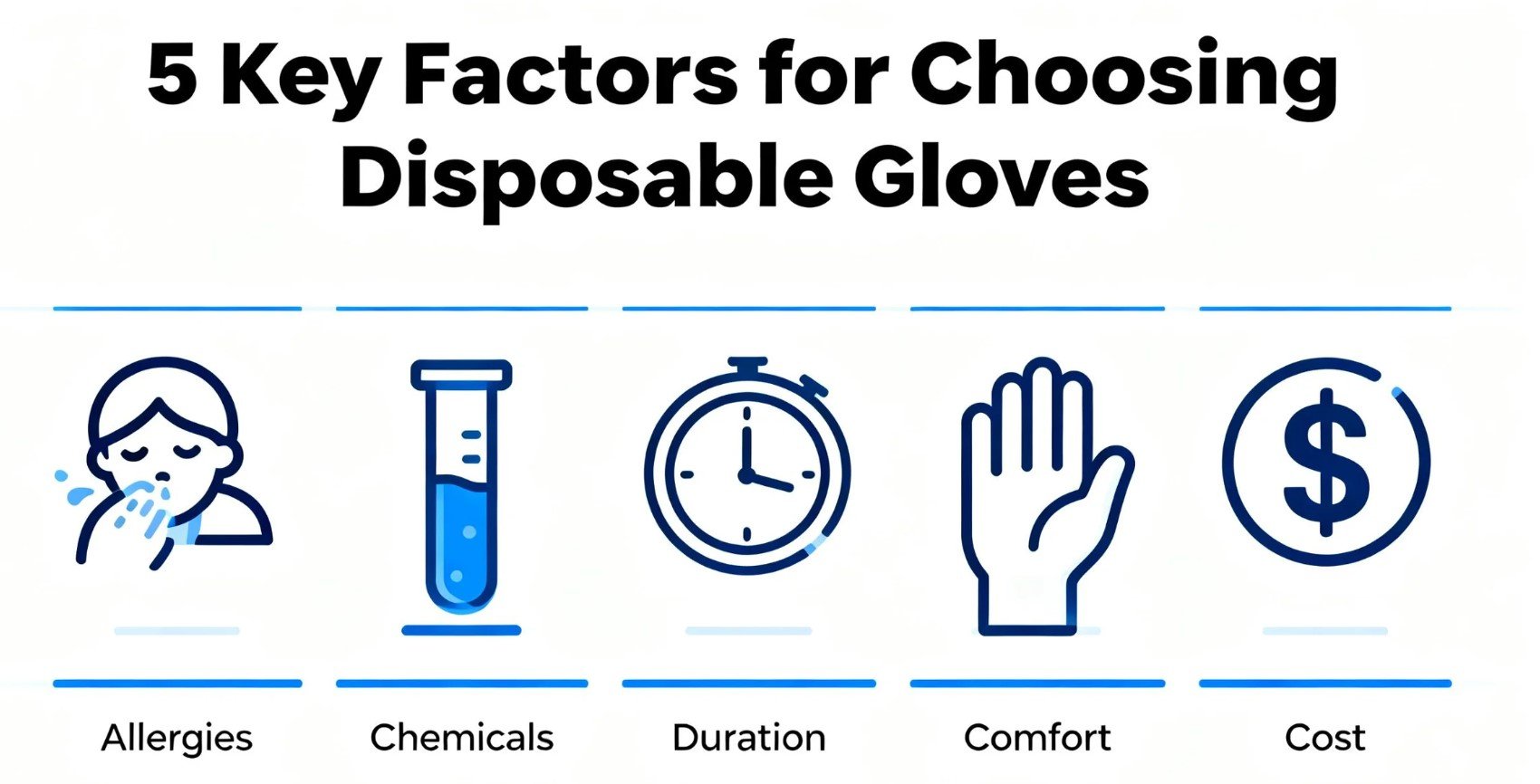
5 Key Factors to Consider When Choosing Gloves
1. Material Allergies
- Always offer latex-free options
- Nitrile is safe for latex-sensitive individuals
2. Chemical Exposure
- Check chemical compatibility charts
- Nitrile: Excellent for oils, solvents, chemicals
3. Duration of Use
- Short tasks (<30 min): PVC or thin nitrile
- Extended wear (>1 hour): Thicker nitrile
4. Fit and Comfort
- Proper sizing prevents hand fatigue
- Latex offers best fit
5. Cost Considerations
|
Material
|
Cost per Pair
|
Durability
|
Best Value
|
|
PVC
|
$0.03-0.08
|
Low
|
High volume, short use
|
|
Latex
|
$0.05-0.12
|
Medium
|
Medical, surgical
|
|
Nitrile
|
$0.08-0.20
|
High
|
Industrial, long use
|
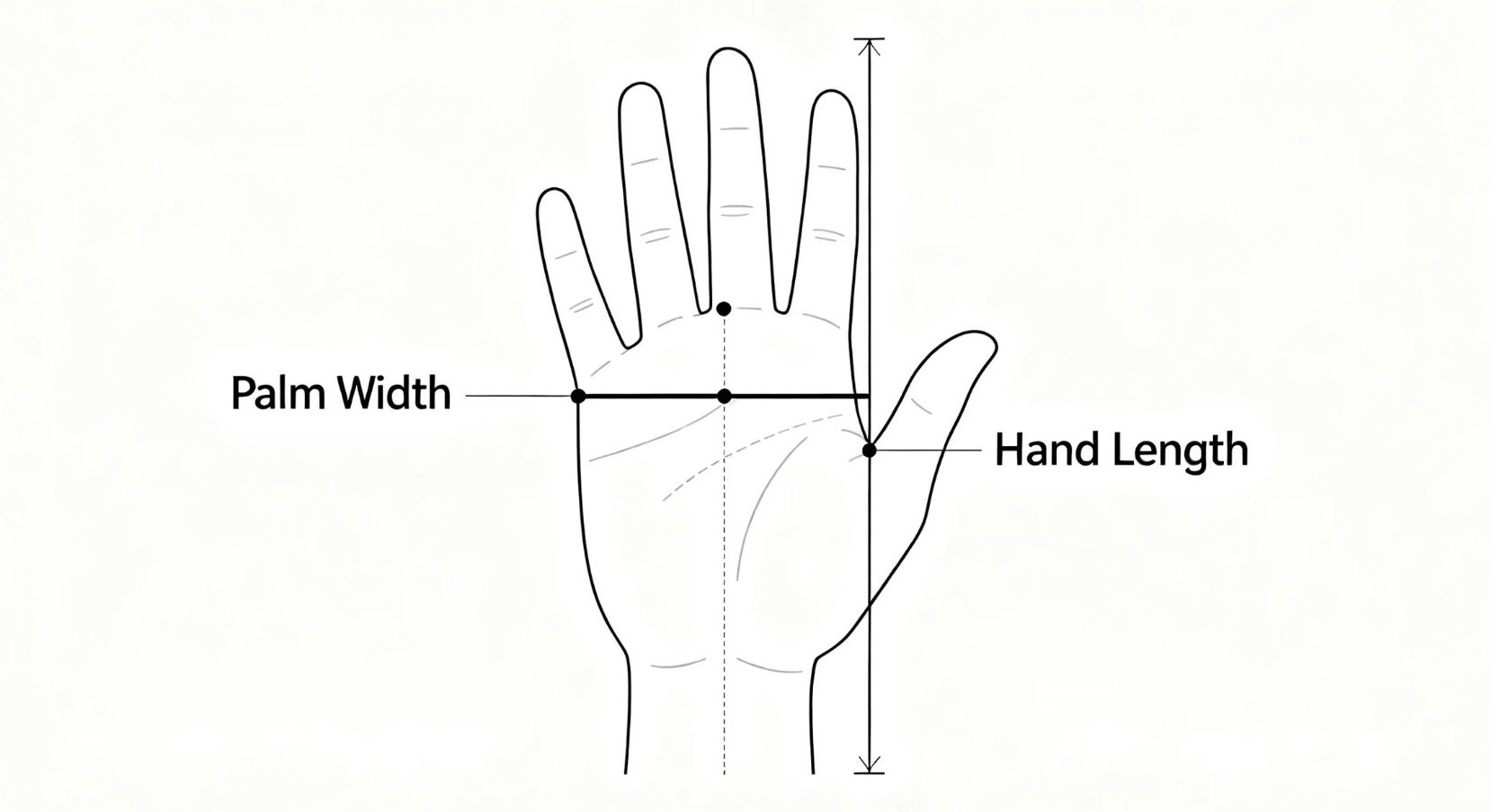
Glove Sizing Guide
|
Size
|
Palm Width (mm)
|
Hand Length (mm)
|
|
XS
|
60-75
|
150-160
|
|
S
|
70-85
|
160-170
|
|
M
|
80-95
|
170-180
|
|
L
|
90-105
|
180-190
|
|
XL
|
100-115
|
190-200
|
How to Measure:
- Measure around your dominant hand at the widest point
- Measure from the tip of your middle finger to your wrist
- Use the larger measurement to determine size
Quality Standards to Look For
Medical Gloves:
- FDA 510(k) Clearance (USA)
- CE Marking (Europe)
- ISO 13485 (Quality Management)
- ASTM D6319 (Nitrile) / ASTM D3578 (Latex)
Industrial Gloves:
- EN 374 (Chemical Resistance)
- EN 388 (Mechanical Risks)
Food Gloves:
- FDA 21 CFR 177.2600 (Food Contact)
Common Mistakes to Avoid
❌ Using latex gloves with oil-based products
❌ Reusing disposable gloves
❌ Choosing wrong size
❌ Ignoring chemical compatibility
❌ Storing gloves in direct sunlight
Conclusion
Selecting the right disposable gloves is crucial for safety, comfort, and cost-efficiency.
Quick Summary:
- Healthcare: Nitrile or Latex (medical-grade)
- Food Service: PVC or Nitrile (FDA-approved)
- Industrial: Heavy-duty Nitrile (6-8 mil)
- Laboratory: Chemical-resistant Nitrile
About Fujian Jixiang E-commerce Co., Ltd.
With over 20 years of experience, we specialize in manufacturing high-quality disposable gloves.
Why Choose Us?
- ✅ Factory-direct pricing
- ✅ ISO/CE/FDA certified products
- ✅ OEM/ODM customization
- ✅ Global shipping to 50+ countries
Contact Us:info@jxgloves.com








 Network Supported